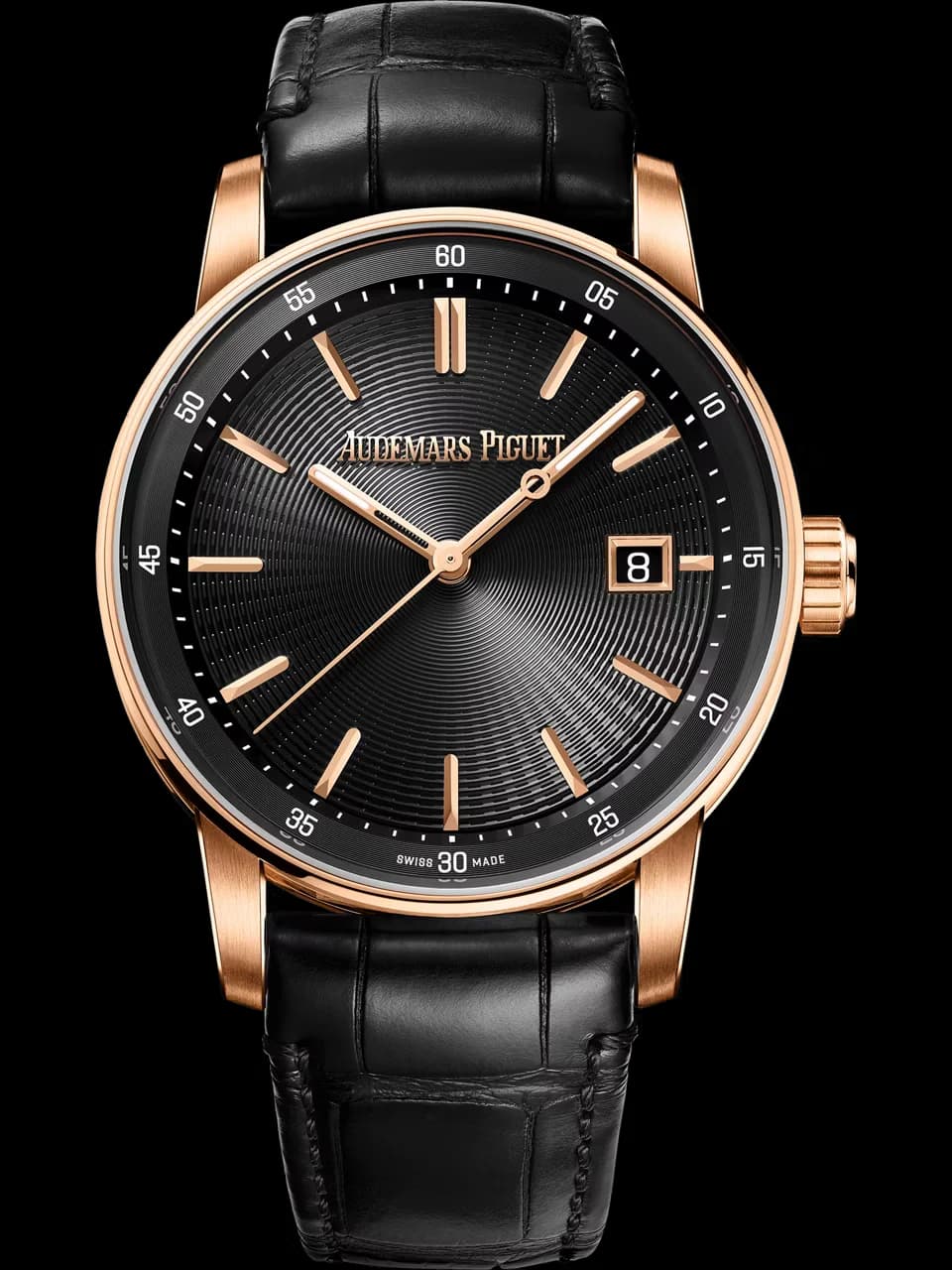
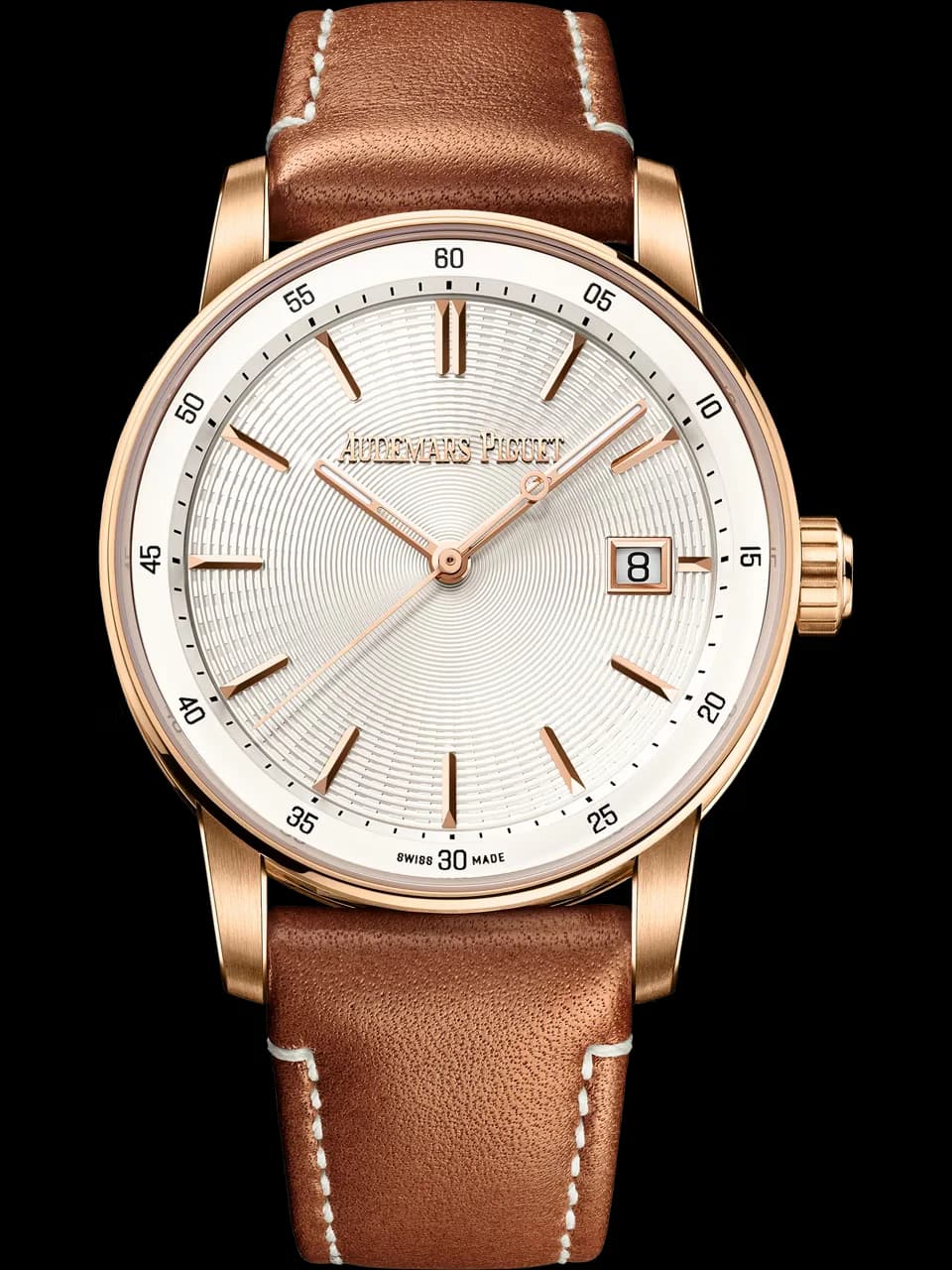
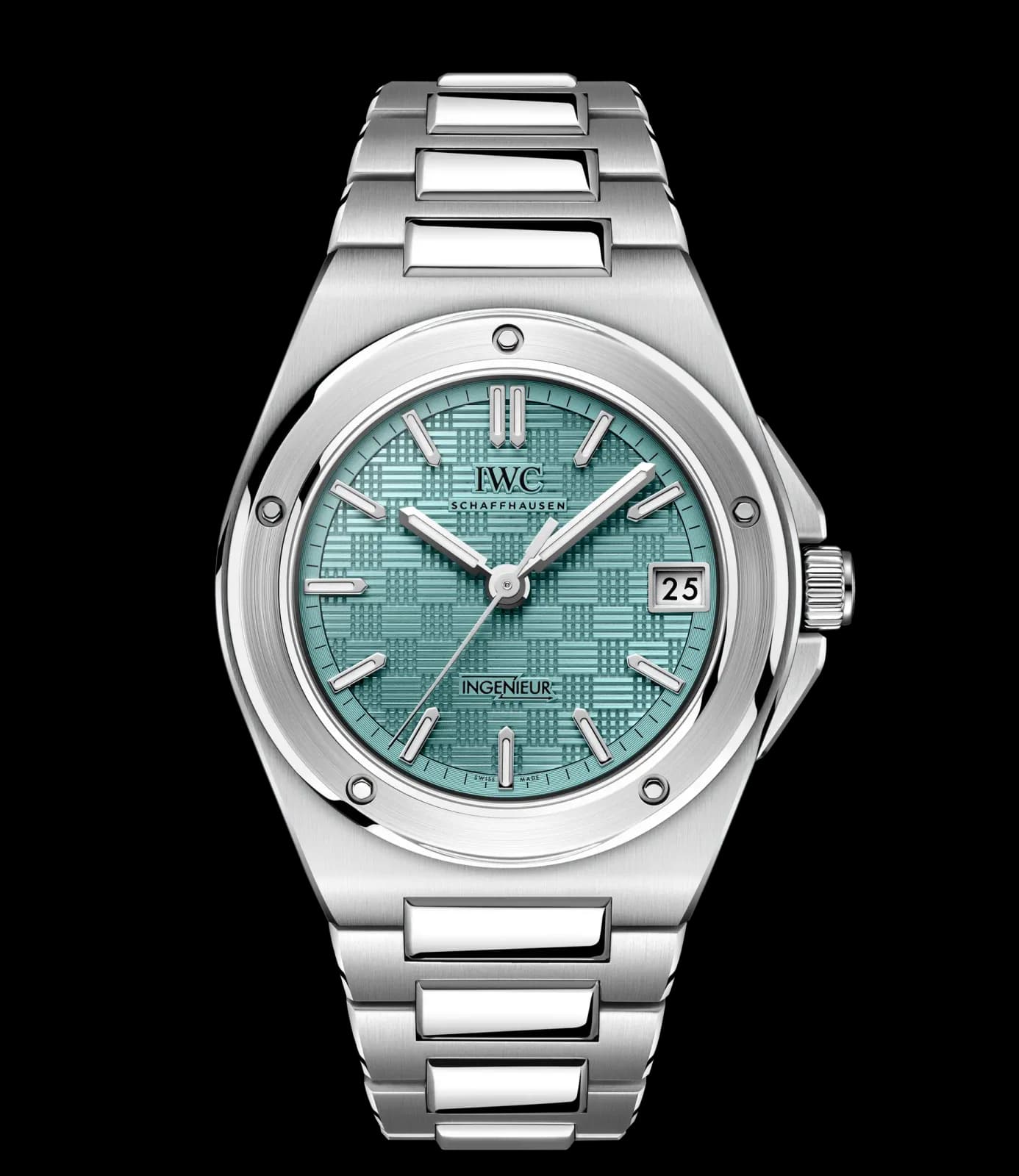
Guilloché is a decorative technique in which a fine, exact, repeating pattern is cut into a surface using a machine worked by hand. Abraham-Louis Breguet used it to engrave his watch dials. The Breguet brand says it gives polished surfaces better protection against everyday wear, and the machine was quicker than making patterns entirely by hand.
How is guilloché cut?
The lines are cut on a machine worked by hand, such as a rose engine or a straight-line machine. The craftsperson turns the workpiece with a crank in one hand and steers the cutter with the other. On a rose engine, the motion is controlled by rotating wheels called rosettes. Each rosette has a different shape, so changing the rosette changes the pattern. The result is a set of fine, interlaced lines that repeat exactly across the surface.
Where it comes from
Engine-turning machines were first used in the 1500s and 1600s on soft materials such as ivory and wood. In the 1700s they began to be used on metals, including gold and silver. Abraham-Louis Breguet took up a guilloché machine to engrave the dials of his watches. The word is French and was in use by the 1770s at the latest. One explanation links it to Guillot or Guilloche, said to have invented an engine-turning machine.
Not to be confused with
Stamped dials imitate the look. Their brass blank is pressed, so the pattern comes from the metal being pushed out of shape, not cut. CNC machines can also reproduce guilloché patterns. Purists say these dials lack the particular shine of hand-turned work. On a true guilloché dial, the lines are cut by a craftsperson working a hand-operated machine.
Checked