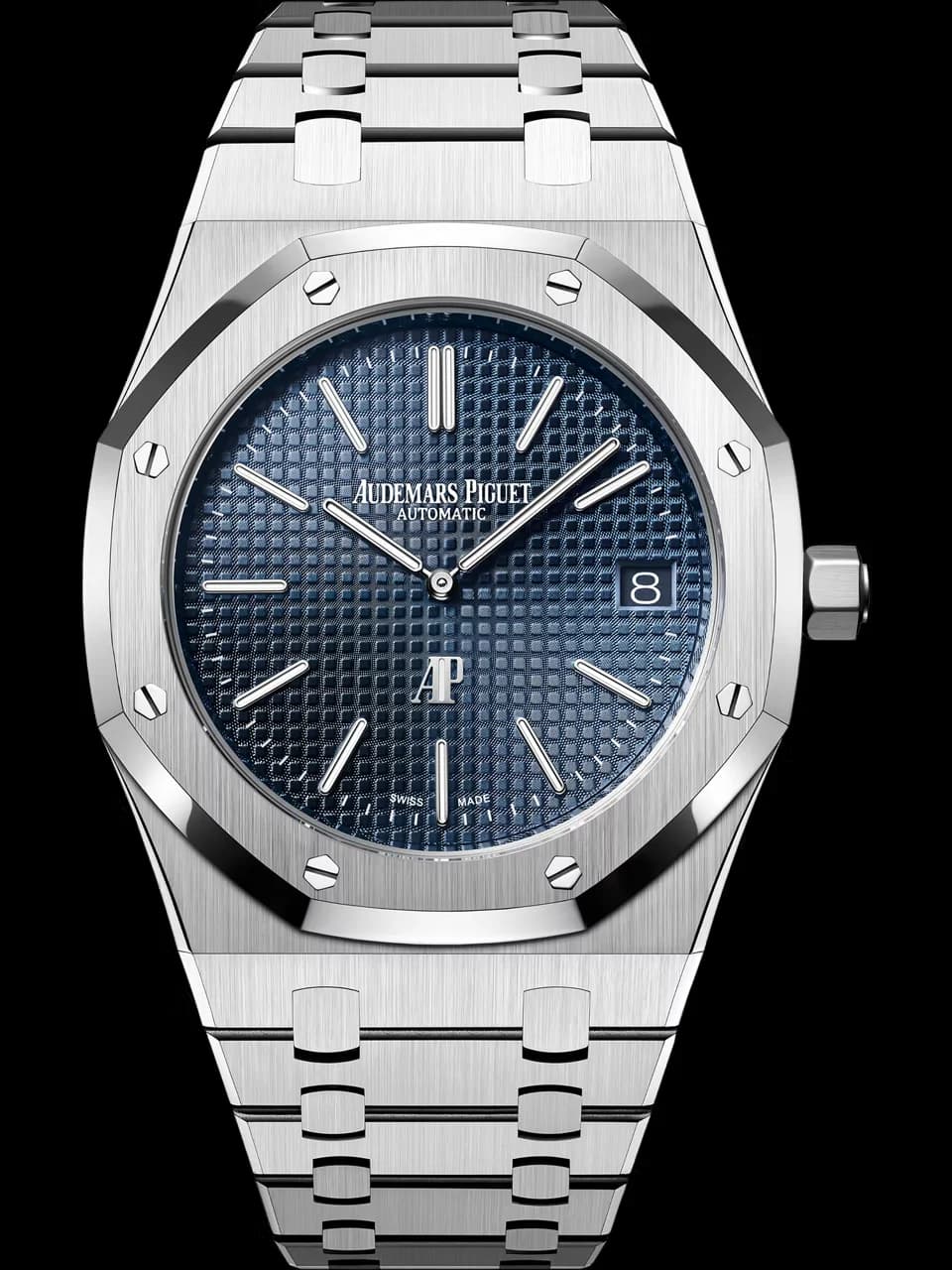
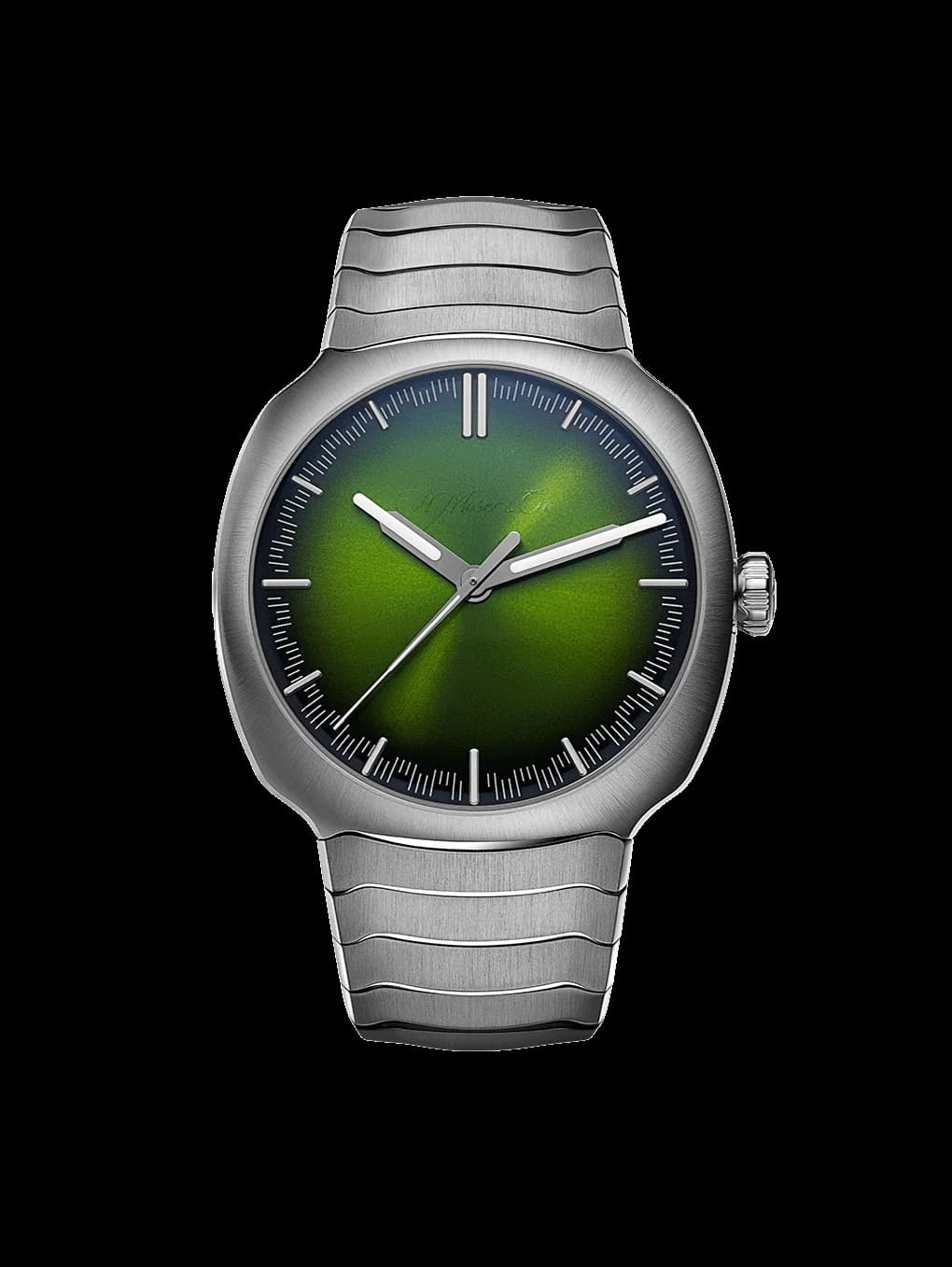
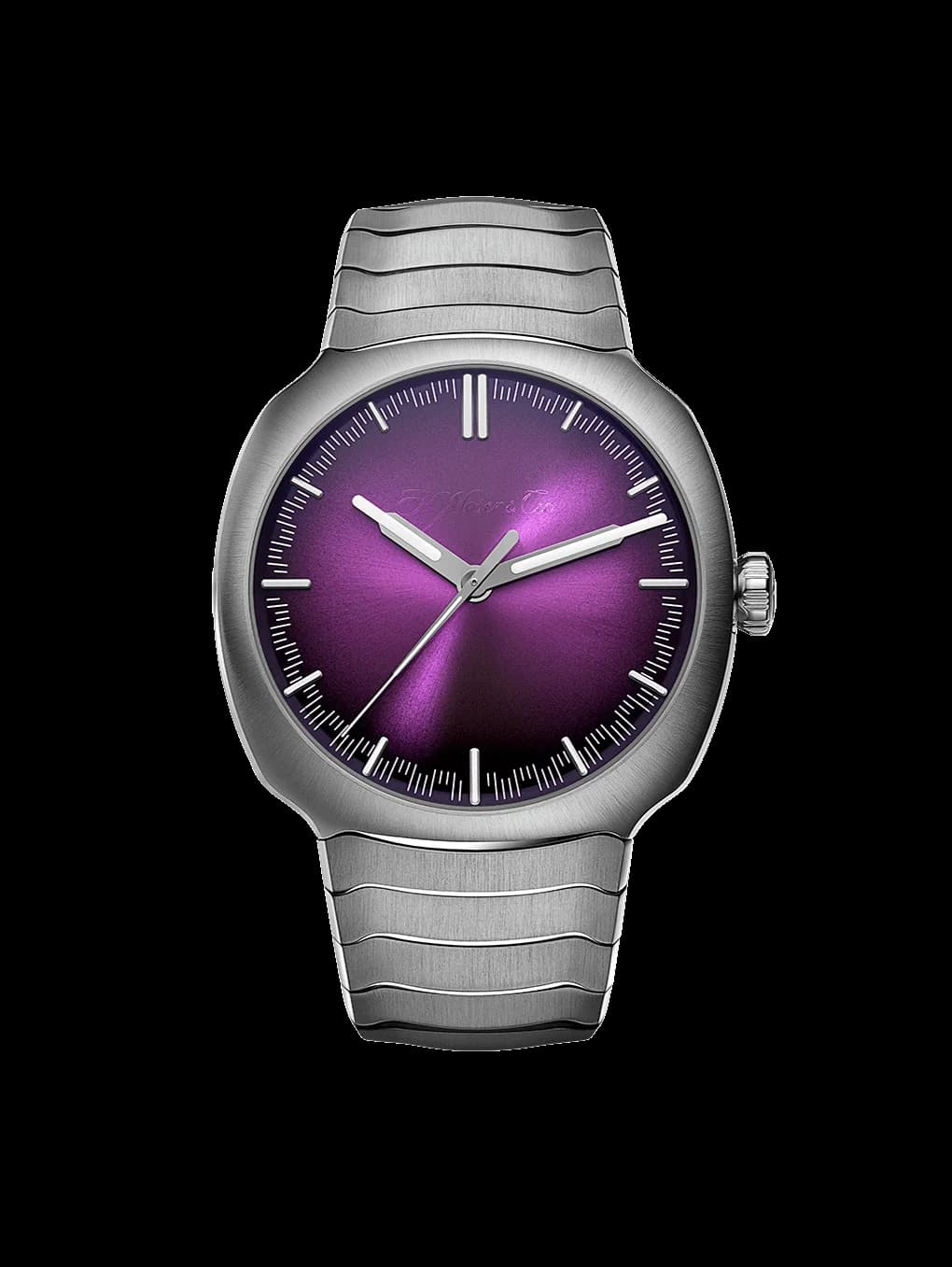
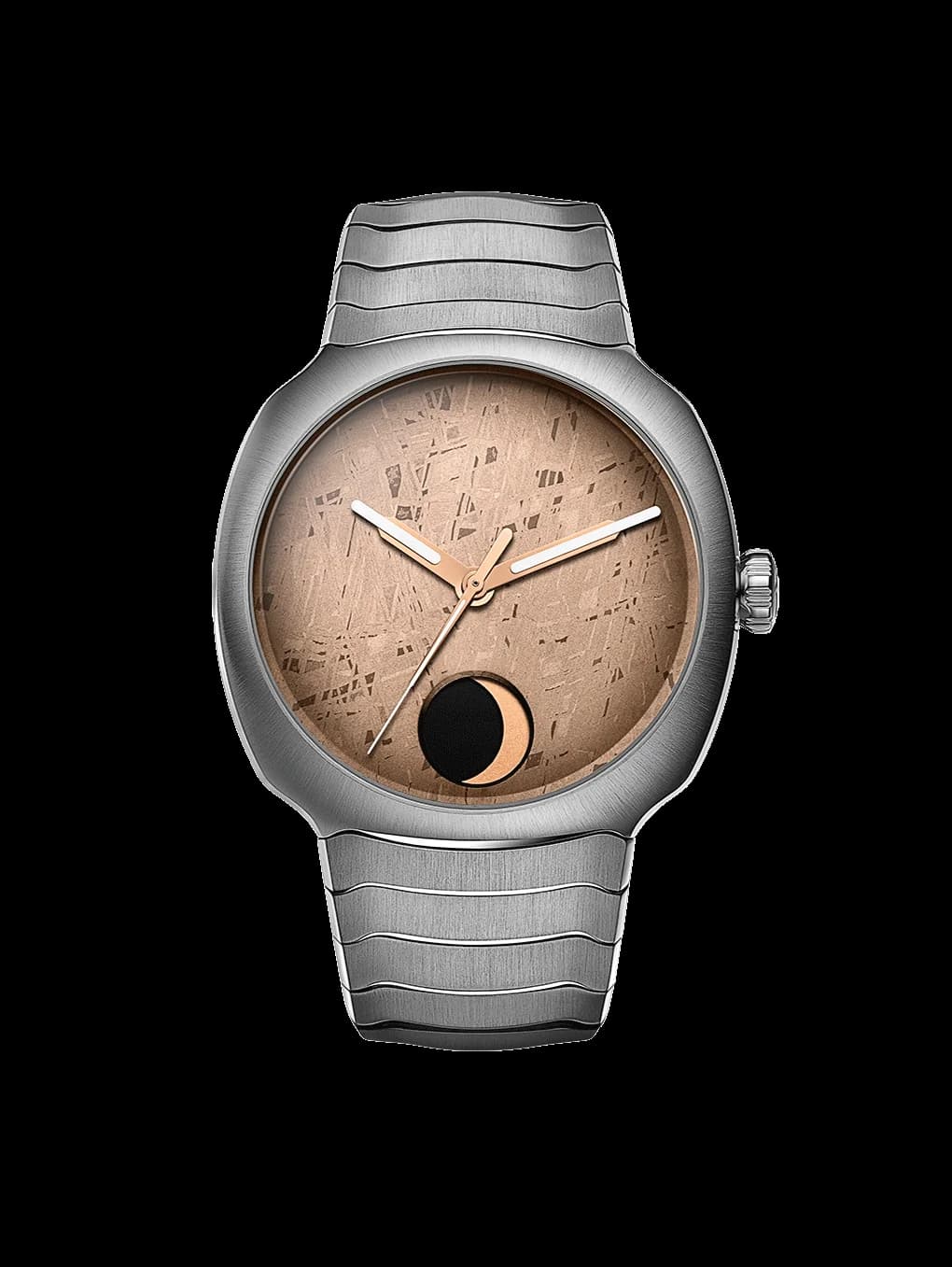
An integrated bracelet is a watch design in which the case and bracelet are joined so they look like one seamless piece. It departs from the usual setup, where a strap or bracelet is fixed between lugs that stick out from the case. The trade-off is that the bracelet usually can’t easily be swapped.
How does an integrated bracelet fit the case?
Strictly speaking, the bracelet has to fit into the case itself to count as integrated. The Audemars Piguet Royal Oak is the standard example. Its case has no pair of lugs with a gap at the top and bottom. Instead, the edge of the case has small recesses. Two male links on the bracelet slot into them. Not every design works this way. Some integrated bracelets attach through a central lug rather than an end link. Either way, the owner usually can’t easily fit a different bracelet or a strap in its place.
Where it comes from
The Omega Constellation was among the first watches designed with an integrated bracelet, ahead of the Royal Oak. Gérald Genta designed the Royal Oak, launched in 1972. He also designed the Patek Philippe Nautilus, launched in 1976. Tudor began making integrated-bracelet watches in 1973. The Prince Oysterdate reference 9101 was among them. Vacheron Constantin followed in 1977 with its own sports watch, the reference 222, designed by Jörg Hysek. Watches from H. Moser & Cie., Laurent Ferrier and Audemars Piguet use the design.
Not to be confused with
Watches are often put in the integrated-bracelet category only because they look like true examples. Looks alone do not settle it. The test is whether the bracelet fits into the case itself. A case with ordinary lugs, and a gap between them, holds its bracelet in the conventional way. That stays true even when the bracelet’s lines run closely into the case.
Checked