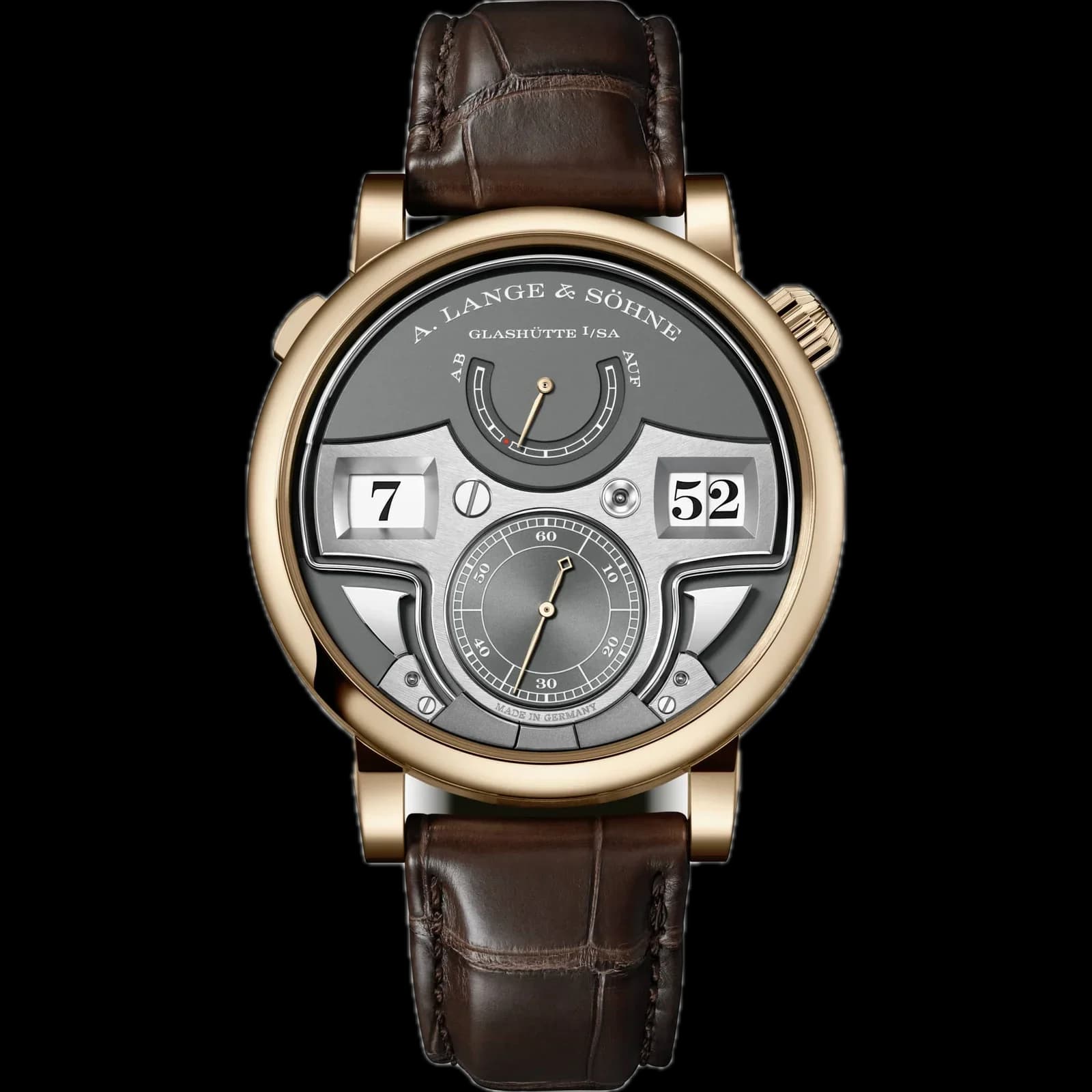
A jumping hour is a way of displaying time in which the hour changes all at once as each new hour begins, instead of creeping forward. There is no conventional hour hand; the hour appears in a dial window. It alters only how the time is read, not how accurately the movement keeps time.
How does a jumping hour work?
The hour numbers sit on a disc that turns once every twelve hours. At each hour change it advances thirty degrees, bringing the next number into the window. In the usual mechanism, the motion work turns a wheel carrying a snail-shaped cam. Over the course of the hour, an arm with a hook is gradually raised. The snail cam lets energy build up as this happens, so that it can be released in a sudden jump. A spring stores this energy over the hour. When the new hour begins, the spring releases it in one go and the disc jumps to the next number.
Where it comes from
Showing the time through a window in the dial goes back to the 17th century. The disc-and-jumper principle developed in high-complication pocket watches of the 18th century. The earliest known jumping hour watch was made in France in the 1830s by Blondeau, watchmaker to King Louis-Philippe. The Austrian watchmaker Josef Pallweber later made a jumping hour pocket watch and sold the licence for his design to IWC. Jumping hour wristwatches first appeared in the 1920s, during the Art Deco period.
Is a jumping hour a true complication?
Strictly speaking, one writer argues that it is not. The reasoning is that a complication is usually defined as a feature that shows information other than the time. A jumping hour shows nothing but the time. It simply presents it in a different way, as a number in a window rather than a hand on a dial. It also leaves the timekeeping of the movement untouched.
What is a mechanical digital display?
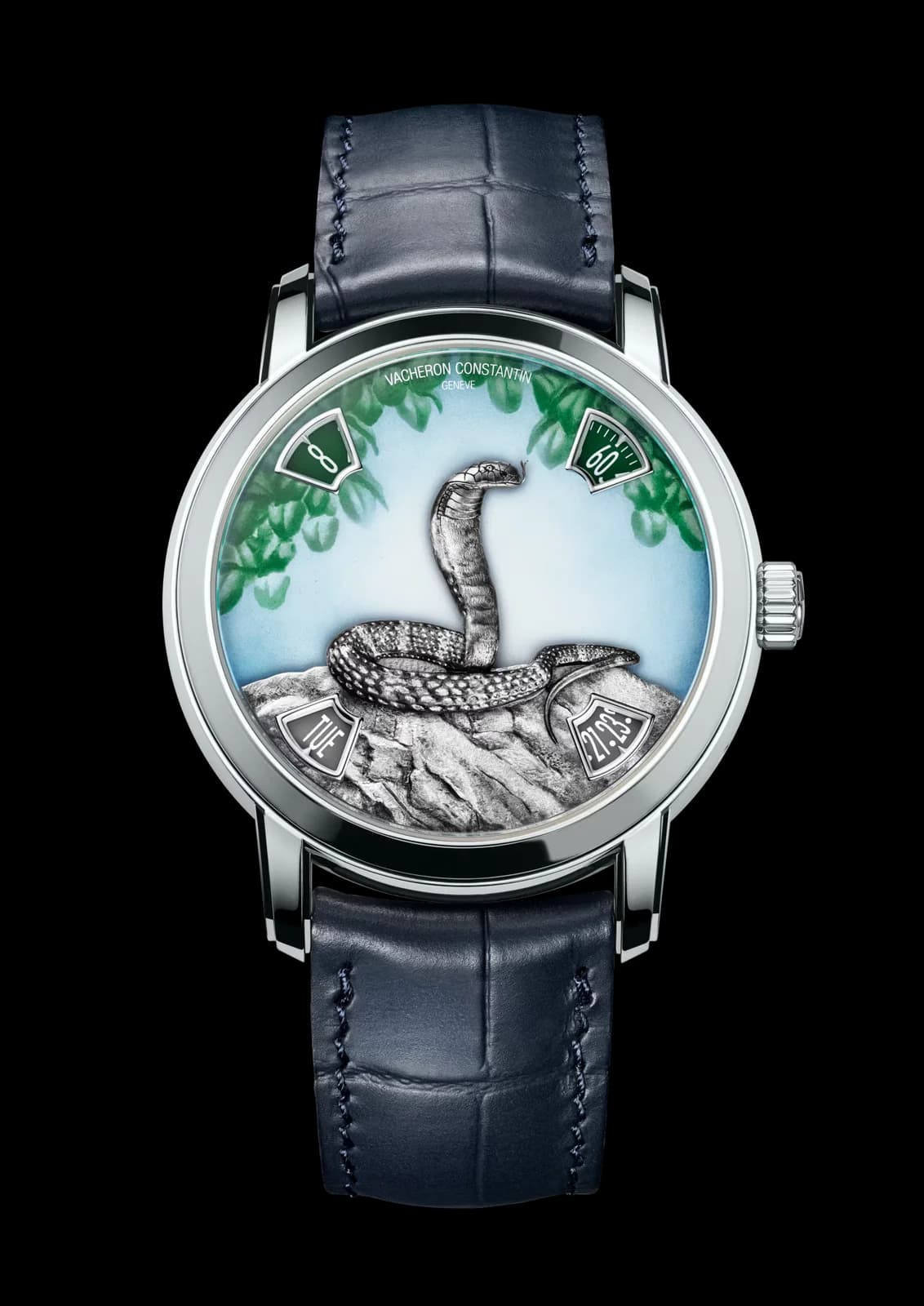
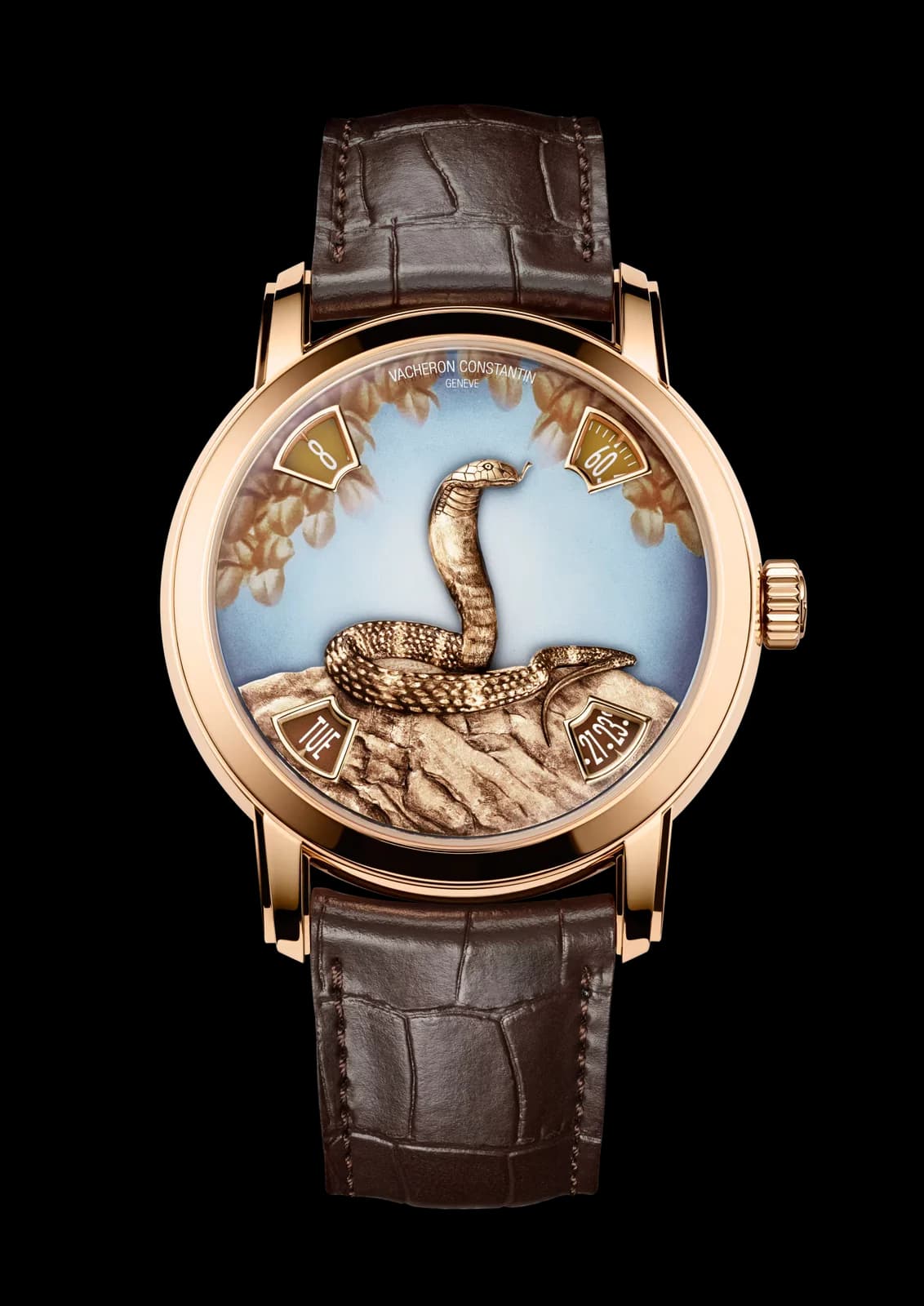
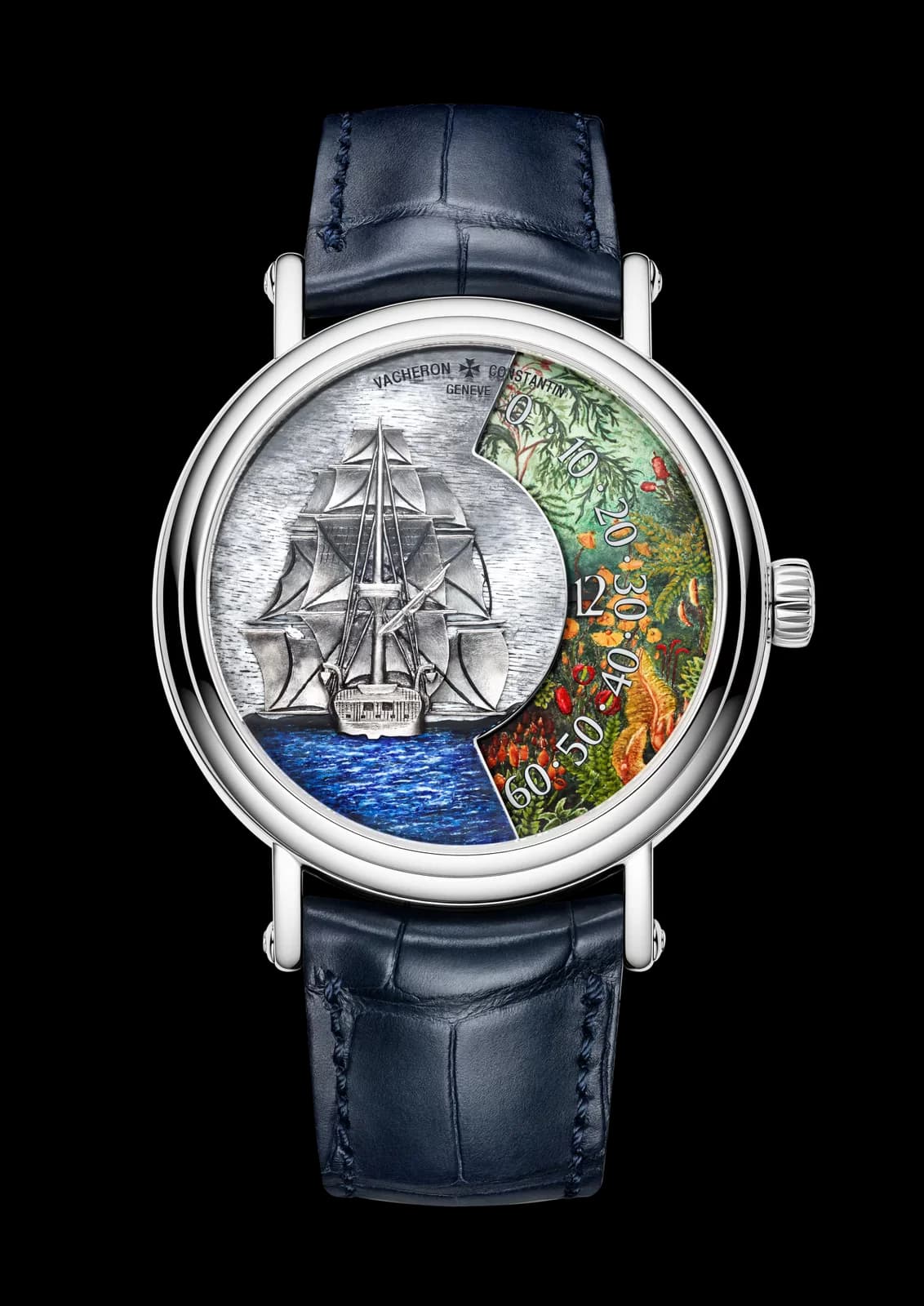
When jumping hours are paired with jumping minutes, the result is called a ‘mechanical digital’ display. On these watches the hour is still read through a window in the dial, not from a conventional hand. A version in which the hour and minute discs sit next to each other is often called ‘Directime’. Jumping hours appear on watches from Vacheron Constantin, MB&F and A. Lange & Söhne.
Checked