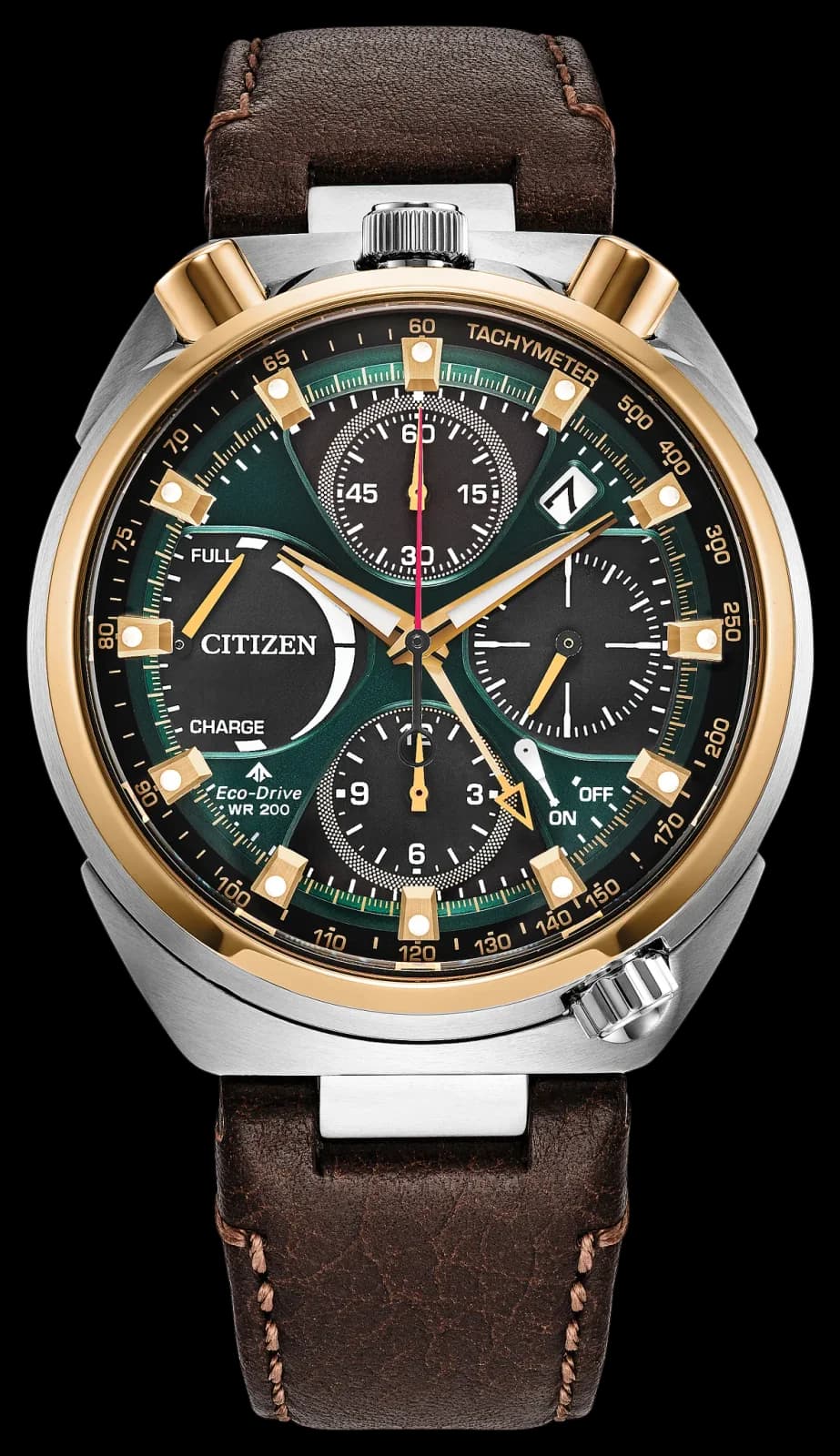
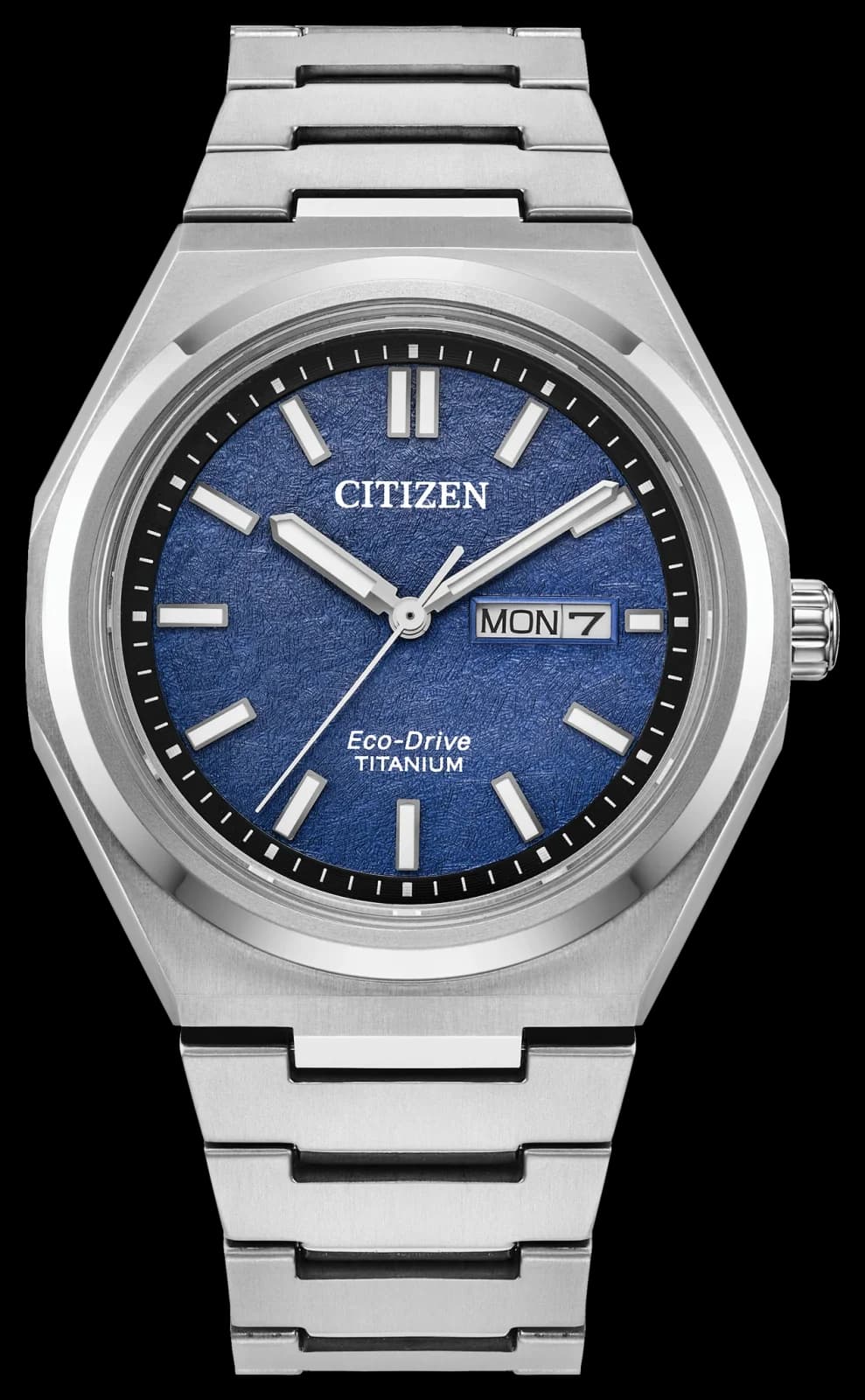
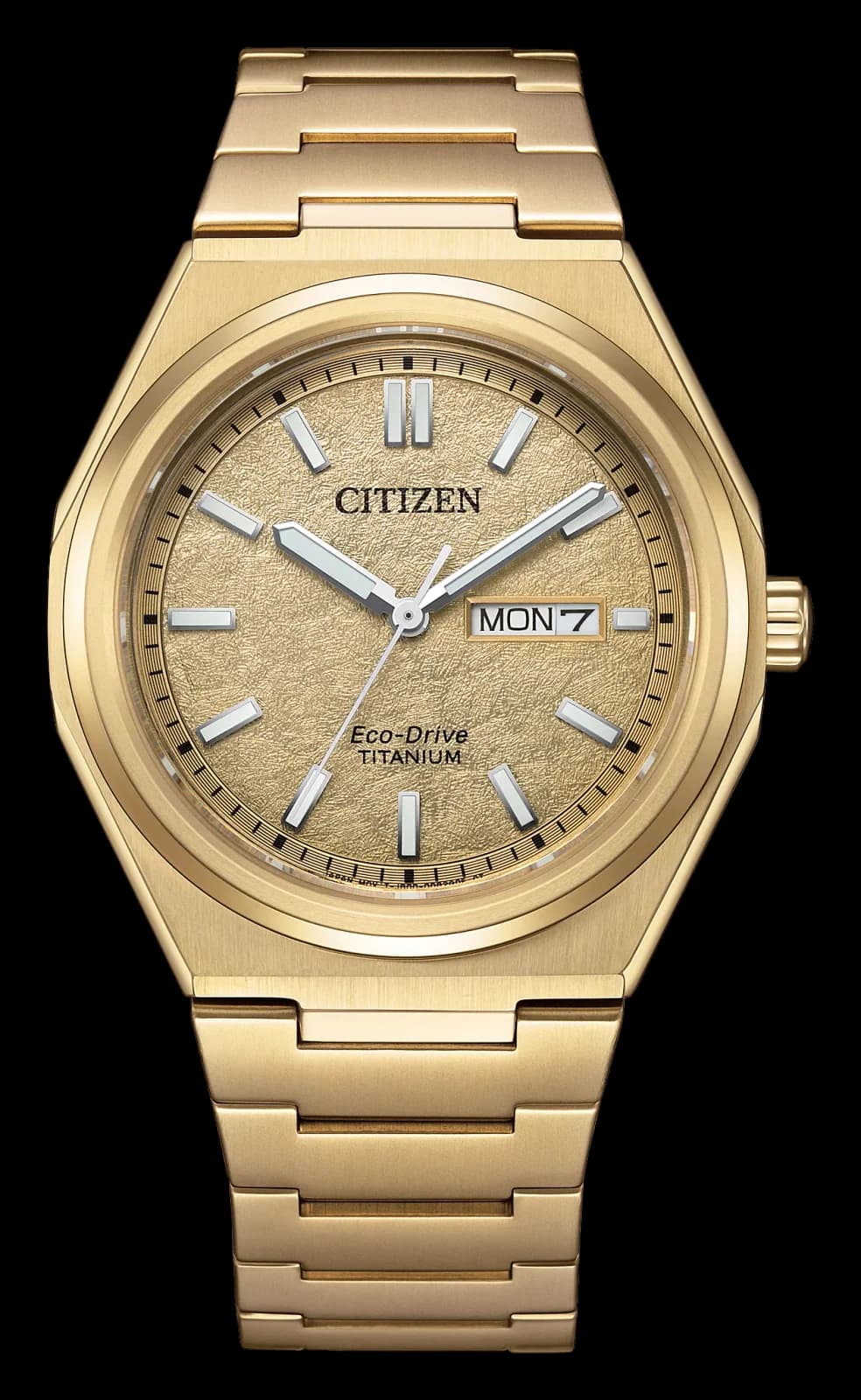
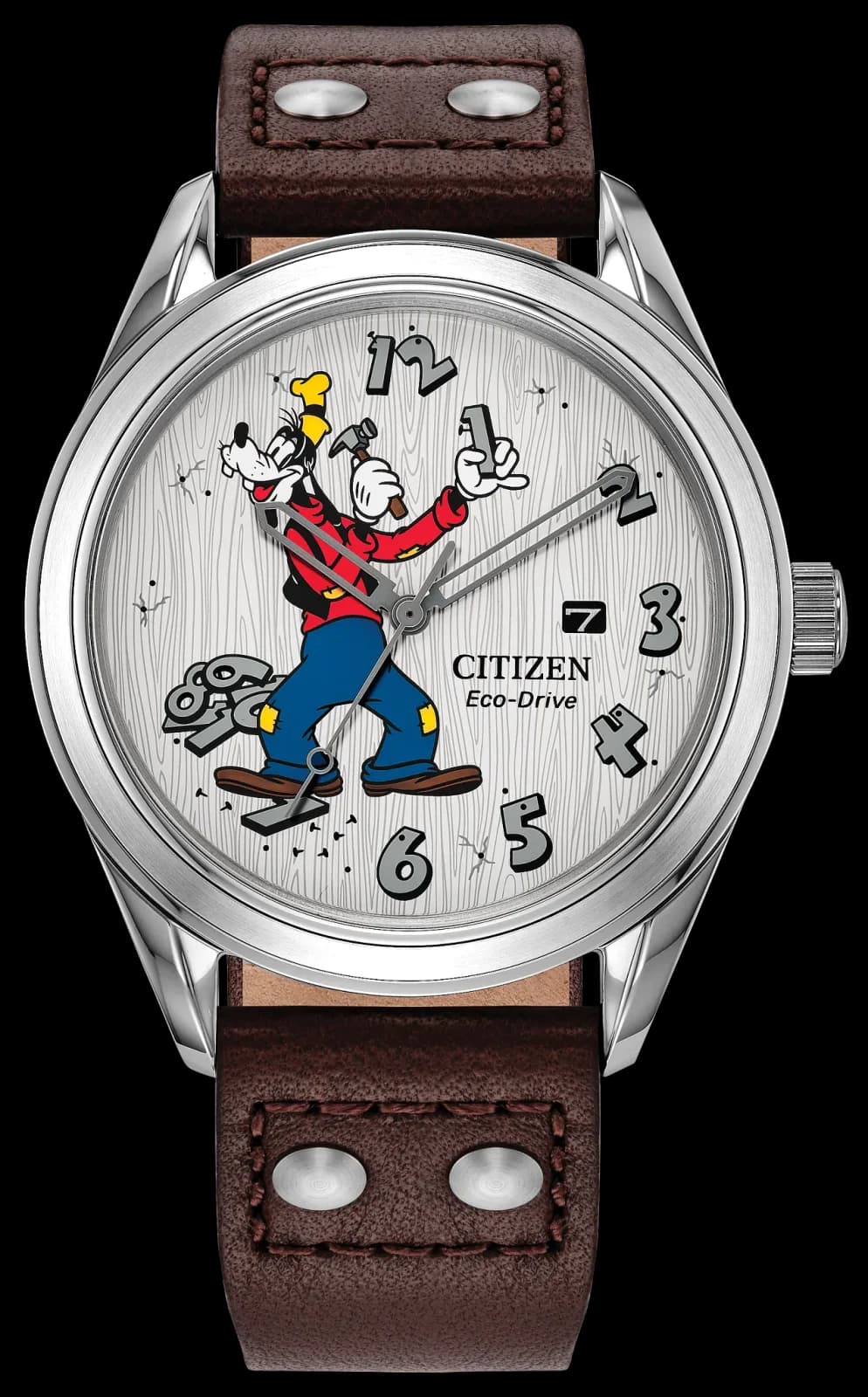
Solar is a watch movement that takes all or part of its power from light, using solar cells. Spare energy is stored in a rechargeable cell, so the watch keeps running at night. Unlike an ordinary battery quartz watch, it does not need regular battery changes.
How does a solar watch work?
Light passes through the watch glass and falls on a solar panel behind it. Sunlight works, and so does artificial light. On many Citizen light-powered models, the solar cell sits under the dial. The cells turn the light into electrical power. Whatever the watch does not use at once is held in reserve for later. Some solar watches can also switch to a power-saving or hibernation mode. In this mode the seconds hand stops. A still seconds hand on a solar watch may simply mean it has entered this mode.
Where it comes from
Light-powered timekeeping came before the solar wristwatch. At the 1952 Basel Fair, Patek Philippe showed a clock powered by photoelectric cells. From the mid-1960s, the American inventor Roger Riehl built prototype solar-powered electronic wristwatches. The Synchronar 2100, released in 1972, has been named the first solar-powered watch. Its solar cells charged a battery, and the battery ran a quartz movement. In 1976, Citizen’s Crystron Solar Cell became the first analogue quartz watch powered by solar cells.
What is Eco-Drive?
Eco-Drive is Citizen’s own name for its light-powered technology. The company coined it in 1994 to set its technology apart from other makers’ versions. Citizen says the system can turn any light into power, from strong sun to weak indoor light. Every Eco-Drive watch is a solar watch, but not every solar watch is an Eco-Drive. Seiko also makes light-powered watches.
Checked