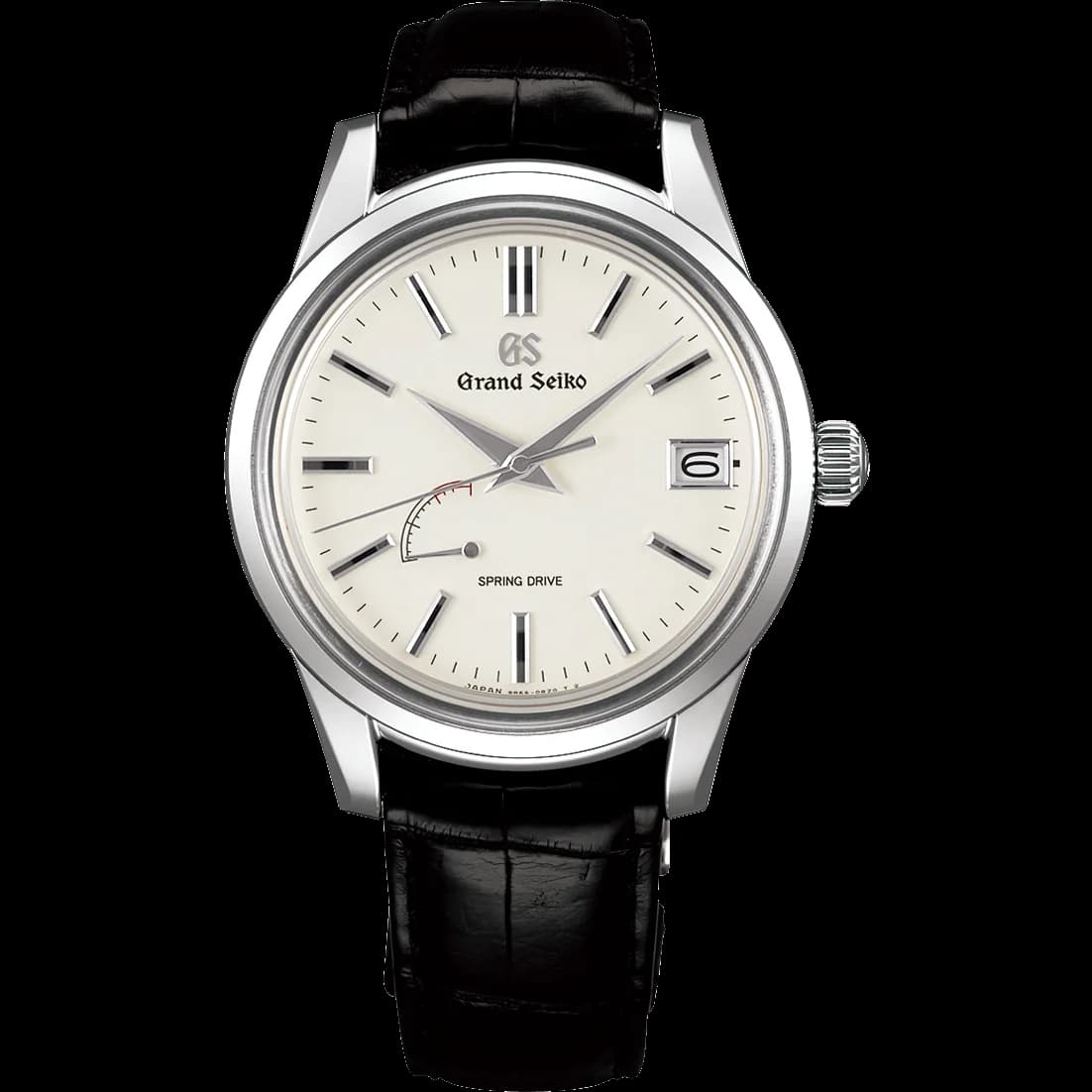
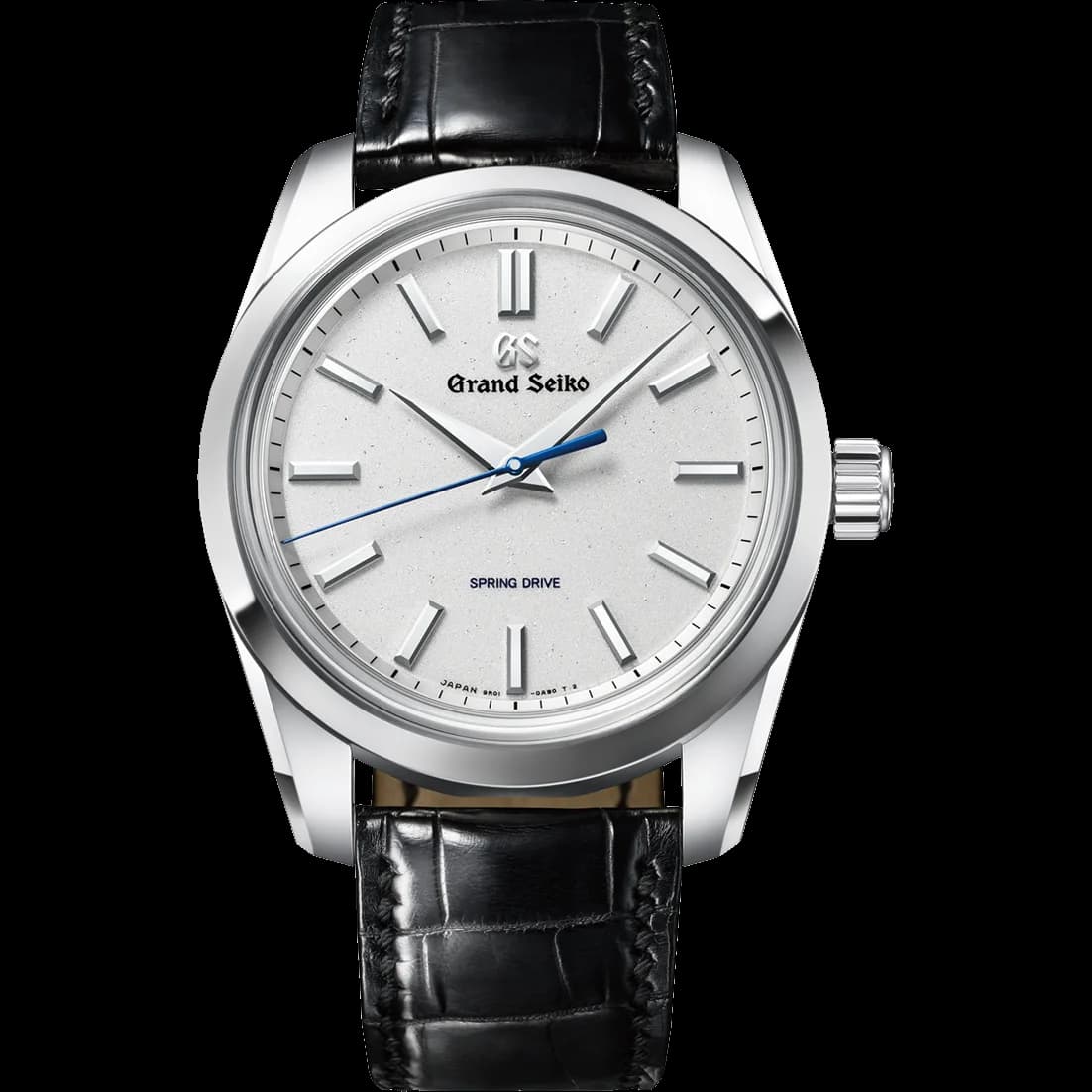
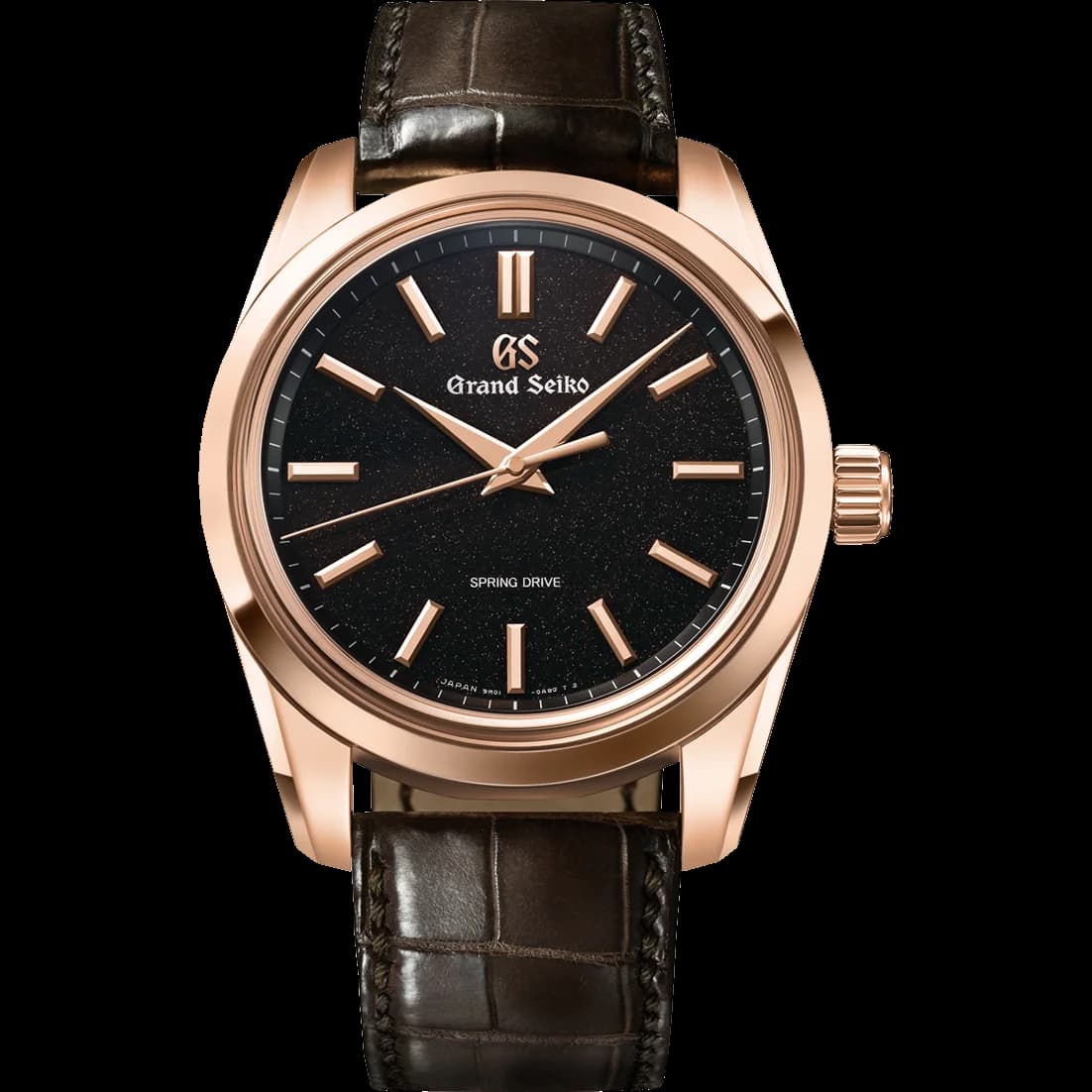
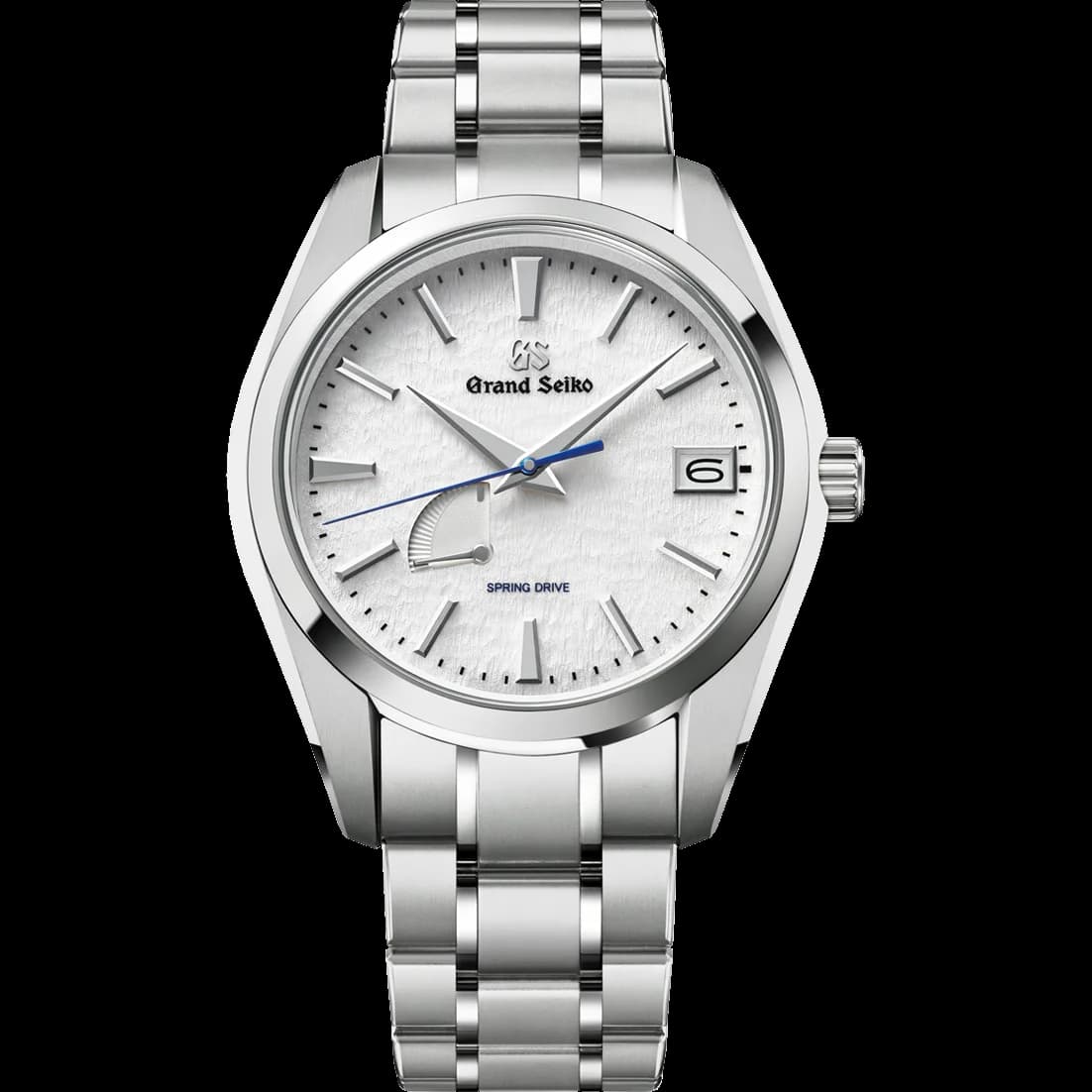
Spring Drive is a family of watch movements that run on a wound mainspring but are regulated by a quartz crystal and an integrated circuit. It joins the power source of a mechanical watch with the precision of an electronic one. Its seconds hand sweeps round without stopping.
How does Spring Drive work?
A Spring Drive movement stores its energy in a wound mainspring, as a mechanical watch does. The difference lies in how that energy is released. Most mechanical watches use a Swiss lever escapement, also called a club tooth escapement. Spring Drive has none. Instead, a part called the Tri-Synchro Regulator turns some of the mainspring’s energy into electricity. A quartz crystal oscillator and an integrated circuit set the timekeeping. The circuit controls an electromagnetic brake, which slows a rotor called the glide wheel. The glide wheel drives the seconds hand directly. So the hand sweeps round the dial without stopping, rather than ticking.
How accurate is Spring Drive?
Grand Seiko gives two accuracy ratings for Spring Drive. Some models are rated at half a second a day. Others are rated at one second a day. Both figures describe how far the watch may gain or lose in a day. That level of precision matches an electronic watch, because a quartz crystal controls the rate. Spring Drive movements appear in watches sold by Seiko Watch Corporation, including its Credor and Grand Seiko brands.
Where it comes from
The idea came from Yoshikazu Akahane in 1977. Akahane was then a young engineer at Suwa Seikosha, the company now called Seiko Epson Corporation. His idea was a quartz timing system powered by a mainspring. The first Spring Drive watches went on sale in Japan in December 1999. They were limited-edition models, wound by hand. The first Grand Seiko with a Spring Drive movement followed in 2004. Today Epson builds the movements in Shiojiri. Grand Seiko presents Spring Drive as a technology tied to a distinctly Japanese sense of design.
Checked