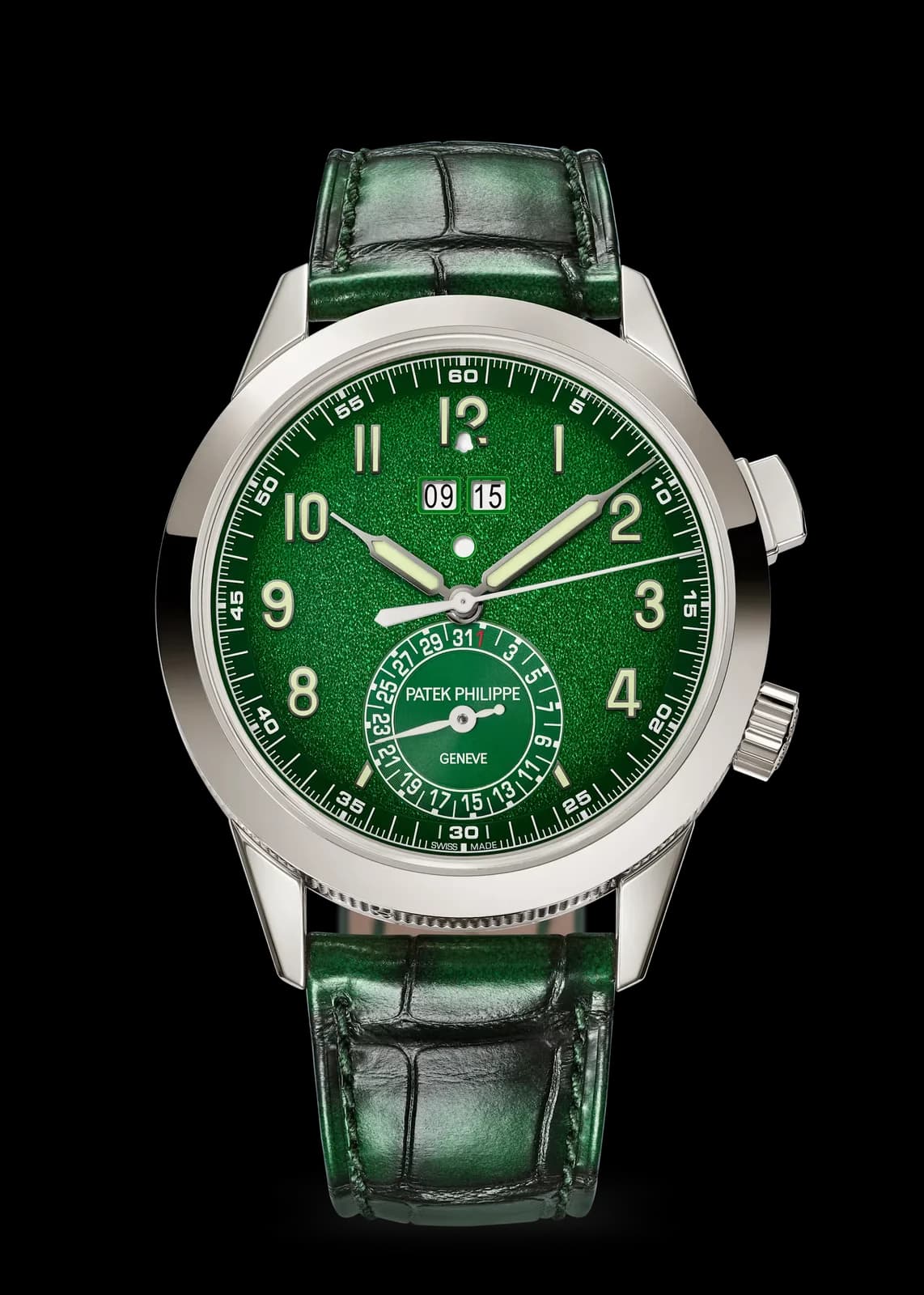
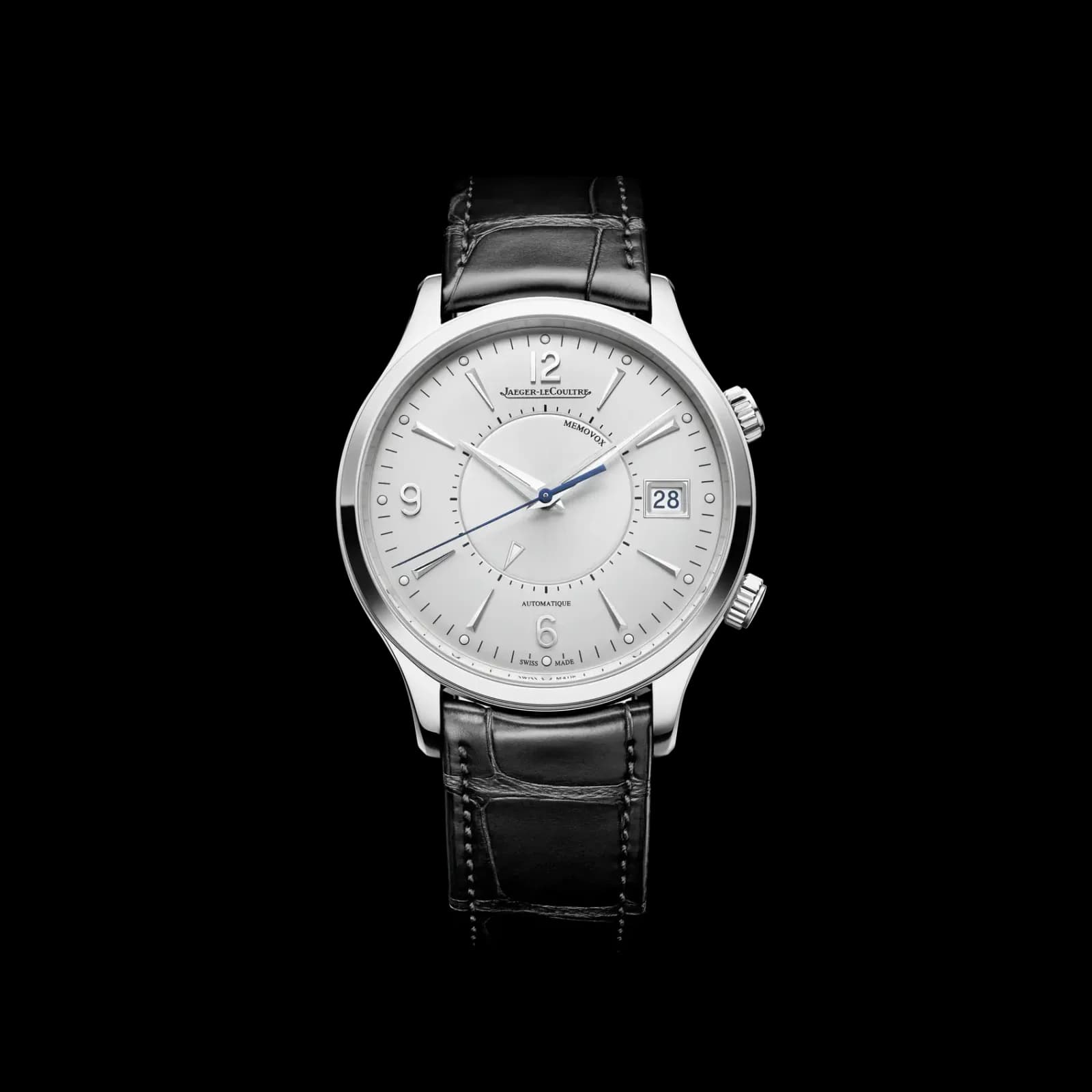
An alarm is a complication that makes a sound at a time the wearer has chosen in advance. It is one of the oldest complications in mechanical watchmaking. A mechanical alarm needs its own power source, separate from the part of the movement that keeps time.
How does a watch alarm work?
The alarm has its own barrel. A separate crown is usually used to wind it and to set the alarm time. The wearer turns the alarm hand to the chosen hour. When the alarm hand and the hour hand line up, a finger drops into a hole and releases the mechanism. A hammer then starts to strike. Depending on the design, it hits either a gong, which is a metal blade fixed to the movement, or the inside of the case. In the Vulcain Cricket, the hammer strikes a thin membrane instead, and a double caseback amplifies the sound. Its hammer could strike as many as 1,300 times in 25 seconds.
Where it comes from
A few alarm pocket watches survive from as early as the 1600s. The Durrstein brothers later patented the first alarm movement made in large numbers. In 1914 Eterna used the Durrstein movement in an alarm wristwatch. The wristwatch case was small, so the alarm spring had to be weaker. As a result, the alarm rang for only about seven seconds. Vulcain named its Cricket after the sound its alarm makes. In 1951 Jaeger-LeCoultre released the Memovox, an alarm watch with the hand-wound calibre 489.
Not to be confused with
A minute repeater and a sonnerie also make sound, but they ring out the time itself. An alarm does not tell the time by sound. It sounds at one steady pitch, whatever the hour, and only at the moment the wearer has set. Its purpose is to signal that a chosen time has come, not to say what time it is.
Checked