Automatic describes a mechanical watch whose mainspring is wound by the movement of the person wearing it. A weight inside the movement turns as the wrist moves, and that motion winds the spring. This spares the owner the regular hand-winding that a manual-wind watch needs.
How does an automatic watch work?
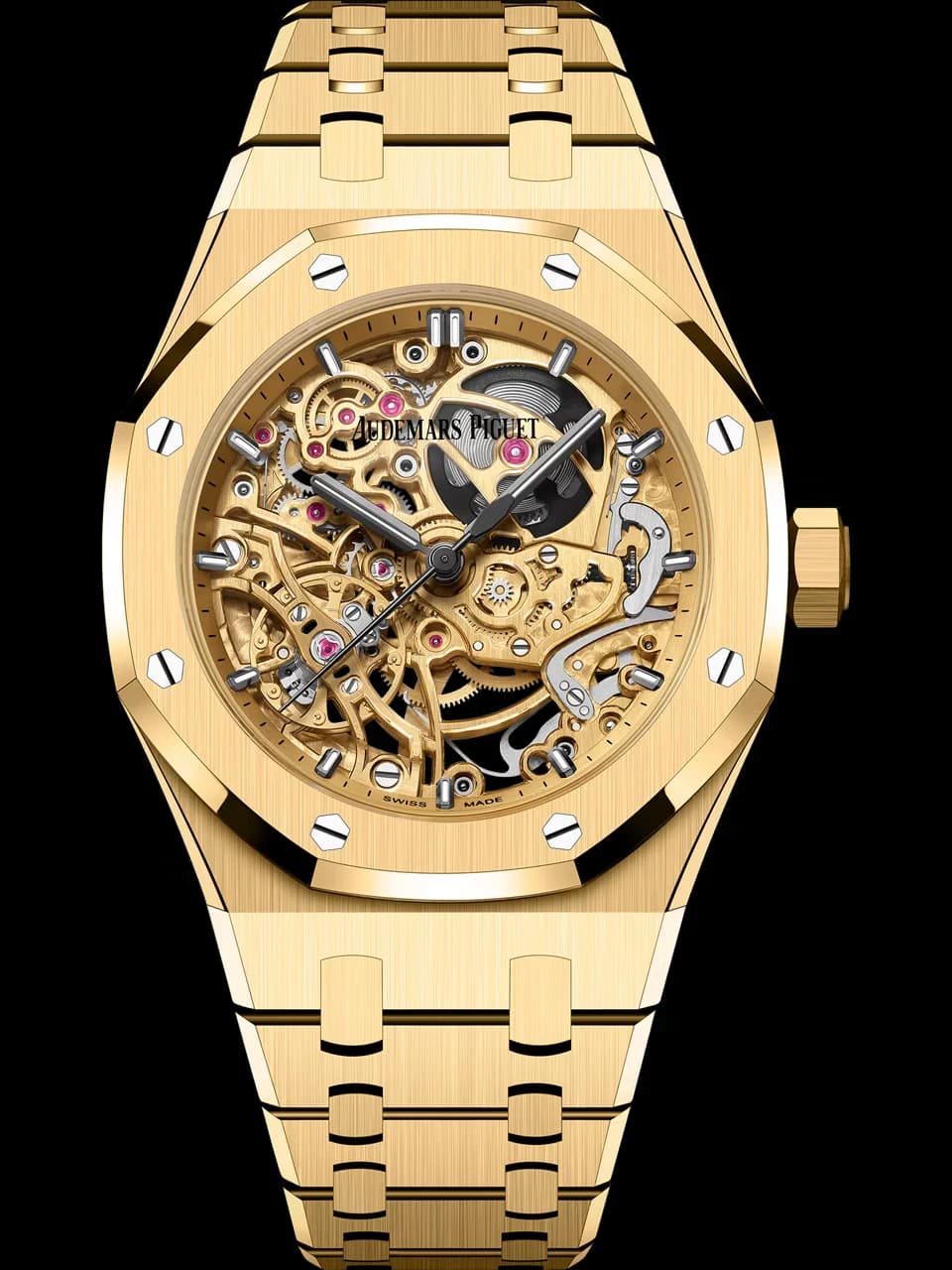
Inside the movement sits a weight mounted on a pivot. As the wearer moves, the weight swings or turns. In a rotor design, the rotor spins as the wrist moves, and that spinning winds the mainspring. The spring cannot be wound too far. A slipping clutch on the mainspring stops the self-winding system from overwinding it, so the weight can keep moving without harm. A typical watch with its mainspring fully wound holds about two days of running energy.
Not to be confused with
A manual-wind watch is also mechanical, but it has no self-winding system. Its owner has to wind the mainspring by hand regularly. An automatic does this winding through the wearer’s movement instead. The two are not entirely separate, though. Many automatic wristwatches can also be wound by hand using the crown. So an automatic can often be given a few turns by hand, while a manual-wind watch relies on the owner alone.
Where it comes from
Abraham-Louis Perrelet invented a self-winding system for pocket watches around late 1776 or early 1777. In 1952 the historians Alfred Chapuis and Eugène Jaquet named him as the inventor of the automatic watch. Hubert Sarton, a Belgian watchmaker, presented an automatic winding system that used a central rotor. John Harwood’s system, patented in 1923, wound the mainspring with a pivoting weight that swung as the wearer moved. From 1931 onward, Rolex had a large part in developing the automatic watch. In 1942 Felsa released the Bidynator calibre, the first watch with a free central rotor that wound in both directions.
Checked