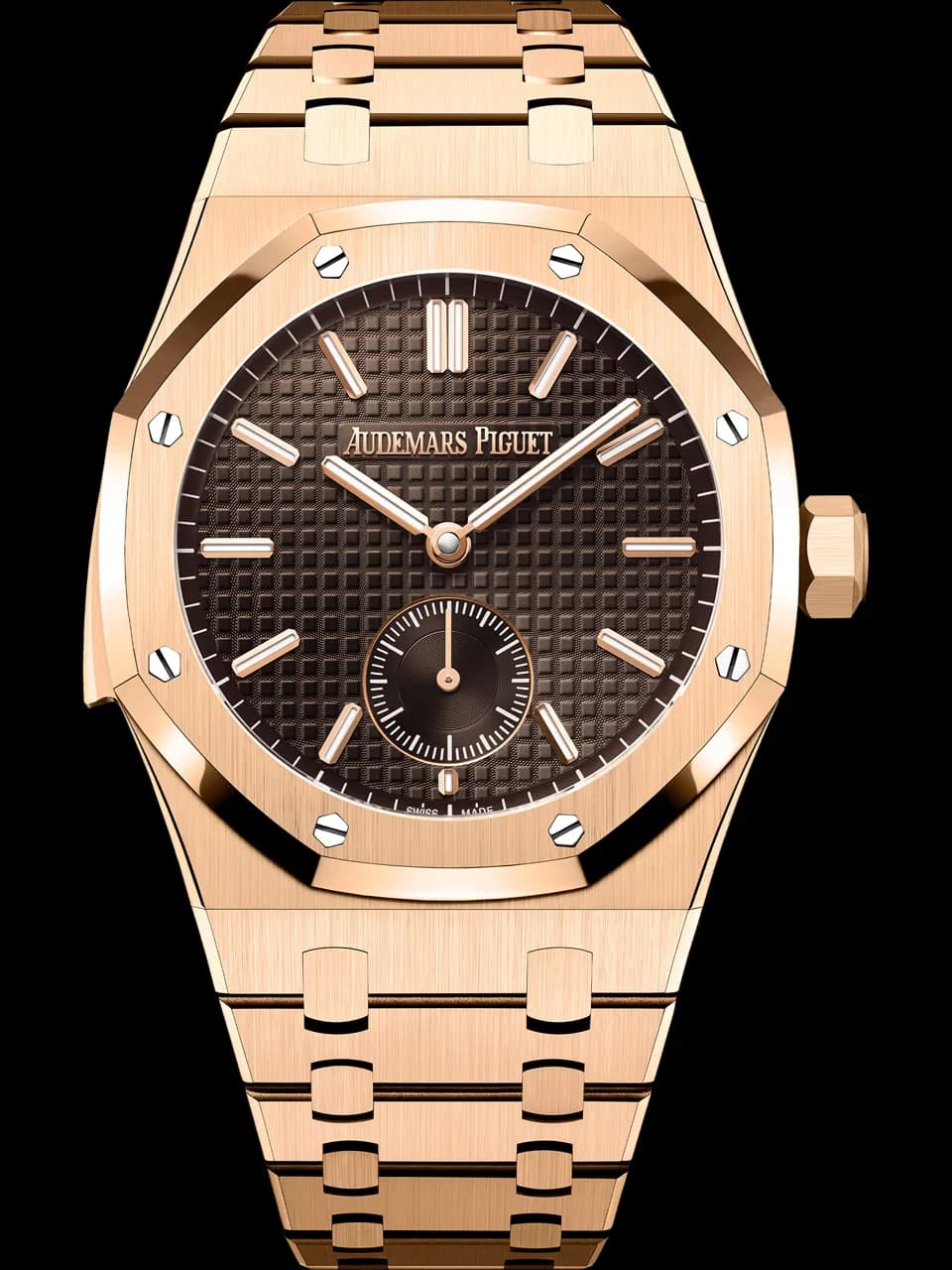
Manual winding is a mechanical movement whose mainspring the owner winds by hand, by turning the crown, at regular intervals. Unlike an automatic, it has no self-winding mechanism. It needs no rotor, so the movement can be made especially slim.
How does manual winding work?
Turning the crown on the side of the case coils the mainspring tighter. That tighter coil is where the energy is stored. During winding, a spring-loaded part called the click engages the teeth of a ratchet wheel. This stops the mainspring from unwinding backwards, so each turn of the crown adds to the stored energy rather than letting it escape. The same principle applied when timepieces were wound with a key.
How often should a hand-wound watch be wound?
NOMOS recommends winding a manual watch every day, at about the same time. NOMOS says a modern hand-wound watch usually runs for about 40 to 72 hours on a full wind. Winding daily therefore tops up the spring well before it runs down. Omega, NOMOS Glashütte and A. Lange & Söhne all make watches with manual winding.
Not to be confused with
An automatic watch is also mechanical, but a self-winding mechanism winds its mainspring. It uses a rotor, which is why a hand-wound movement, with no rotor, can be made especially slim. The line is not absolute. Many automatic wristwatches can also be wound by hand with the crown, so manual winding describes an action as well as a type of watch.
Where it comes from
The earliest watches were wound and set with a separate, removable key rather than a crown. In 1838, Louis Audemars devised an early type of keyless winding in Switzerland. In 1844, Adrien Philippe, who later co-founded what became Patek Philippe, developed the modern sliding-pinion keyless winding system. Today, any watch that is wound with a crown is called stem wound.
Checked