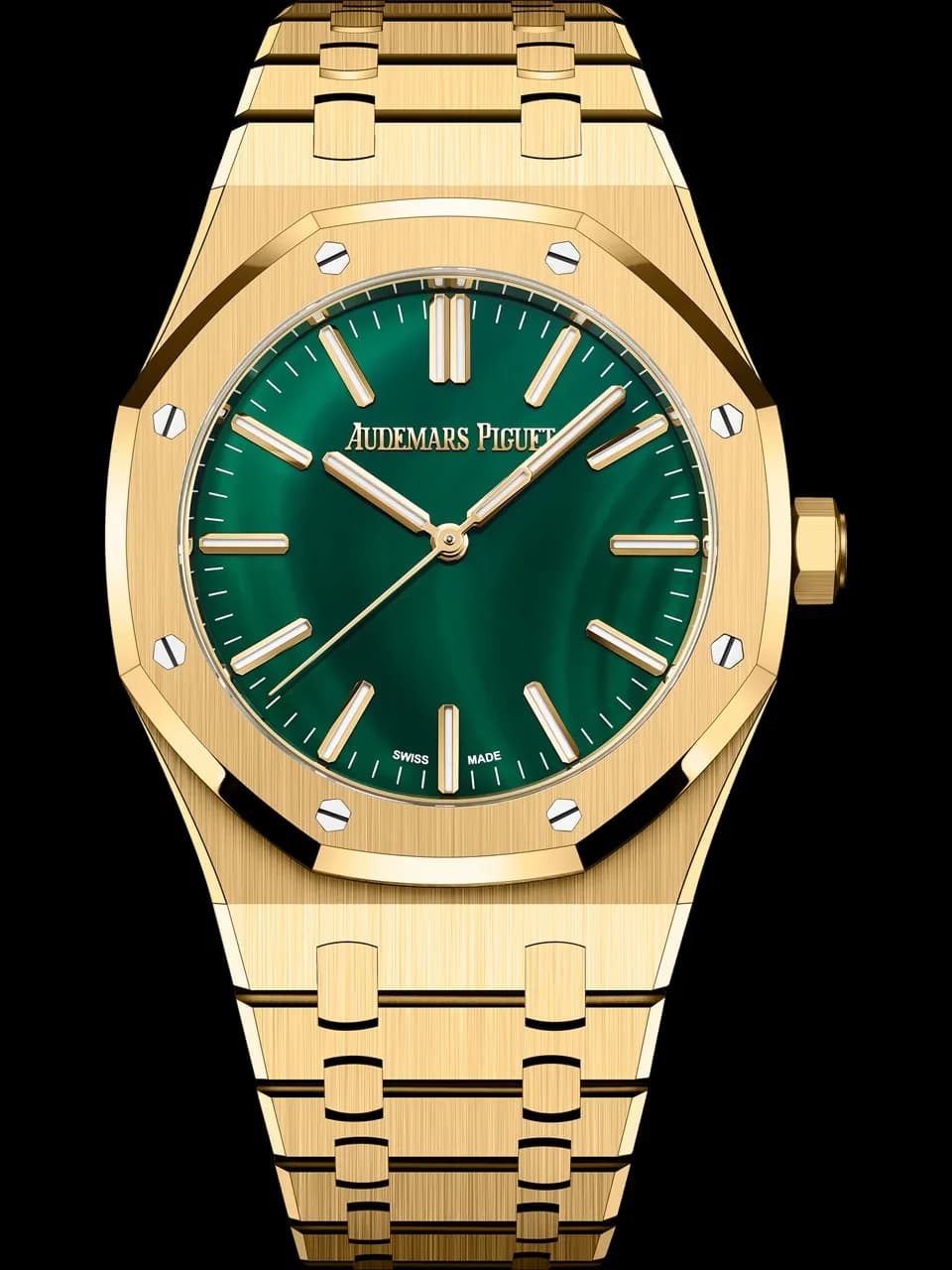
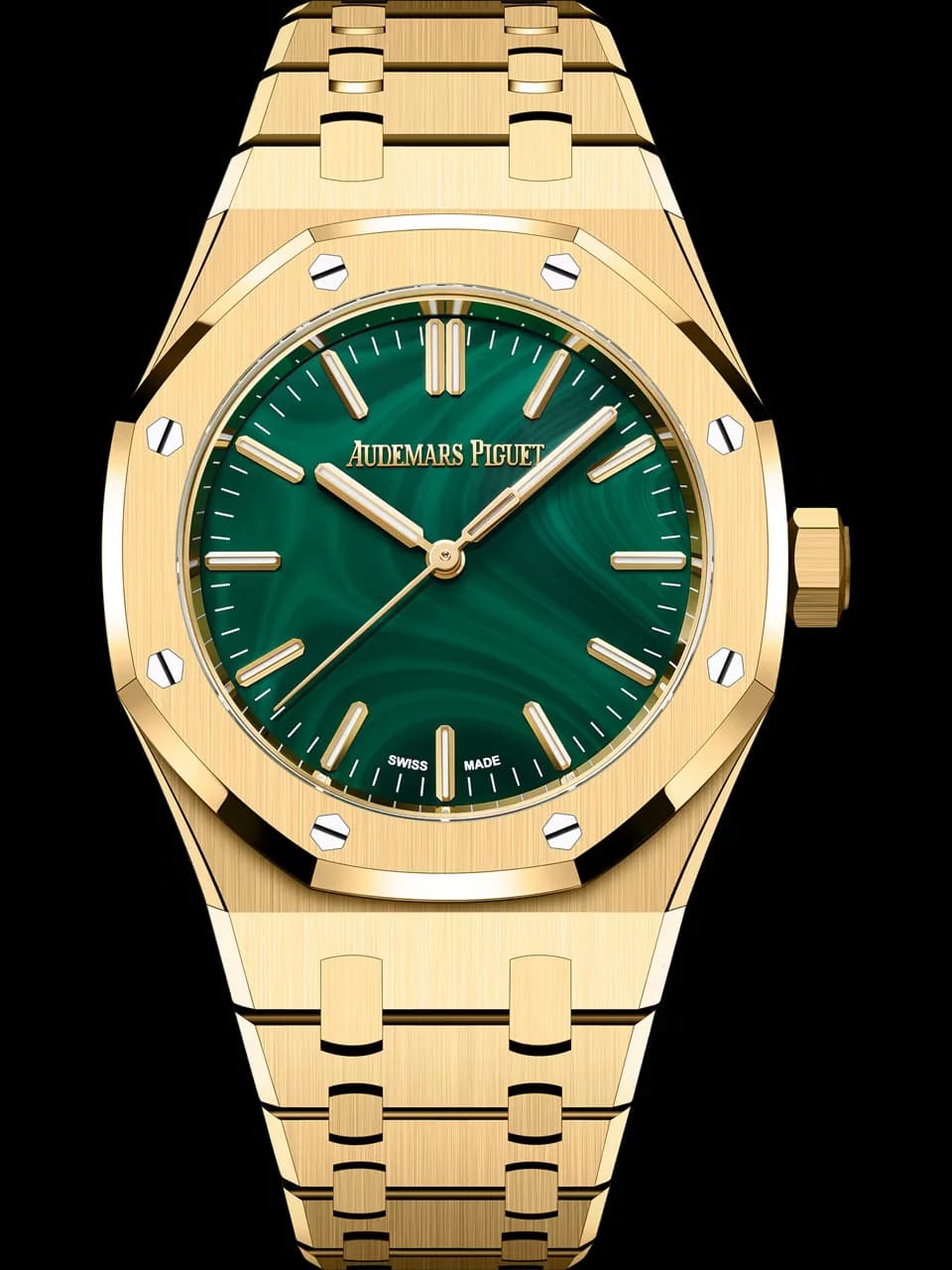
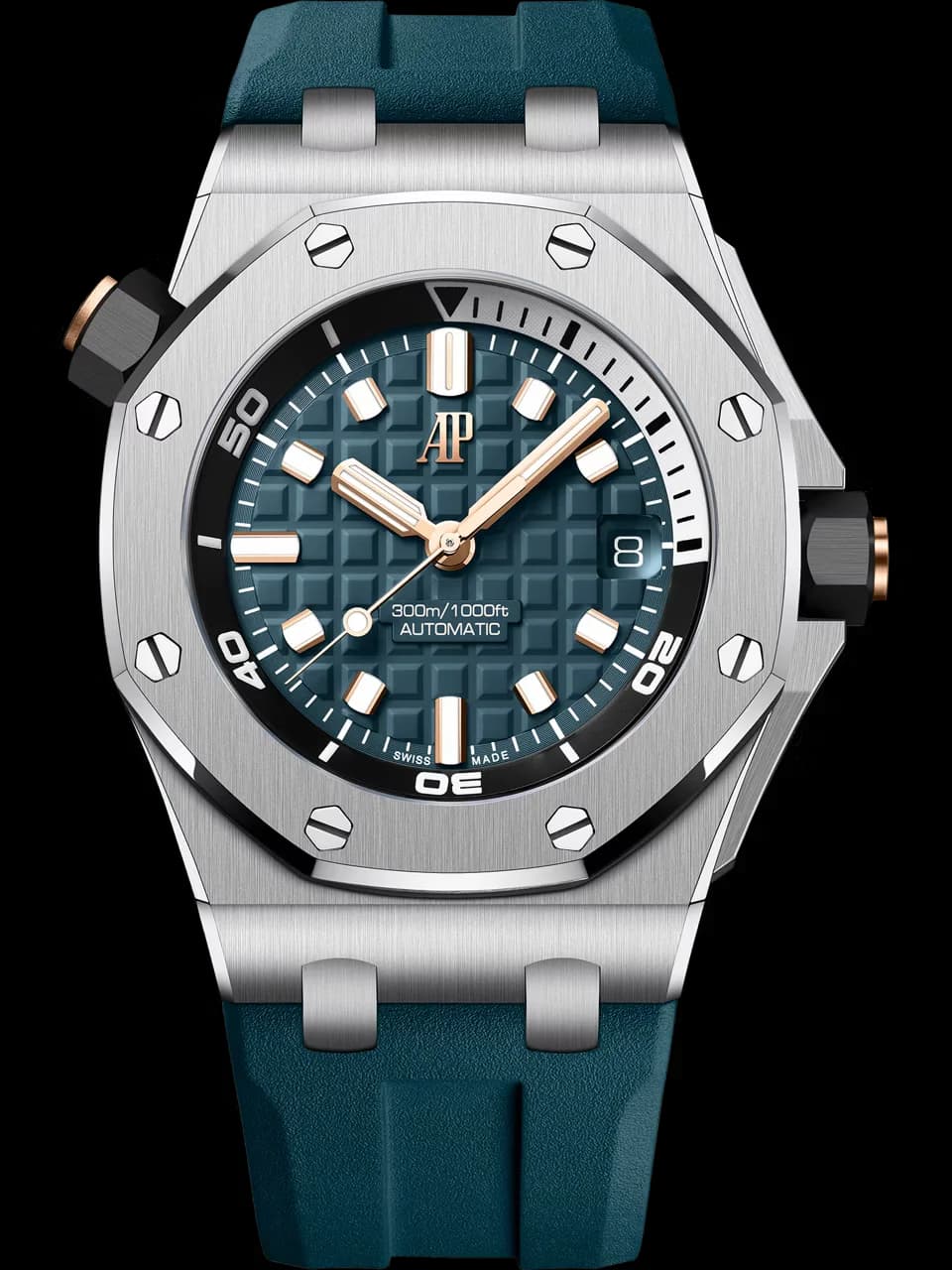
Baton indices are hour markers shaped as flat rectangular bars with straight, parallel sides and blunt ends. They do not narrow to a point, and that sets them apart from pointed marker styles. They are fairly wide, so there is room for luminous material. That means the time can be read at night.
What does a baton dial look like?
On a stick dial, a plain ring of batons or sticks runs around the edge of the dial. The markers at 12, 3, 6 and 9 are often longer, wider or doubled. This marks the main positions on the dial. Baton markers are usually made in one of two ways. Some are polished metal bars fixed to the dial. Others are simple printed lines. Thick baton markers match the style of baton hands.
Where it comes from
The name stick comes from the marker’s long, narrow shape. In the 1960s, thicker batons that glow in the dark became a typical feature of tool watches. Their width left room for luminous material, so the time could be read at night. The IWC Aquatimer and the Panerai Luminor are examples of watches with baton markers. Baton markers are still found today, on modern dress watches and on sports watches alike. Watches from Audemars Piguet, Longines and Rolex use them.
Not to be confused with
Baton and stick markers have the same basic shape. Both are straight bars that do not narrow to a tip. Where a difference is drawn, the stick is the slimmer, more delicate version, and the baton is the sturdier of the two. Dress watches usually have thin baton markers, and these thin versions are sometimes called stick markers. Thick, luminous batons are more typical of tool watches. Pointed marker styles are a separate family, because they narrow to a tip.
Checked