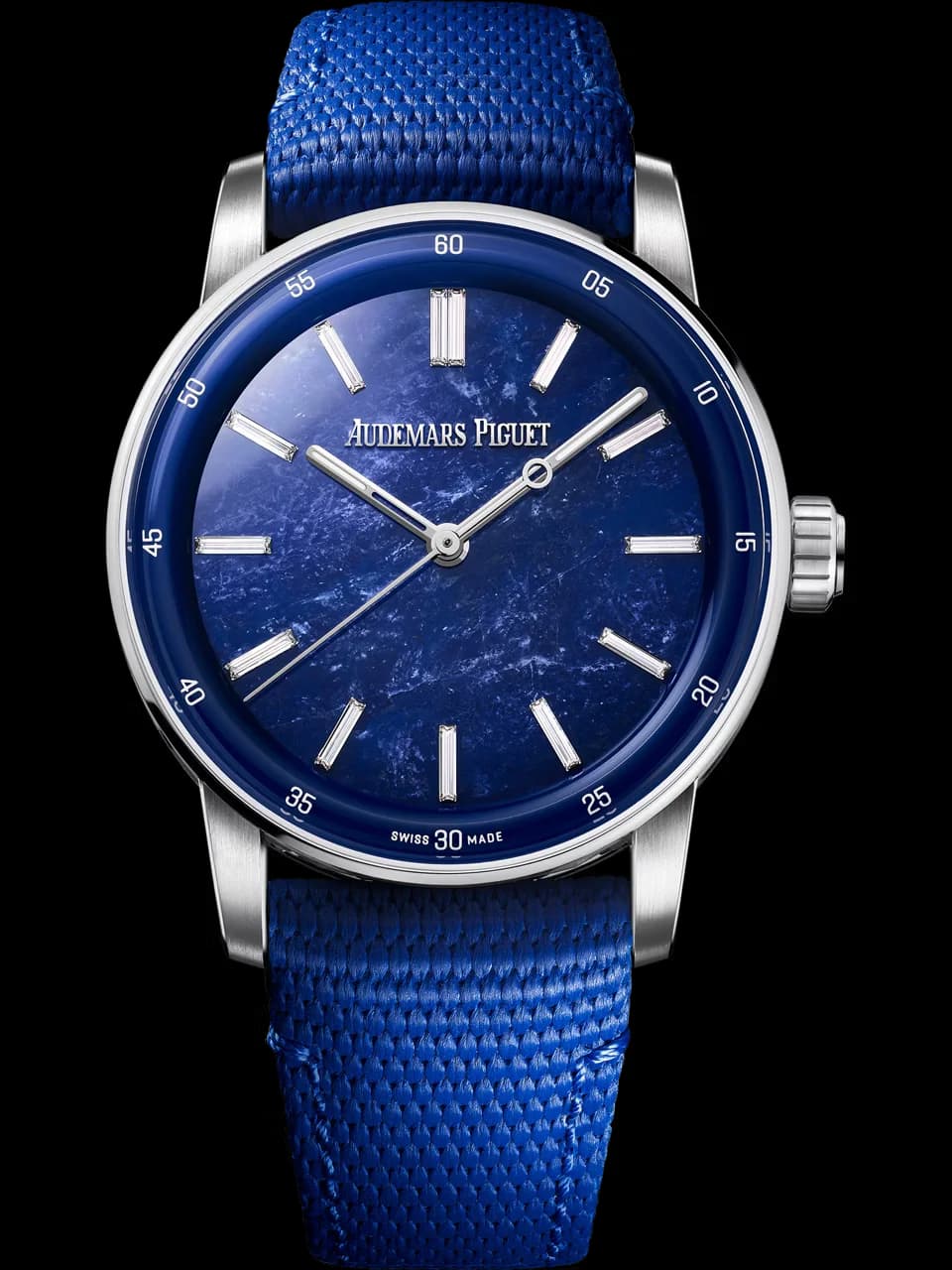
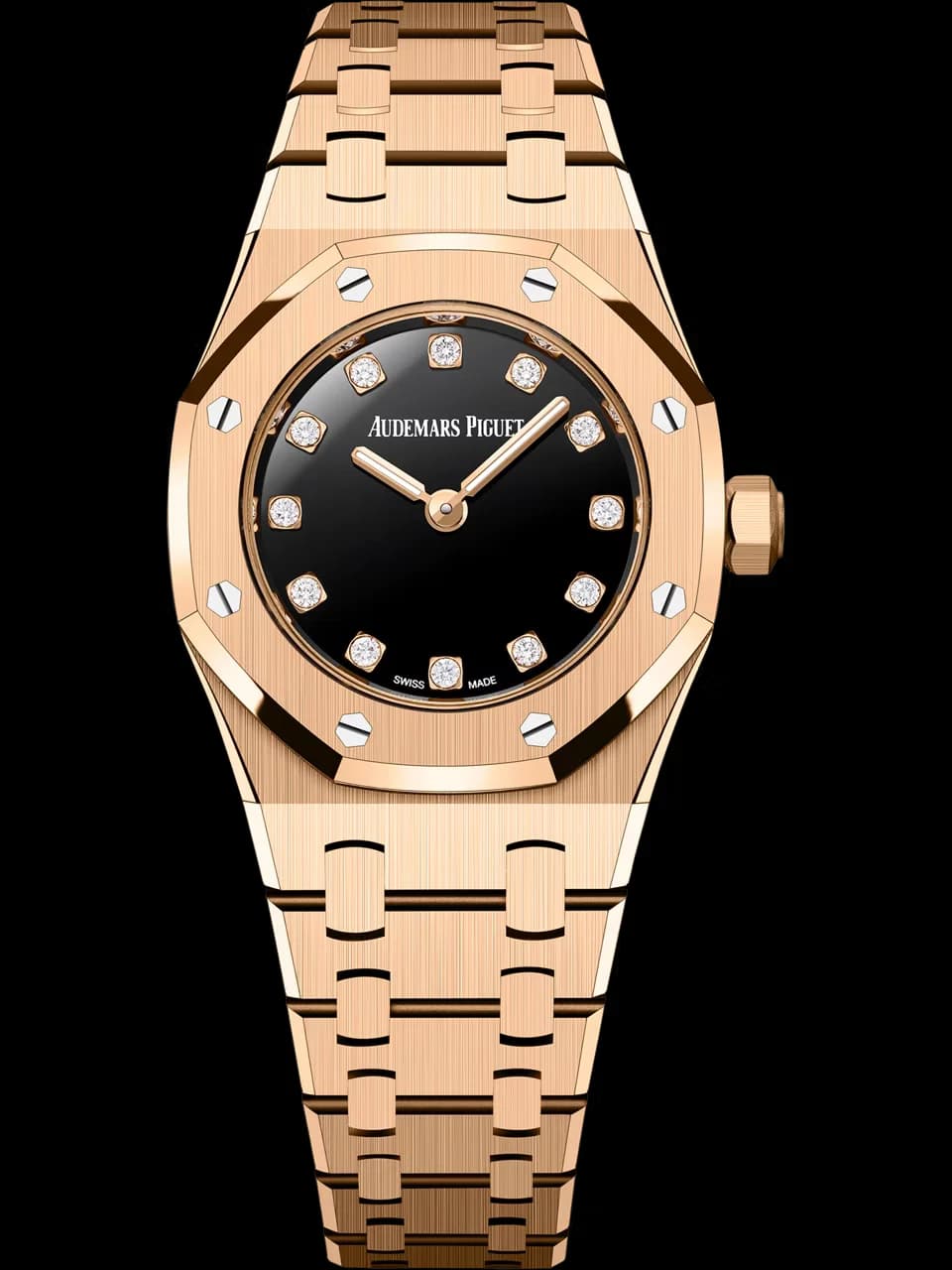
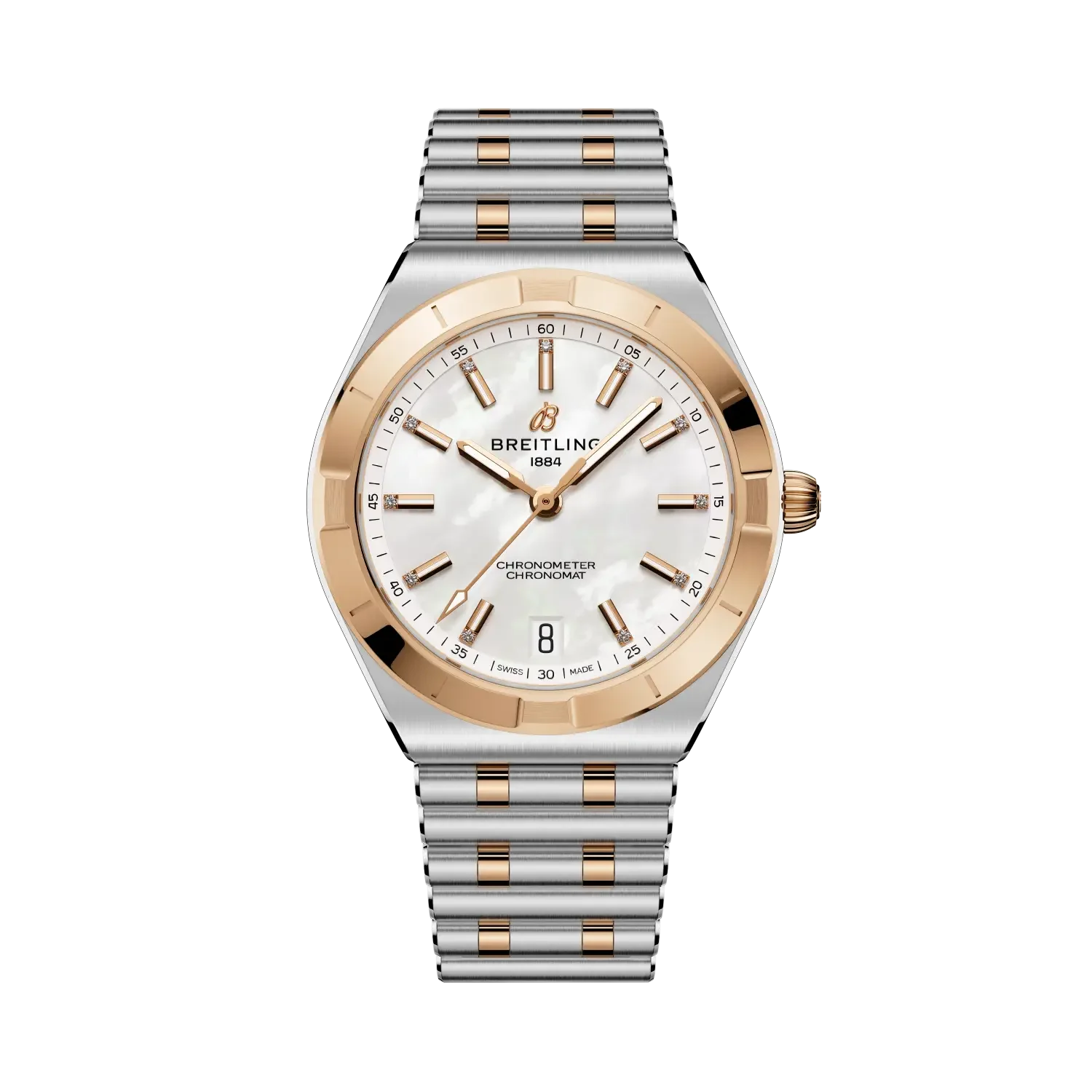
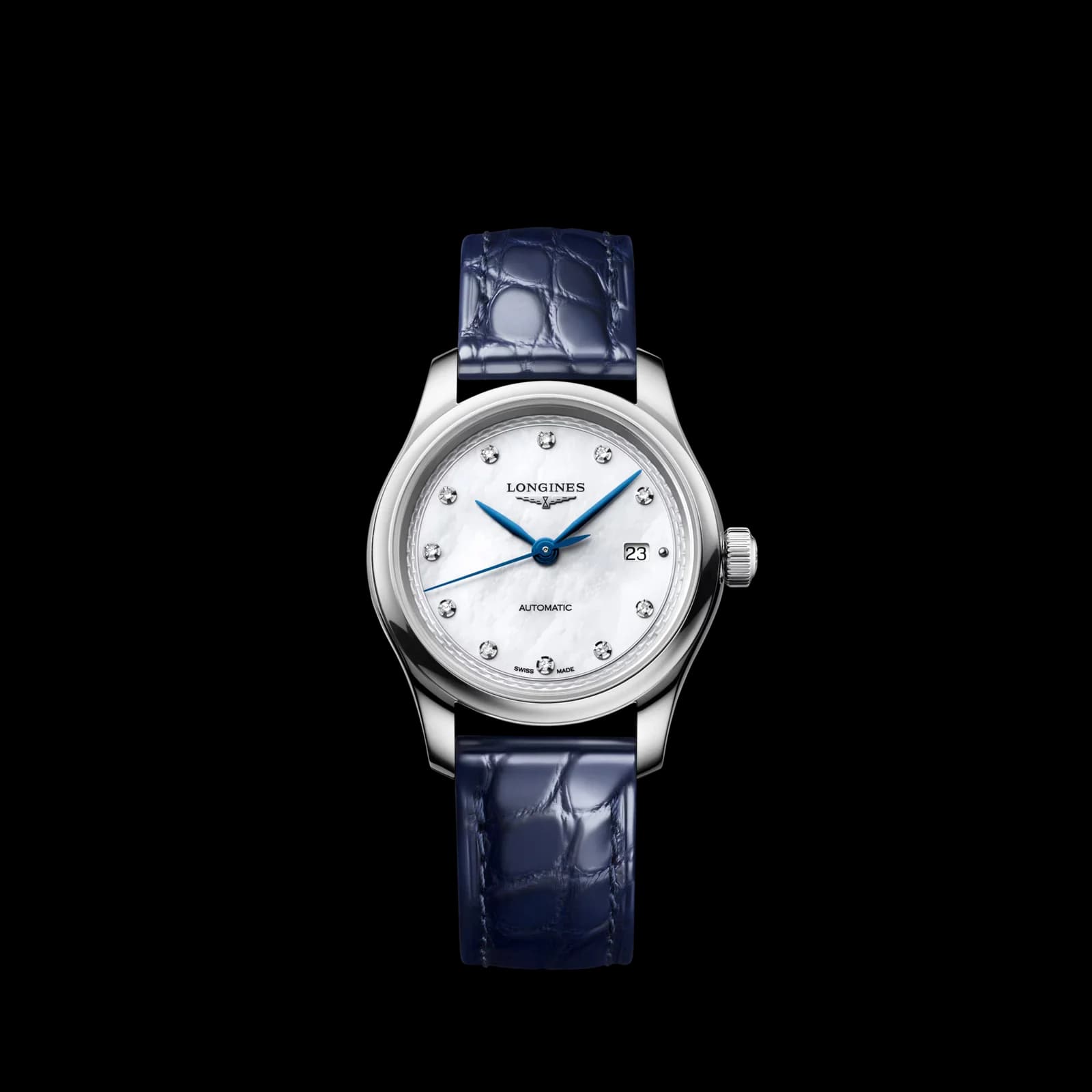
Diamond-set indices are gemstones set at the hour positions on a dial in place of ordinary markers. Unlike most hour markers, they are there for looks rather than to help read the time. They are most common on women’s watches, where they add a jewellery feel, though some men’s watches have them too.
What does a ‘Diamond’ dial mean at Rolex?
In Rolex dealer usage, a ‘Diamond’ dial is any dial where diamonds replace the normal hour markers. The jewellery word ‘serti’ means set with diamonds, and in Rolex usage it also means a diamond dial. Rolex Oyster Perpetual models with diamonds usually have diamond hour markers, which suit their plain, uncluttered dials. On factory pieces, the diamonds are laid out in regular geometric patterns typical of the brand, which helps when checking authenticity. Rolex makes its gem-set dials and bezels at a dedicated site in Chêne-Bourg, Geneva.
Not to be confused with
A pavé dial is not the same as a dial with diamond indices. On a pavé dial, stones cover the whole surface. With diamond indices, the stones sit only at the hour positions. The two ideas can be combined. One Patek Philippe Nautilus has emerald hour markers set against a background paved with diamonds.
Which stones and watches use gem-set markers?
Diamonds are not the only stone used at the hour positions. Makers also use sapphires, rubies or emeralds as hour markers. Watches with diamond markers often carry other diamond details as well, such as a gem-set bezel, so the dial is often not the only gem-set part. Diamond markers are found on watches from Rolex, Omega, Longines and TAG Heuer.
Checked