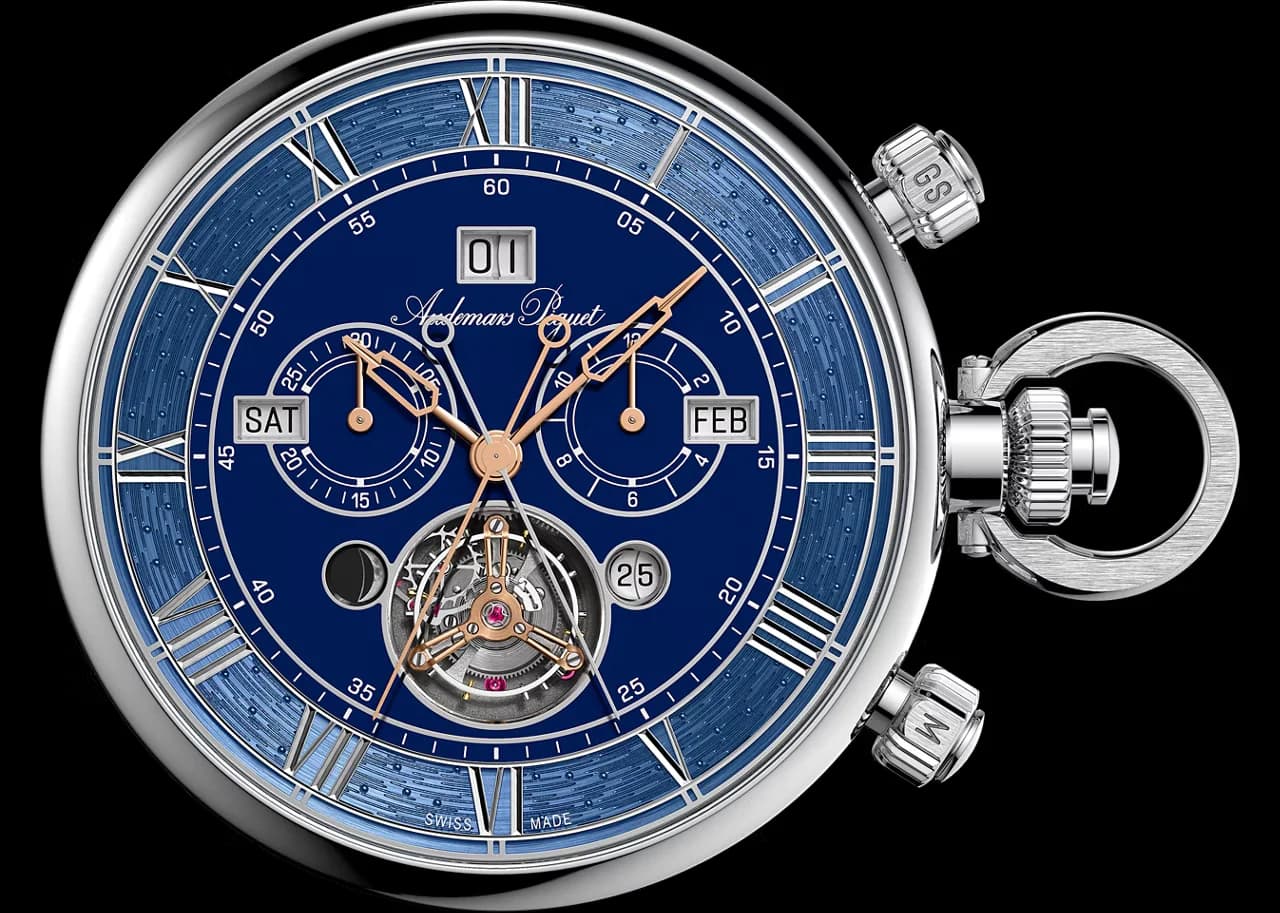
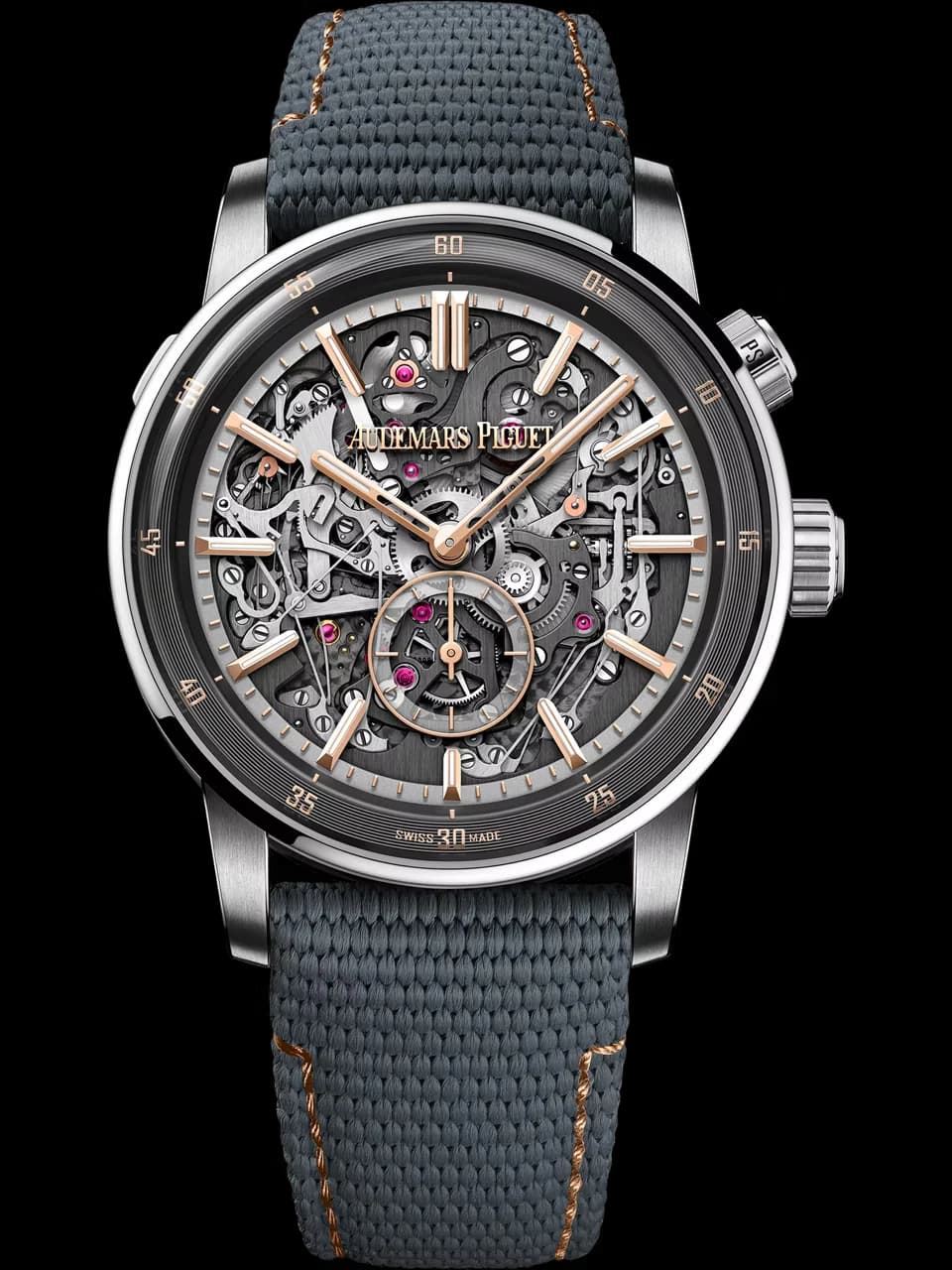
Grande sonnerie is a striking complication that sounds the time on its own at every quarter hour, giving the current hour and the number of quarters passed. It is built around a repeater, which makes it more complicated than the petite sonnerie. The result is a full reading of the time by ear.
How does a grande sonnerie work?
The watch chimes by itself at each quarter hour, much as a household clock does. The wearer does not need to press or slide anything. The chiming mechanism draws on its own barrel, whose spring is kept wound and under tension. How many times it can strike on one full winding depends on the striking mechanism and that spring. Some minute repeaters can take an add-on chiming module. A grande sonnerie cannot. Its movement has to be designed and built as one whole.
Not to be confused with
A petite sonnerie also chimes on its own, but it does not sound the hour again at each quarter. It also lacks a repeater at its core, so it is the simpler mechanism. Modern sonnerie watches often include both, and the wearer can switch between grande and petite modes. A minute repeater is different again. It stays silent until the wearer starts it by hand, usually with a slide on the side of the case. A sonnerie needs no such action.
Where it comes from
Watches that chime go back to striking pocket watches of the 1400s. Fitting a grande sonnerie into a wristwatch took far longer. The first grande sonnerie wristwatch was not made until 1992. Philippe Dufour presented a handmade 41 mm wristwatch with a grande sonnerie. Today the complication appears in watches from Audemars Piguet, Patek Philippe and Breguet.
Checked