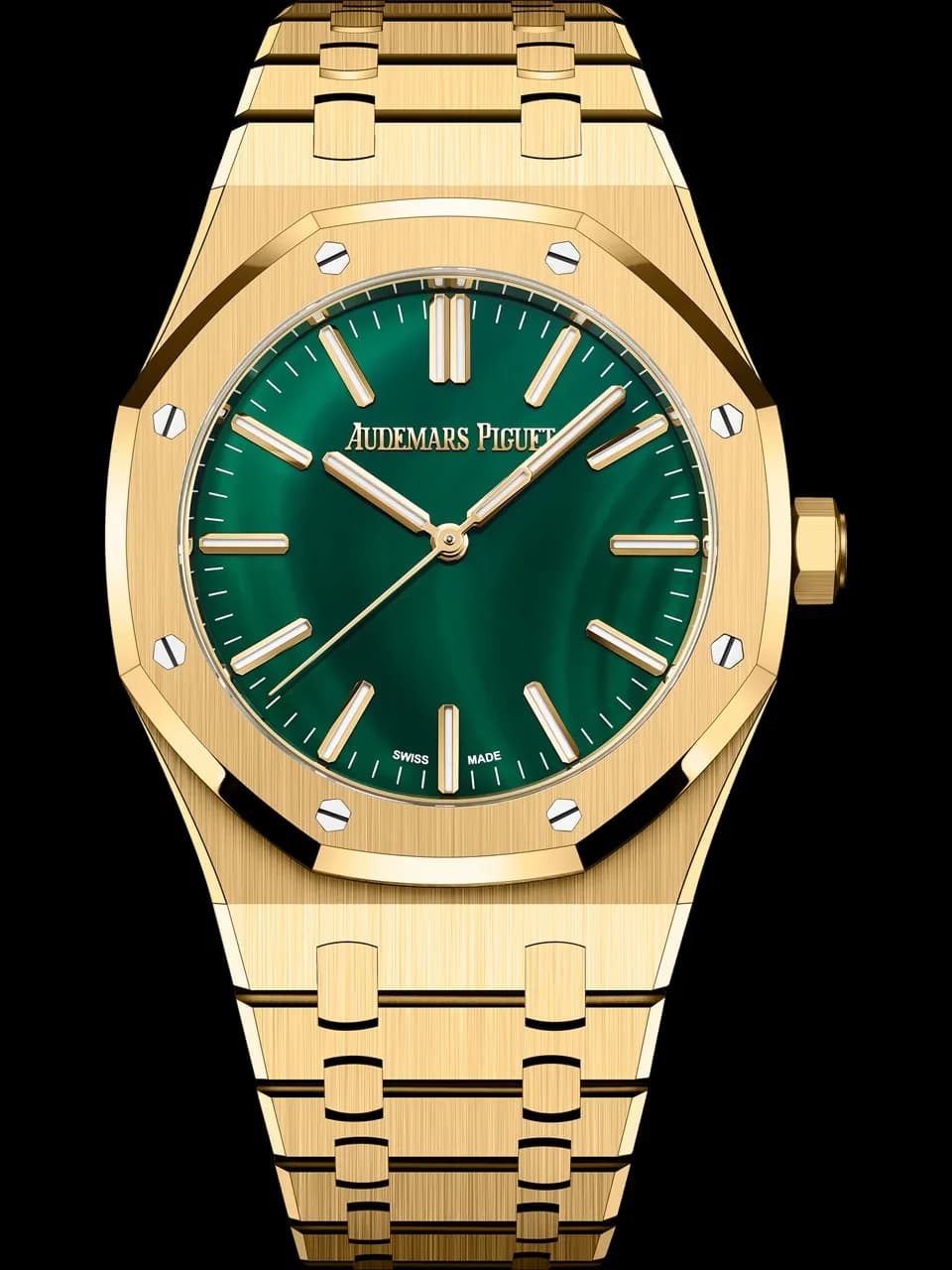
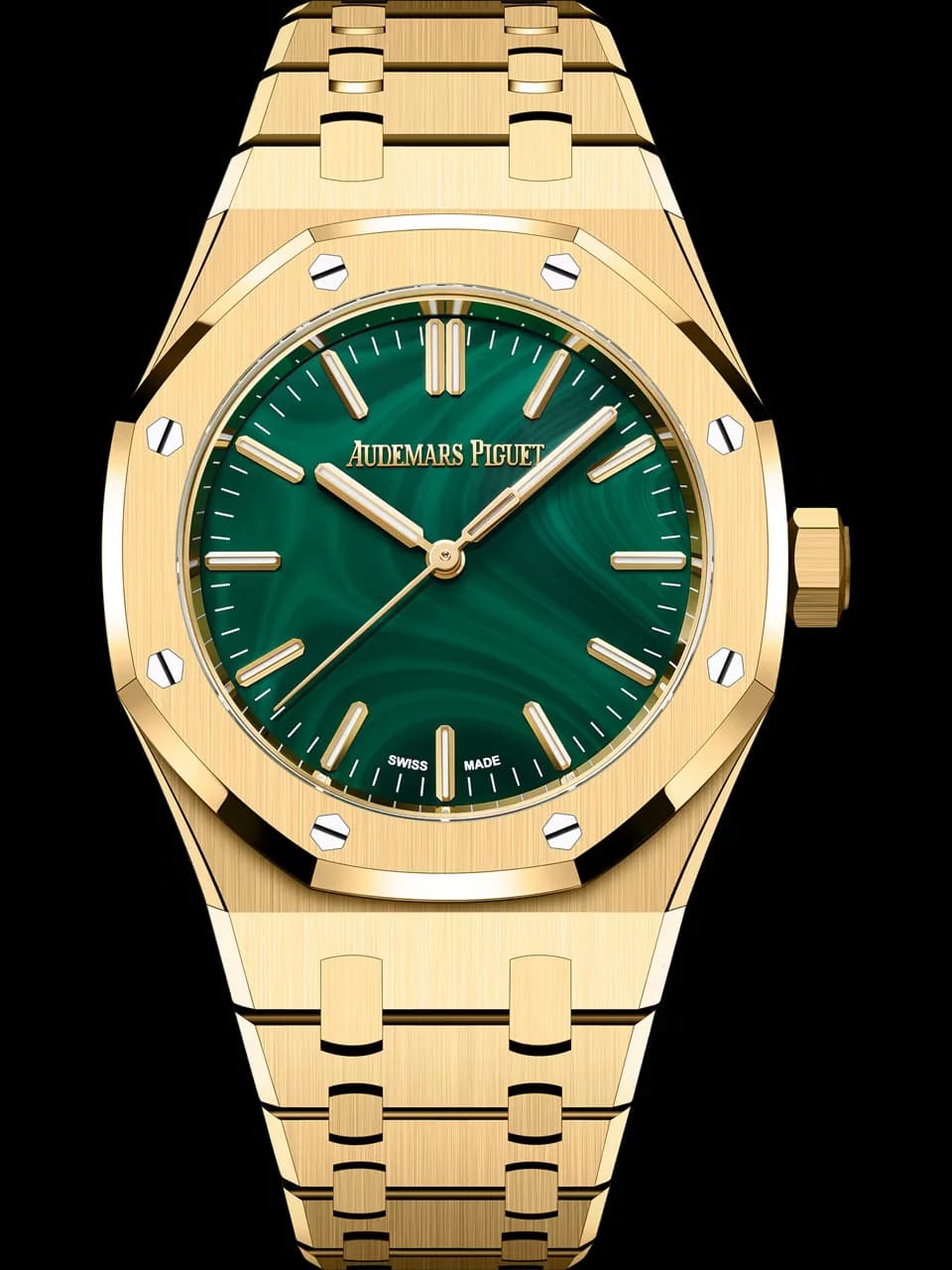
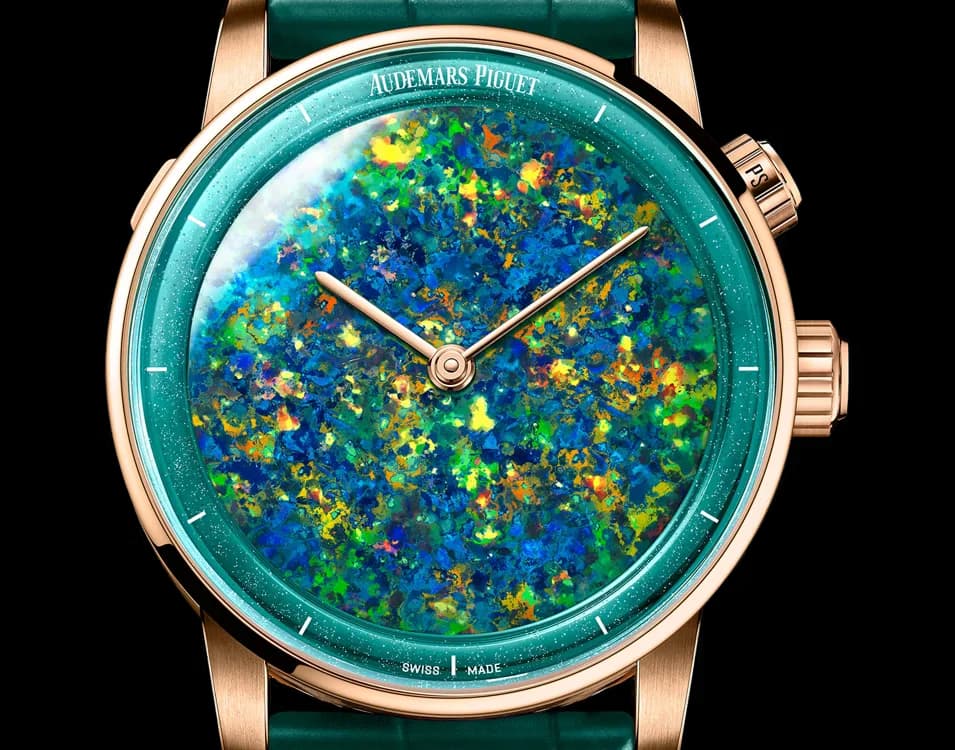
A hard stone dial is a watch dial made from a thin slice of ornamental stone, such as lapis lazuli, malachite, tiger’s eye, jade or onyx. Because the stone is natural, no two dials look exactly alike. Each one is cut from the stone itself rather than made on a production line.
How is a hard stone dial made?
The stone is cut down to a very thin slice, typically only about 0.3 to 0.5 mm thick. Once it has been finished, it is glued to a supporting dial base, usually brass or gold. The work is delicate, and flaws in the stone add to the risk. A very high share of dials fail during production. Stones often broke while being cut or polished, and some cracked even while the hands were being fitted.
Where it comes from
Stone inlay, known as pietra dura, grew out of Renaissance Florentine mosaic. It probably came into watchmaking in the 1800s. Stone dials became practical in 1957, when Piaget brought out its very thin calibre 9P movement. In 1963 Piaget started selling watches with dials of lapis lazuli, jade, malachite and opal. It usually covered the whole dial with one thin slab of stone. Sometimes it paired two different stones, one for the centre and one for the outer ring.
Which watchmakers used stone dials?
In the 1970s Rolex offered a wide range of stone dials on its Datejust and Day-Date models. Stern Frères, a specialist dial maker, was another major producer. Stone dials also appear on watches from Omega, Piaget and Audemars Piguet. Whichever the maker, the dial is cut from natural stone, so its pattern belongs to that one dial and is not a copy of the next.
Checked