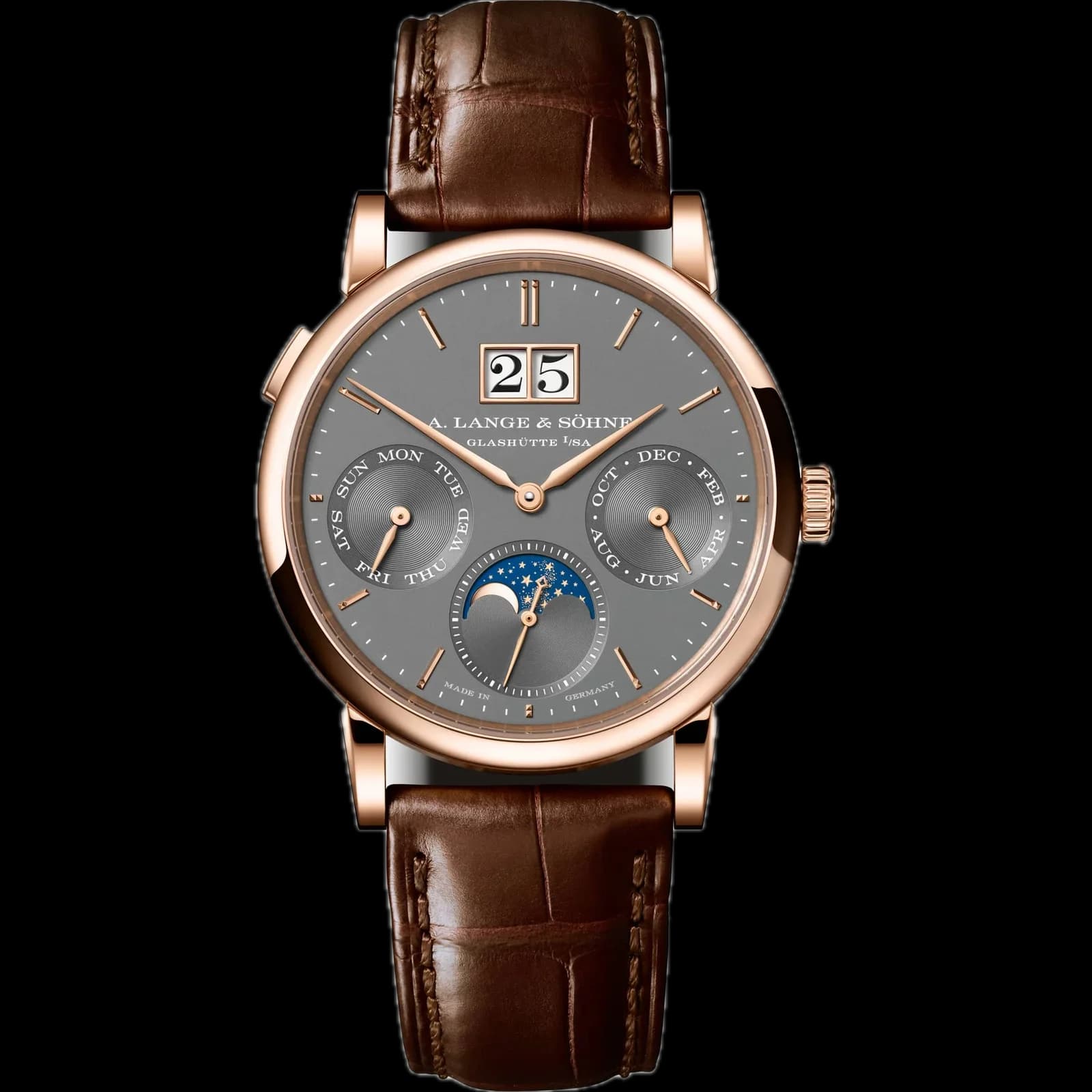
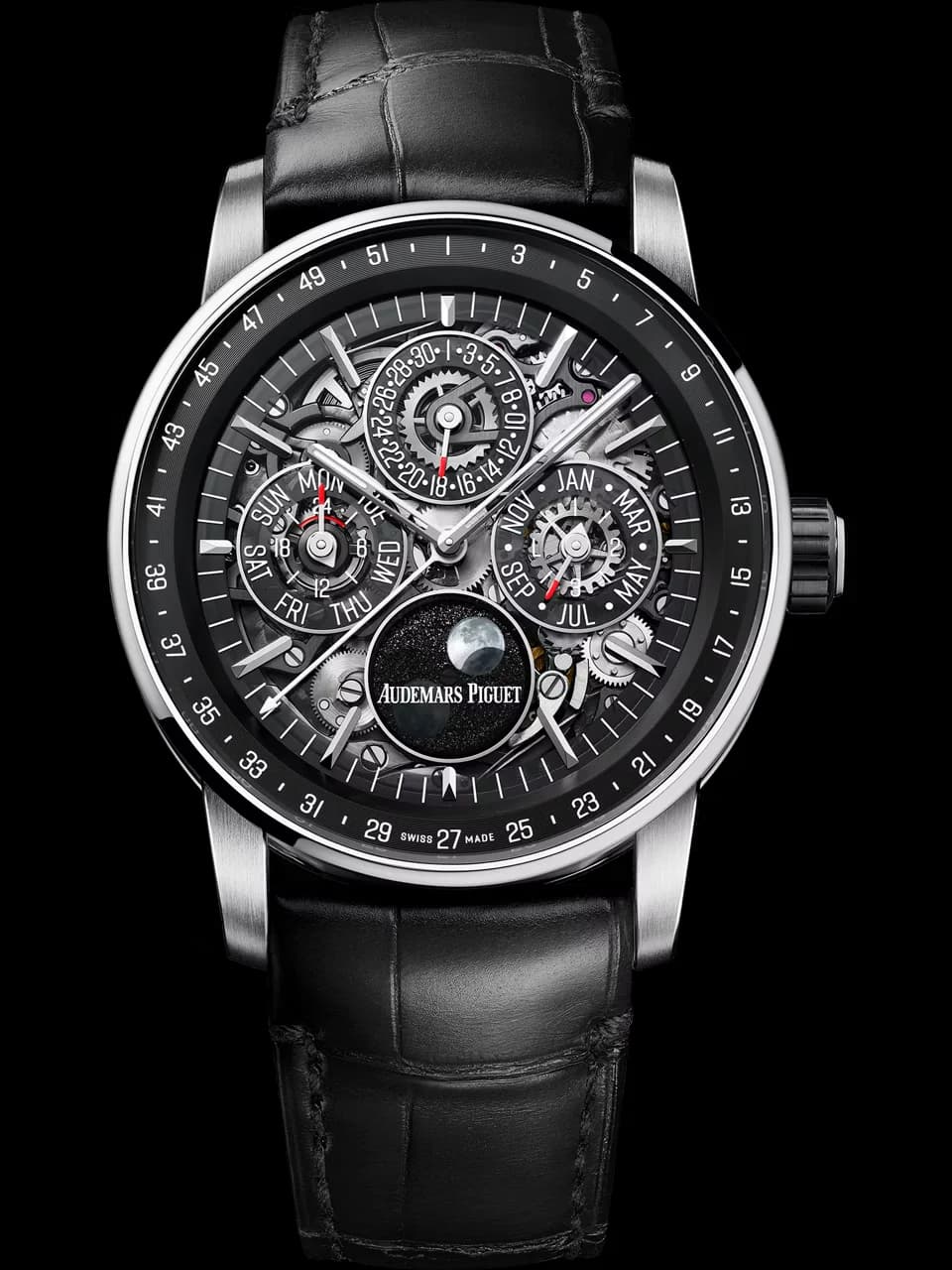
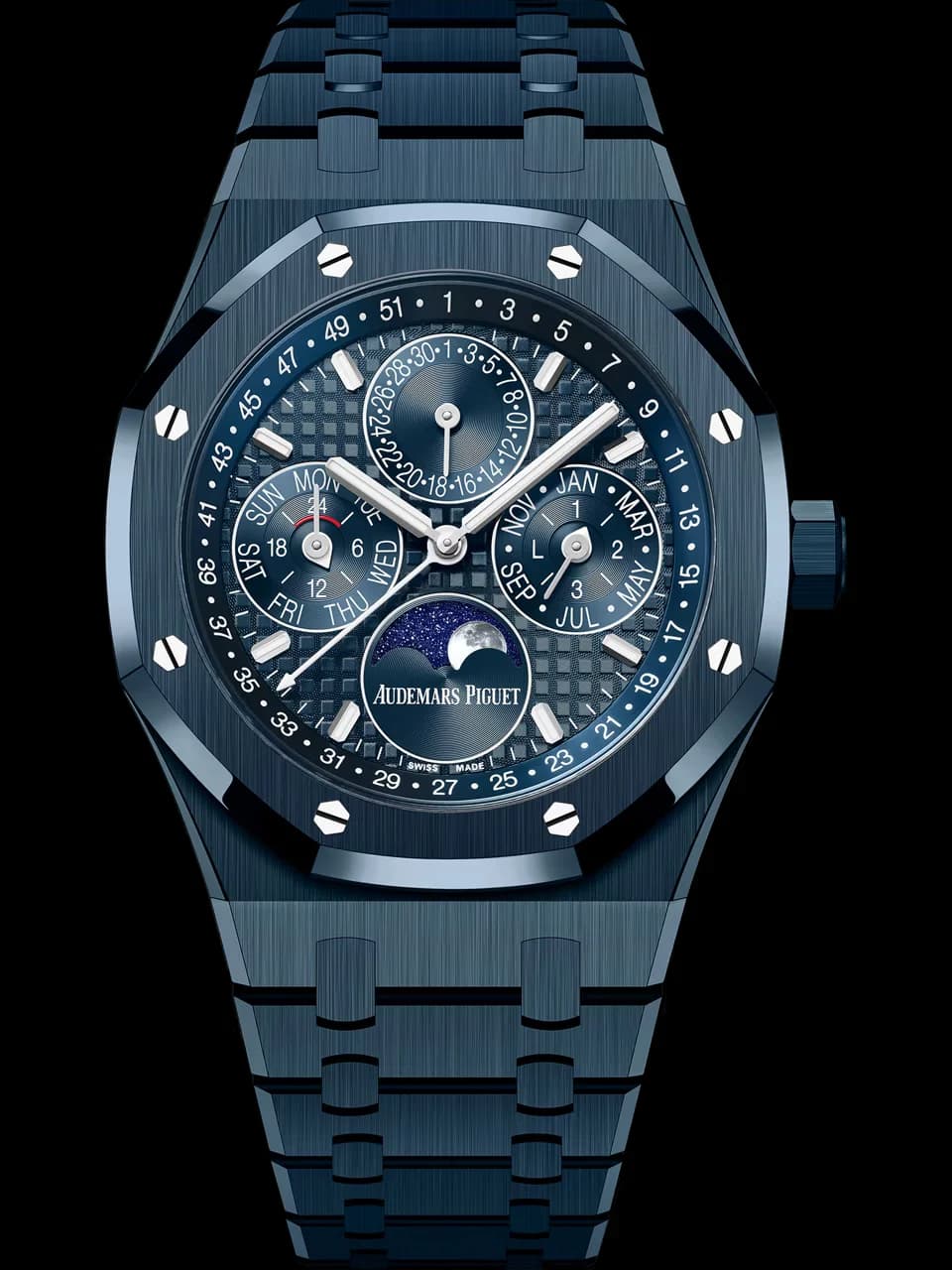
A moon phase is a complication that shows on the dial how the Moon currently looks from Earth. It displays the lit part of the Moon’s face as an observer on Earth sees it. It was first made for practical tasks, such as checking the calendar and navigating.
How does a moon phase work?
Most moon phase displays work from a wheel with 59 teeth. It moves forward by one tooth each day. A common layout uses a small opening in the dial. Behind it sits a night-sky disc printed with two full moons. Because the disc carries two moons, each lunar cycle on the display lasts 29.5 days. Not every watch uses a flat disc. Some show the phase with a turning sphere that is half gold and half dark. Others show no picture of the Moon at all. They simply count the day of the lunar cycle on a numbered scale.
How accurate is a moon phase?
The real synodic month is slightly longer than the display’s 29.5 days. It lasts about 29 days, 12 hours and 44 minutes. That small gap adds up over time. A standard 59-tooth display falls a full day behind roughly every two years and seven months. Precision versions add a gear with 135 teeth. This cuts the error to about one day in 122 years.
Where it comes from
Lunar phase displays have been part of mechanical timekeeping since it began in the 14th century. Monumental astronomical clocks such as the Prague Orloj have shown the Moon’s position since the 1300s. Moon phases first appeared on table clocks around the 1500s and later moved into pocket watches. Breguet led the way in pocket watches: its No. 5 of 1794 already had one. Today the complication appears on watches from Patek Philippe, IWC Schaffhausen and Audemars Piguet.
Checked