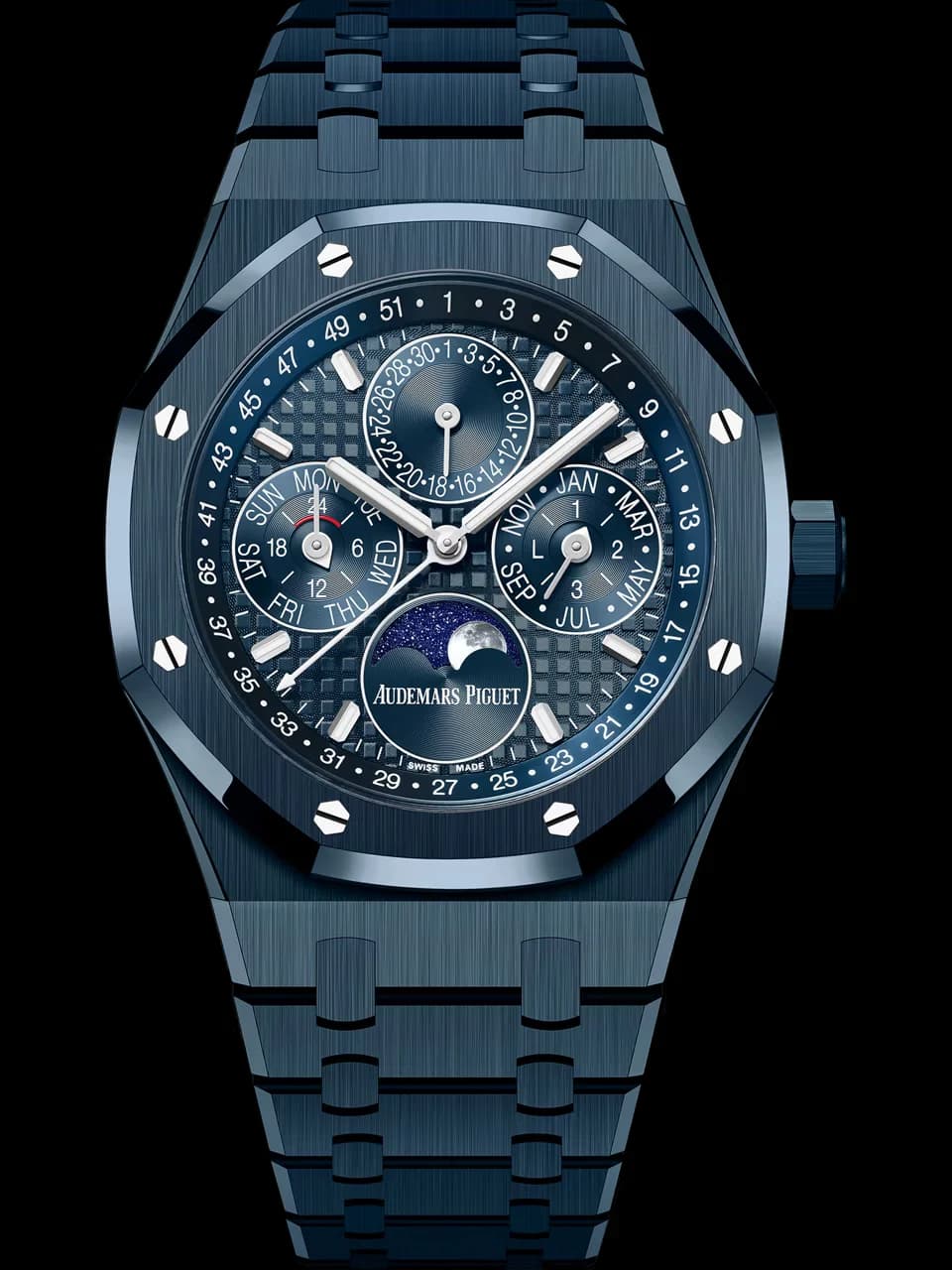
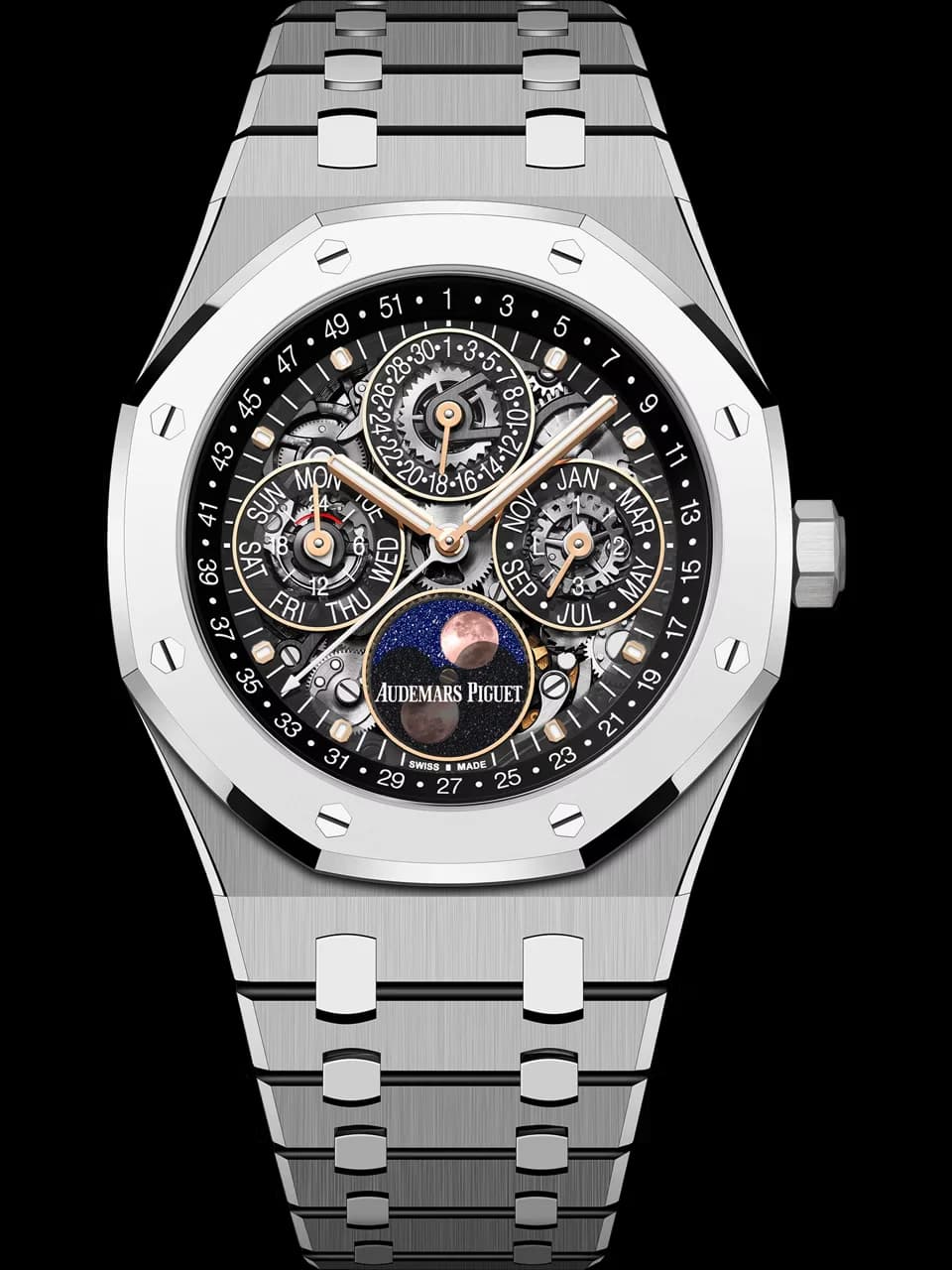
A perpetual calendar is a watch mechanism that keeps showing the correct date without manual help. It allows for months of different lengths and for leap years. So the owner does not need to correct the date at the end of short months or after February, as simpler calendar watches require.
How does a perpetual calendar work?
The key part is a programme wheel or disc. It carries notches and steps. These set how long each month is and when leap years fall. As the date moves on, the mechanism reads this programme. It then knows whether a month is short or long. It also knows whether February gains an extra day that year. The date jumps to the first of the next month at the right moment. No one has to push it forward with the crown.
Will a perpetual calendar ever need setting?
Yes, in most cases. A standard perpetual calendar handles most leap years correctly. It will go wrong in 2100, because 2100 is not a leap year in the Gregorian calendar. Most perpetual calendar watches will need to be set by hand on 1 March 2100. A secular perpetual calendar goes further. It also follows the Gregorian calendar’s 400-year leap-year cycle, so it allows for years like 2100 as well.
Where it comes from
The perpetual calendar was used in clocks before it reached watches. The English watchmaker Thomas Mudge is believed to have made the first perpetual calendar pocket watch. He is often named as the first to put the mechanism into a watch. It first appeared in a wristwatch in 1925. Patek Philippe made it by reworking a Victorin Piguet movement first built for a pendant watch. That earliest wristwatch was sold to Thomas Emery.
Not to be confused with
An annual calendar is simpler. It cannot handle February, so it has to be corrected by hand once a year, on 1 March. A complete calendar is simpler still. It does not know how long each month is, so its date has to be corrected at the end of every short month. Outside watchmaking, a perpetual calendar means something else: a calendar that works across many years. It is often used to find the weekday for any past or future date.
Checked