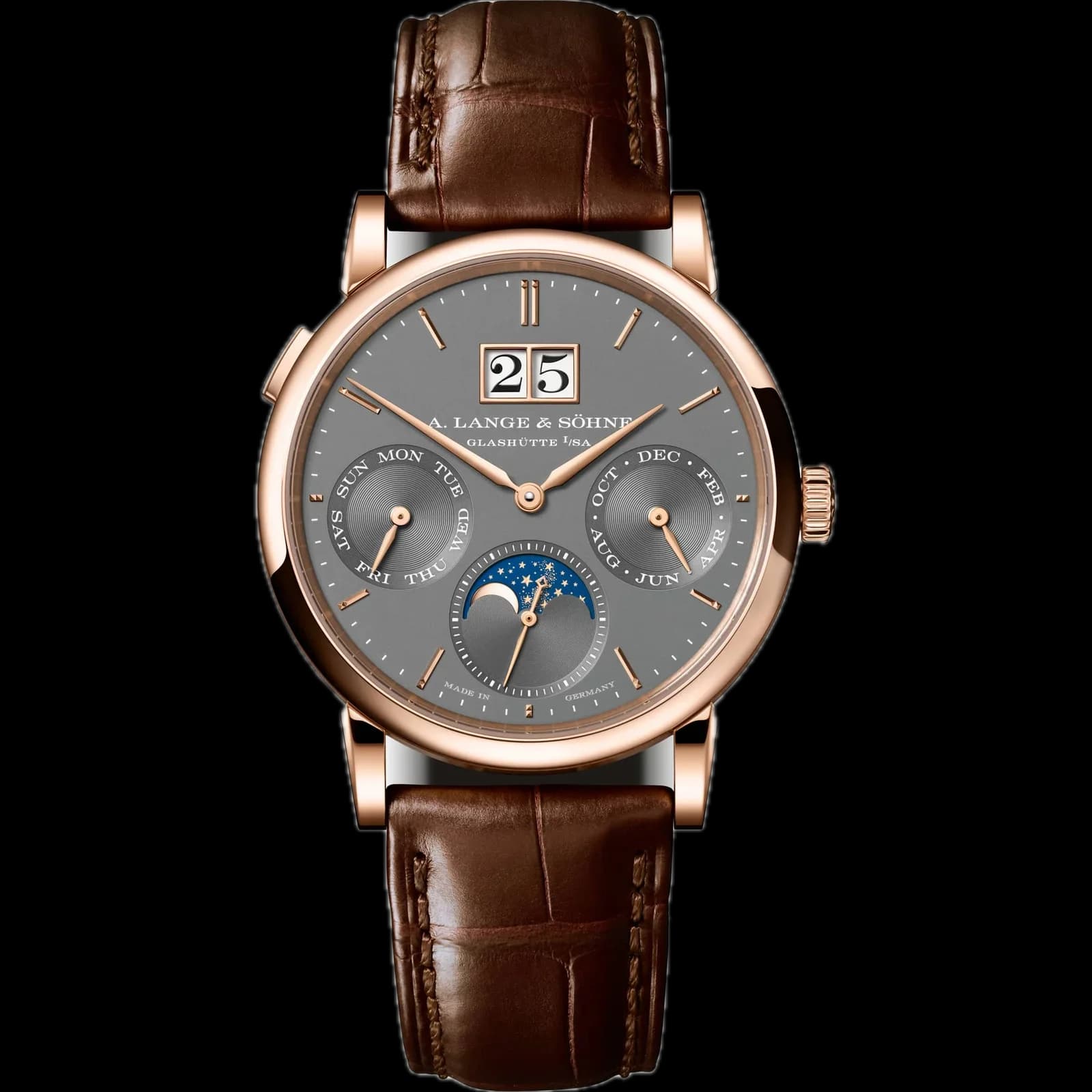
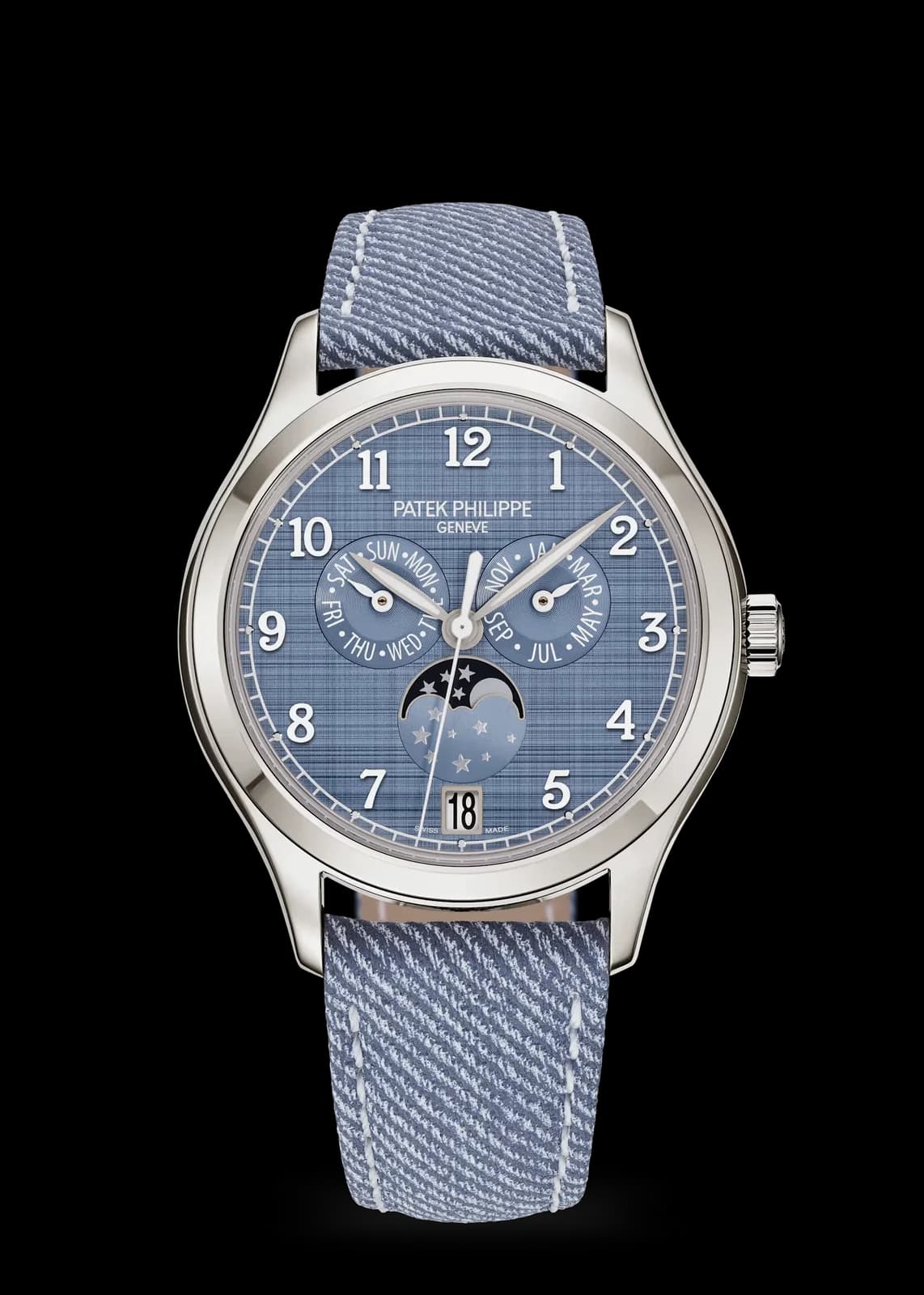
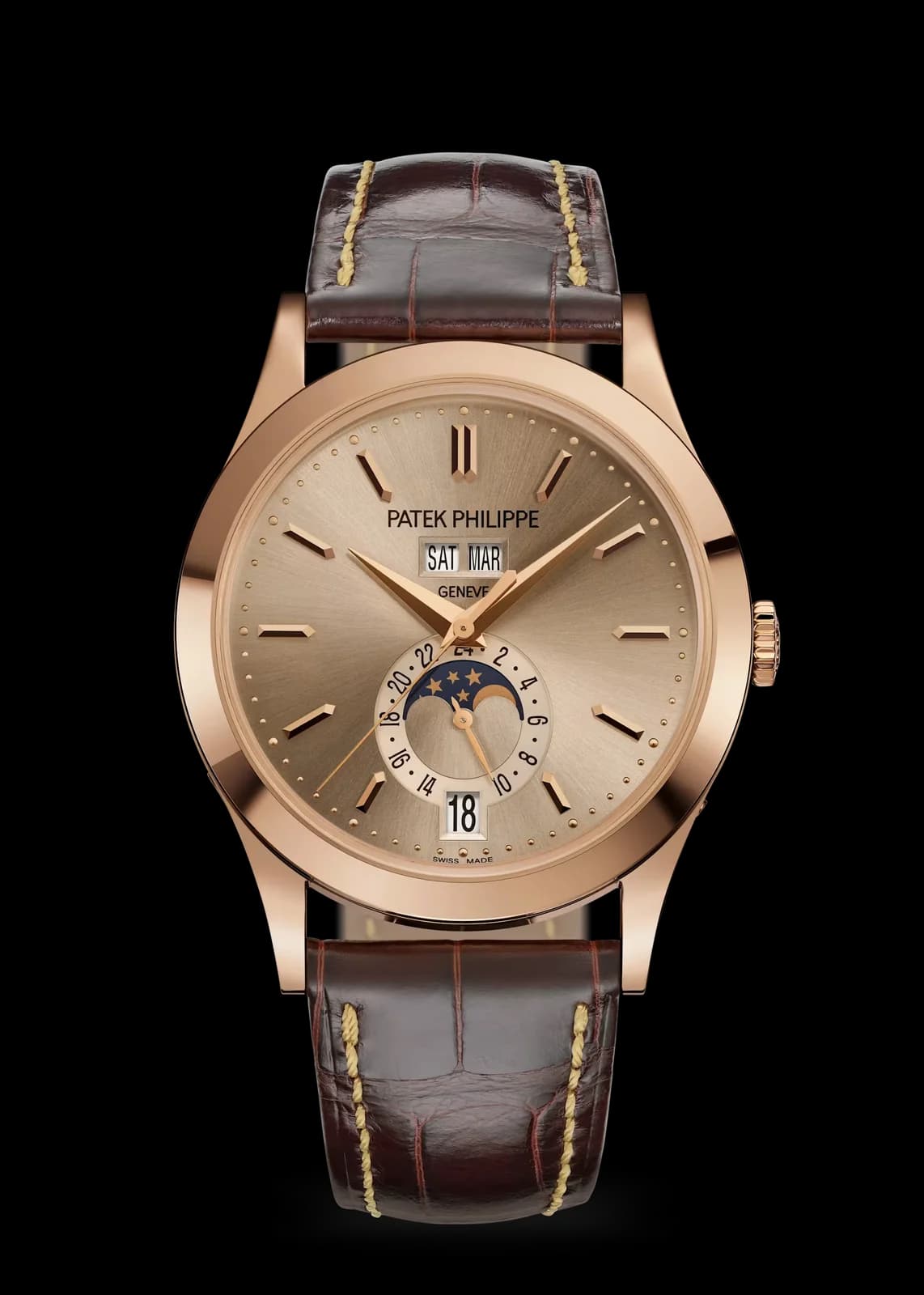
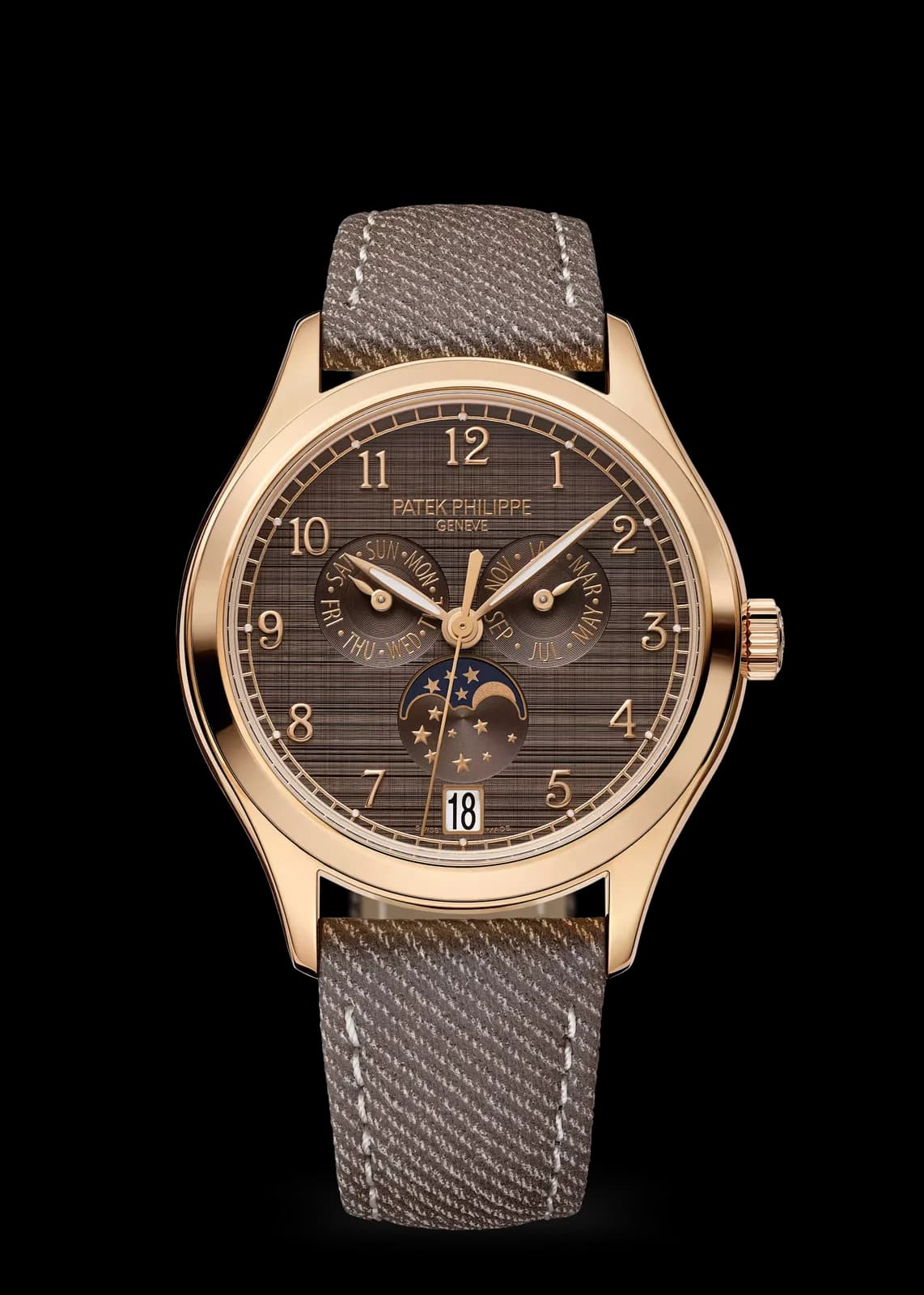
An annual calendar is a watch complication that tells 30-day months from 31-day months by itself. It needs setting by hand only once a year, after February. That puts it in a middle ground: the watch looks after the long and short months, and only February is left to the owner.
How does an annual calendar work?
An annual calendar usually shows the date, the weekday and the month. How these are laid out on the dial varies from model to model. What sets it apart from simpler calendars is that it knows by itself which months have 30 days and which have 31. When a 30-day month ends, the date moves on to the 1st without help. The same happens at the end of a 31-day month. The owner does not need to touch the crown for any of these changes.
When does an annual calendar need setting?
The mechanism does not follow February. February is shorter than any other month, so the calendar cannot keep track of it by itself. In practice, the wearer corrects the date by hand on 1 March. This is the one correction the calendar needs each year. For the rest of the year, the watch keeps the date, the weekday and the month in step on its own.
Where it comes from
Patek Philippe brought out the annual calendar in 1996. That year it showed the first wristwatch with the complication, Reference 5035, at Baselworld. The firm patented the mechanism and says it invented it. It calls the annual calendar the best known of its practical complications. Patek Philippe also pairs it with other complications, such as moon phases, chronographs and minute repeaters. Omega and Carl F. Bucherer also make watches with an annual calendar.
Not to be confused with
A complete calendar shows the same information as an annual calendar: the date, the weekday and the month. The main difference is that a complete calendar does not know how long each month is. It cannot tell a 30-day month from a 31-day month, so the owner has to step in more often. An annual calendar handles those months by itself and leaves only February to the owner.
Checked