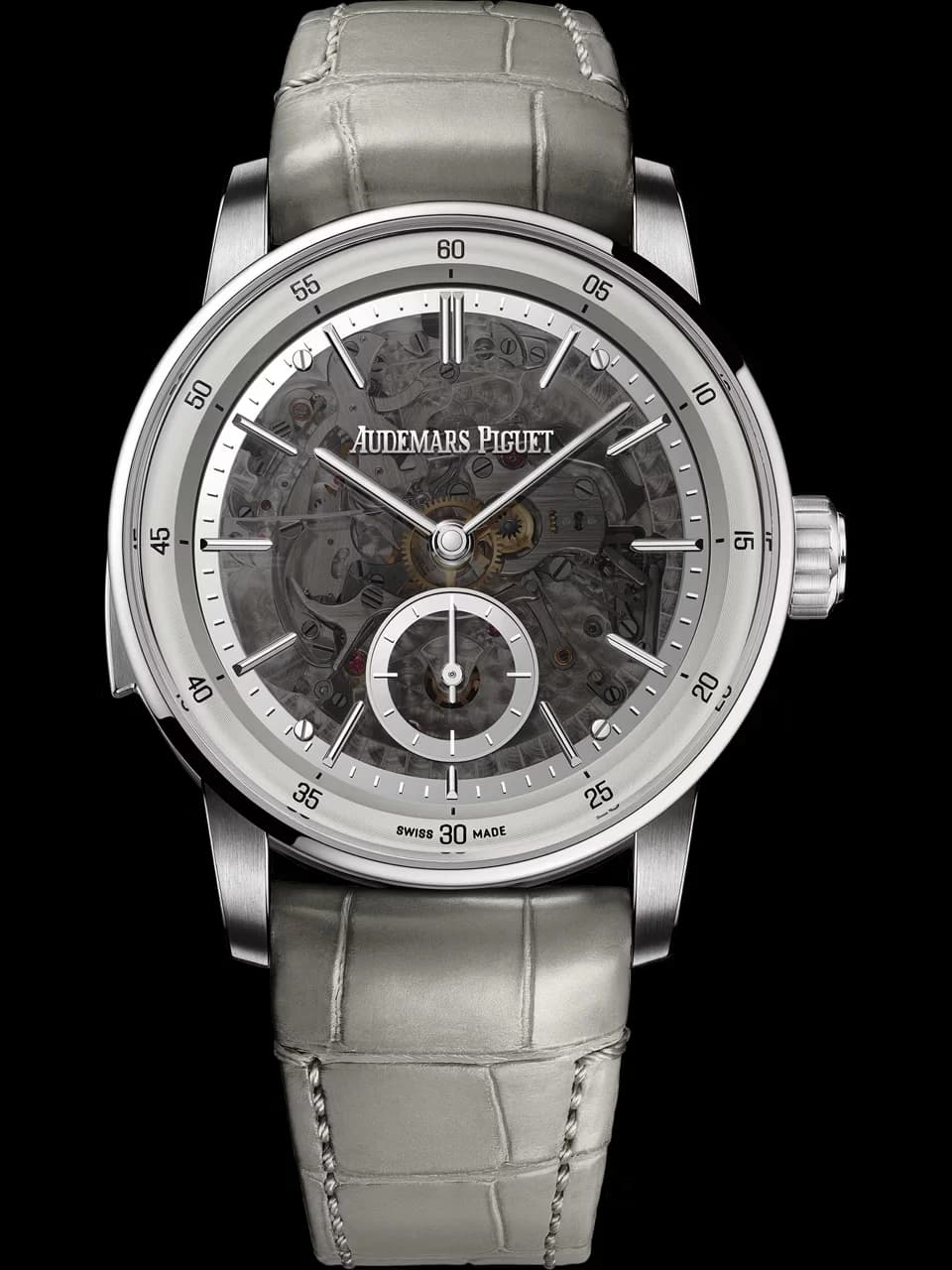
What is synthetic sapphire?
The sapphire used in watchmaking is man-made. It is crystalline aluminium oxide, grown at very high temperatures. Sapphire is a form of the mineral corundum, and ruby is the red variety of the same mineral. It counts as a crystal rather than a glass. Most synthetic sapphire is still made by a method Auguste Verneuil developed in 1902. Known as the Verneuil or flame fusion process, it melts alumina powder in a hydrogen flame.
How is a sapphire dial made?
Only diamond is harder than sapphire. That makes the material hard to machine. The raw sapphire is cut with diamond saws, then ground and polished into its finished shape. A dial is a demanding part to make. It needs mounting points and openings cut into it, and each one has to be worked into a very hard material. The job falls to specialist sapphire processors. The same firms also make watch crystals, cases and movement parts from sapphire.
Why does a tinted sapphire dial change colour?
A sapphire dial can be clear, or tinted or smoked. On a tinted dial, such as the one on Christopher Ward’s C60 Sapphire, the colour seems to change with the light. The reason sits behind the dial. Light reflects off the movement, so the dial looks different as the light around it changes. Sapphire dials also appear on Zenith’s DEFY Extreme, which pairs one with skeletonised sub-dials.
Not to be confused with
A transparent dial is fully see-through. A translucent dial is not the same thing. Its material lets light pass, but it is opaque rather than clear. Light gets through, yet whatever lies behind the dial stays hidden. A sapphire dial is transparent, so the wearer can see the movement behind it. A translucent dial keeps the movement out of sight.
Checked