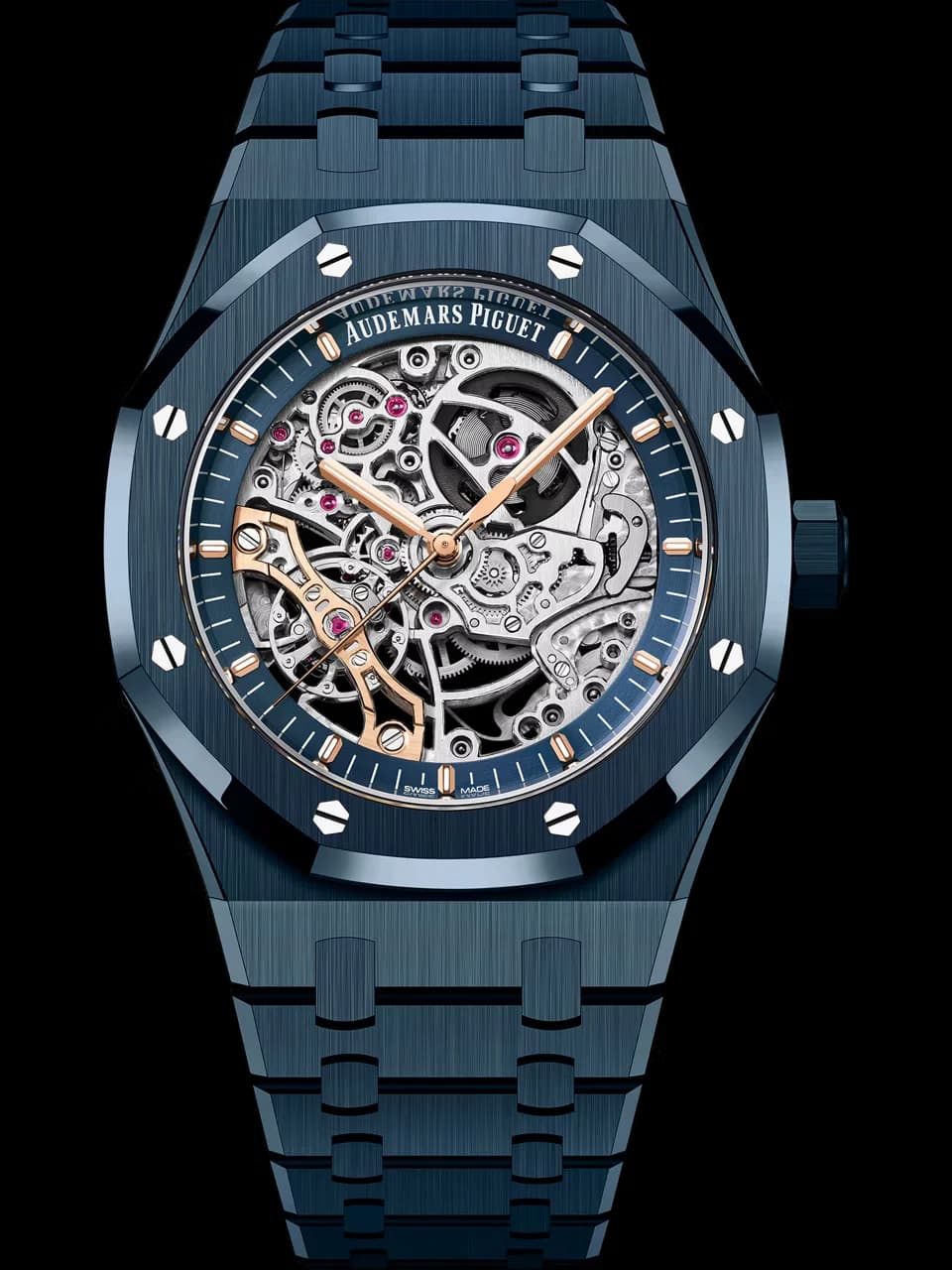
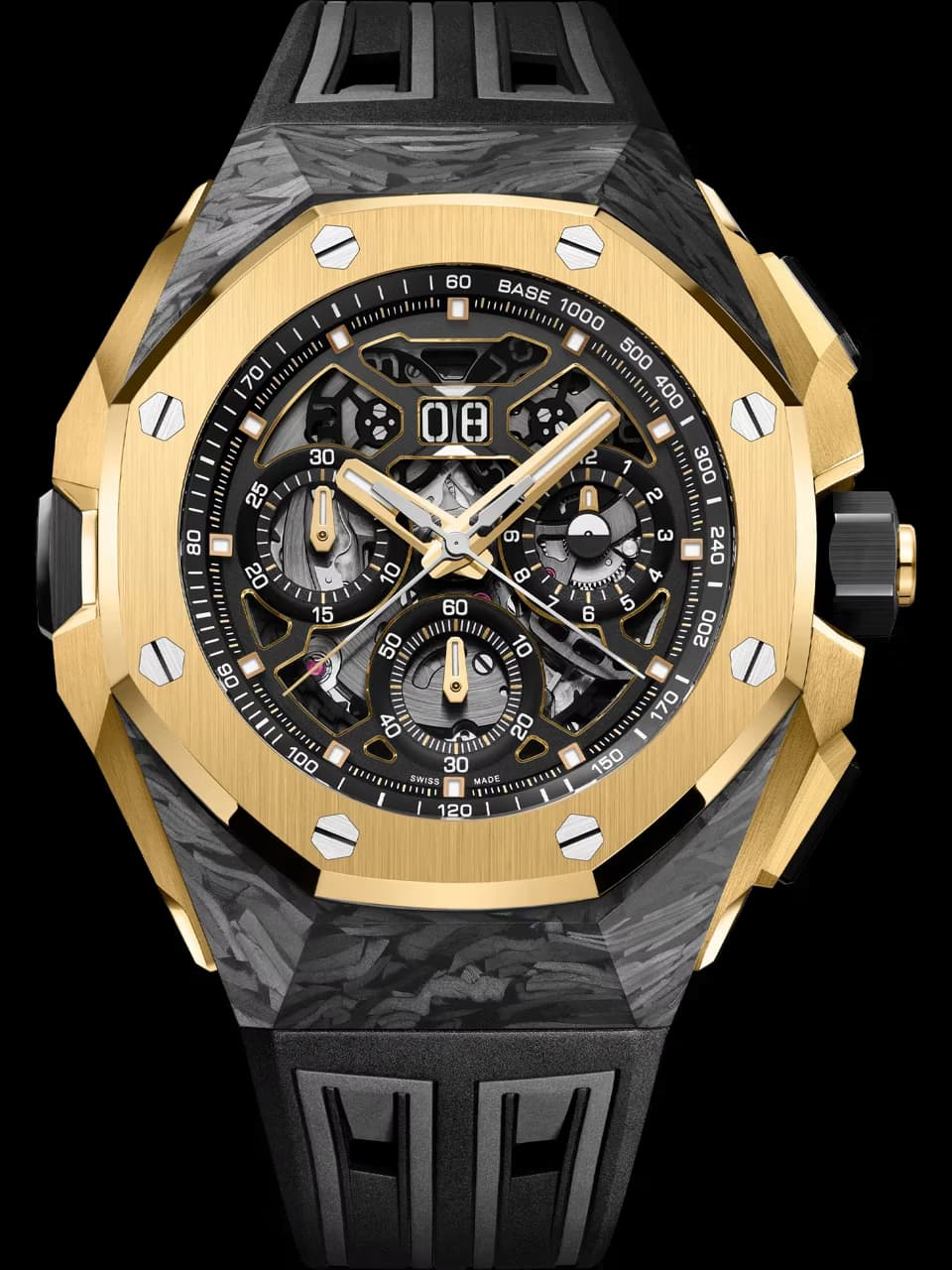
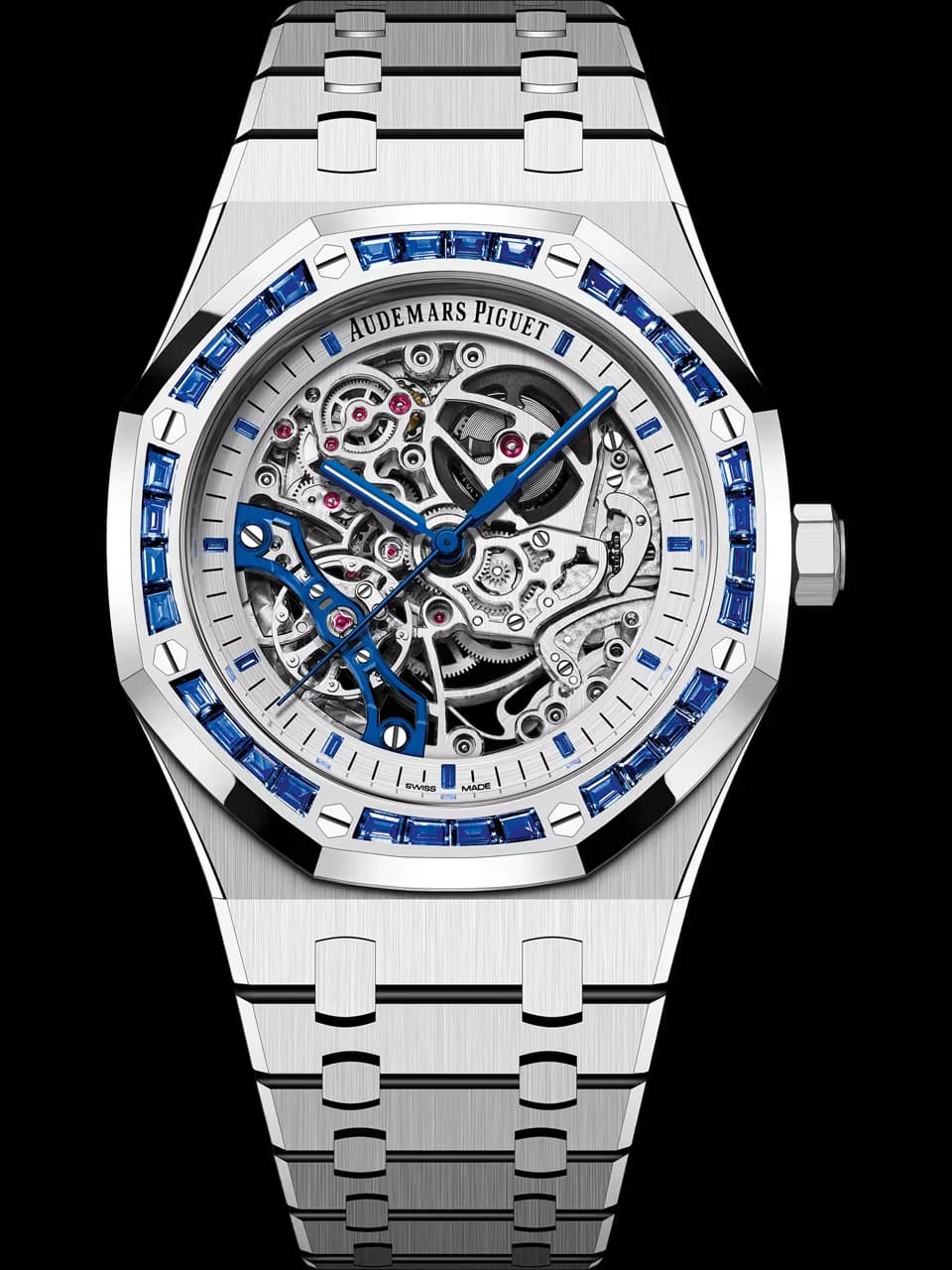
Skeletonisation is the craft of cutting away any metal a mechanical movement does not need, from its bridges, plates, wheel train and other parts, so the moving parts can be seen. It takes a great deal of time and skill, and every part left in view must be carefully finished.
What is the difference between skeletonised and openworked?
The words overlap, but they are not the same. Skeletonisation, also called openworking, names the craft itself: a skilled worker carefully removing metal from a movement by hand. ‘Skeleton watch’ is a looser term. It can describe anything from a purpose-built movement to a watch that simply has no dial. So every skeletonised watch is openworked, but an openworked watch is not always skeletonised.
What are semi-skeleton and open heart watches?
A semi-skeleton watch cuts away only part of the dial. Some of the movement underneath shows through, and the rest stays hidden. An open heart watch has a window in the dial that shows the balance wheel. This style is especially common on tourbillon watches. Both give a view of the mechanism without fully skeletonising the movement.
Where it comes from
The French clockmaker André-Charles Caron is credited with creating the skeleton watch in the 1760s. In 1746 he had taken on the young Jean-Antoine Lépine as his apprentice. The craft began in France, with the watchmakers who taught Breguet. About a century after Caron, Patek Philippe made skeleton pocket watches for exhibition and display. In the Victorian era, skeleton pocket watches were among the most prestigious things a collector could own. Very few were made in early times, because each one took so much time and work.
How were early skeleton movements made?
In early skeleton watches, the extra metal of the plates and bridges was carved away by hand. What remained was only the metal the movement needed. A skeleton movement shows everything, so the parts left behind could not be left plain. They were engraved, bevelled and polished. Every part on show needed this care.
Checked