What neo‑vintage means, and why collectors want it
Between vintage and modern sits a loose, much-argued category of watches from the 1980s to the early 2000s, and collectors can’t stop looking at them.
5 min read
A word with two lives
Ask three collectors where vintage ends and neo-vintage begins and you will get four answers. That is part of the charm. The word started in the trade, where dealers needed a label for stock that was not quite vintage and not quite pre-owned, yet had the feel of something older.
It likely spread through Rolex, where the five-digit references of the 1980s and 90s picked up the nickname. Before that, though, the word meant something else entirely: a modern watch inspired by vintage design. Baltic used it in its 2018 Kickstarter headline for watches assembled in France. By around 2015 it had settled into everyday collector vocabulary, and dealers gave it a further push during the 2020-2022 boom.
Today the term still carries both meanings, which is why it helps to be clear. A heritage reissue looks historic but is a new build. A neo-vintage watch is the real thing, simply from a younger decade.
Where the borders fall
The dates move depending on who is talking. Some say roughly 1985 to 2005. Others start at 1980 and run to the early 2000s, and some listings use 1980 to 2004. A tighter view puts it between the early 1990s and the mid-2000s. In plain terms, these are watches about 20 to 40 years old.
Collectors also use Rolex’s own changes as fences. One common end point is the switch from tritium to Super-LumiNova in 1998 and 1999. Another is the arrival of Cerachrom ceramic bezels, around 2005 to 2007, which marks the point where many people feel a watch turns modern.
At the start, the Patek Philippe Calatrava ref. 3940, launched in 1985, is a widely cited opening marker. Classic vintage, by contrast, is generally thought of as the 1930s to the late 1980s, so the two categories overlap at the edges and nobody minds much.
Why the period feels special
These watches were designed after the quartz crisis, when mechanical watchmaking had to justify itself again. They also predate the heavy marketing and speculation of the 2010s. That gives them a particular character: confident, well made, and not yet shaped by hype.
The era is often described as one when tool watches were supreme and watches managed to be both stylish and functional. Much of today’s design, across almost every brand and category, is an attempt to bring that mood back. Neo-vintage collectors simply skip the imitation and go to the source.
The period was also a lively one. IWC released the first ceramic watch in 1986. Louis Vuitton’s Monterey II arrived in 1988 with a ceramic case and a screw shank at 12 o’clock. Seiko worked with Giorgetto Giugiaro on asymmetric pieces for the Aliens. The re-launch of A. Lange & Söhne is often noted as a sign that collectors were already turning their attention to this time.
The names that come up
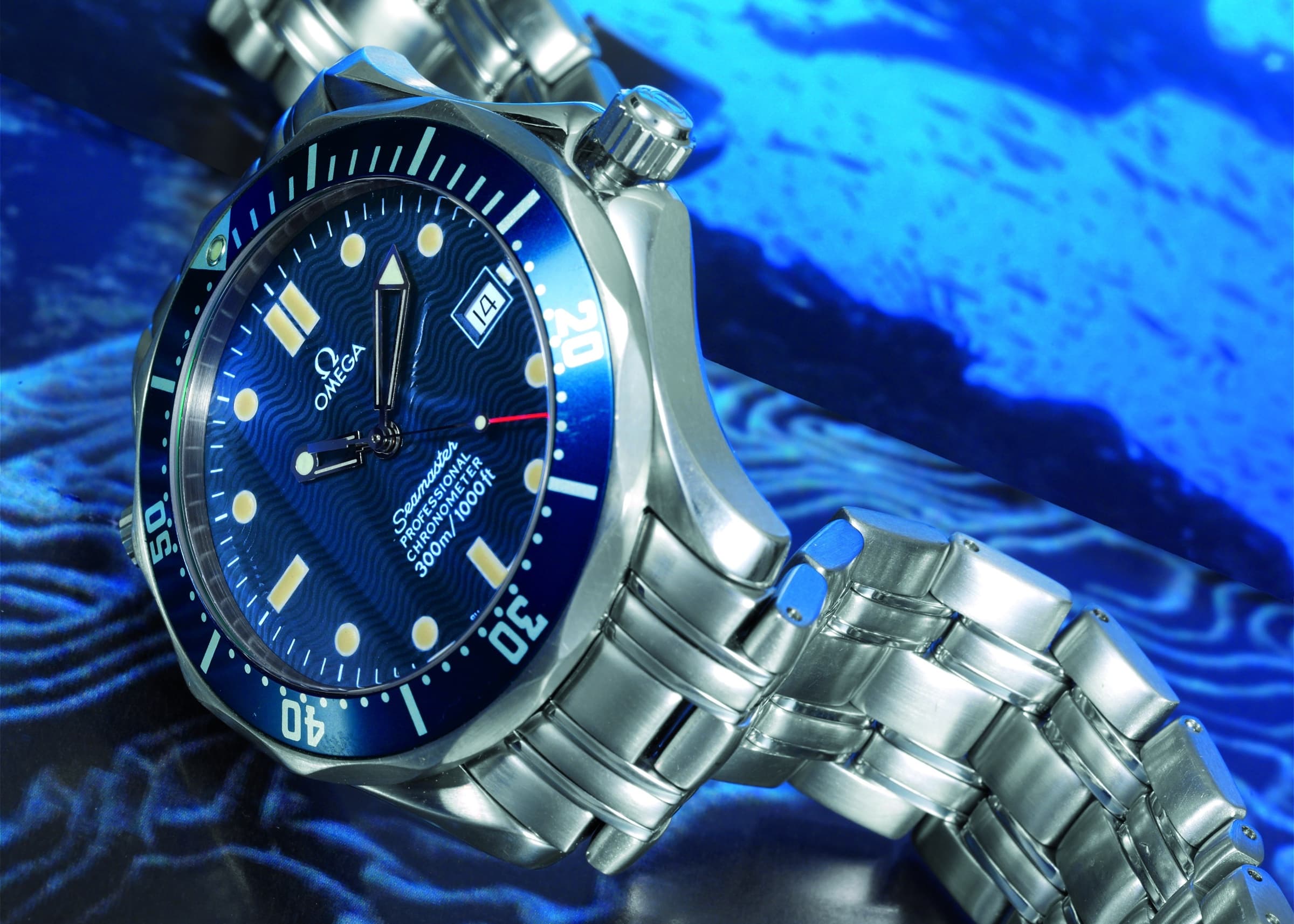
Rolex supplies the textbook cases: the Submariner 14060M and 14060/16610, the Daytona 16520 with its Zenith movement, and the Explorer 16570. The Submariner 16610LV, the Kermit, came in 2003 for the model’s 50th anniversary. Add the Omega Seamaster 300M and you have the usual suspects.
Audemars Piguet gives the Royal Oak 14790, the Day-Date Moon Phase 25594BA, introduced in 1984 and discontinued in 2006, and the Jumbo ref. 15202ST, which debuted at SIHH in 2000. IWC’s Big Pilot’s Watch ref. IW5002 appeared at Baselworld in 2002. Panerai’s Luminor 1950 PAM00127, released that same year, was modeled on the Rolex 6152/1.
Patek Philippe’s 3960, first released in 1989, is often called emblematic. It helped mark the company’s 150th anniversary. Collectors also hunt for Cartier Tanks and for Patek references 3940, 5970, 5050 and 5004. Cartier’s Santos ref. 2961 is another name that comes up often.
Beyond the obvious
Not every neo-vintage watch wears a famous crown. Today the word is just as likely to point to lesser-known brands that made excellent watches in the 1980s and 90s. Daniel Roth, Roger Dubuis and the Lemania-based Patek Philippe pieces are typical examples. Girard-Perregaux’s back catalogue also holds quiet finds with in-house movements.
The earlier part of the span has its own pleasures. Eighties watches often lean toward jewellery, with precious metals and stone dials, and many collectors now love them for exactly that. The 1984 Breitling Chronomat, the Cartier Pasha of 1985 and two-tone gold models typify the look.
Then there are the gold sports watches: the Patek Philippe 3770 Nautilus of 1980, nicknamed the Nautellipse, and the Nautilus 3800/1J of 1981, with an 18-karat yellow gold bracelet and a case of about 37.5 mm. The Rolex Day-Date 36 ref. 18038, produced until 1988, came in many dial variants. Rolex ref. 16758 in yellow gold carried the nipple dial, and the Piaget Polo Large ref. 7661C701 is an 18k gold piece from the same decade.
What collectors get
Part of the appeal is how these watches wear. They offer warm patinas and robust materials, and they come without the waitlists and retail premiums attached to many modern watches. Neo-vintage models often sell for 10% to 50% less than their modern counterparts, the Daytona and Day-Date being examples, and many remain inexpensive.
But the lasting draw is less about arithmetic and more about feel. These are watches made when a reference could stay in the catalogue for years, when proportions were more modest, and when a watch was expected to be worn. For a collector, finding one with an honest, even aged dial is a small thrill.
The label will keep stretching, and arguments over its edges will go on. That seems fitting for a category defined by being in between.
Sources
- chrono24.com (opens in a new tab)
- europastar.com (opens in a new tab)
- Fratello (opens in a new tab)
- gq-magazine.co.uk (opens in a new tab)
- Hodinkee (opens in a new tab)
- mostra-store.com (opens in a new tab)
- oracleoftime.com (opens in a new tab)
- Robb Report (opens in a new tab)
- wristbuzz.com (opens in a new tab)