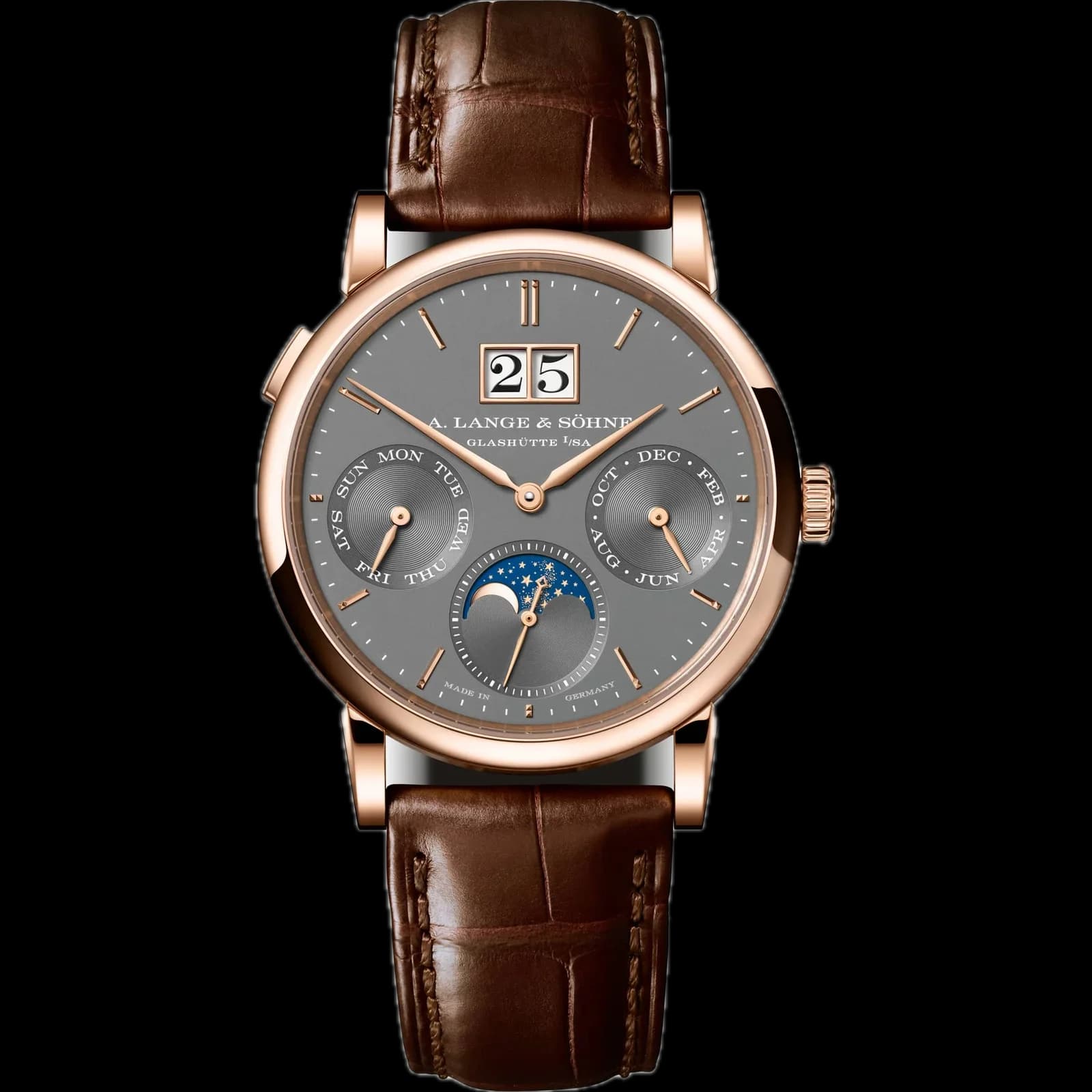
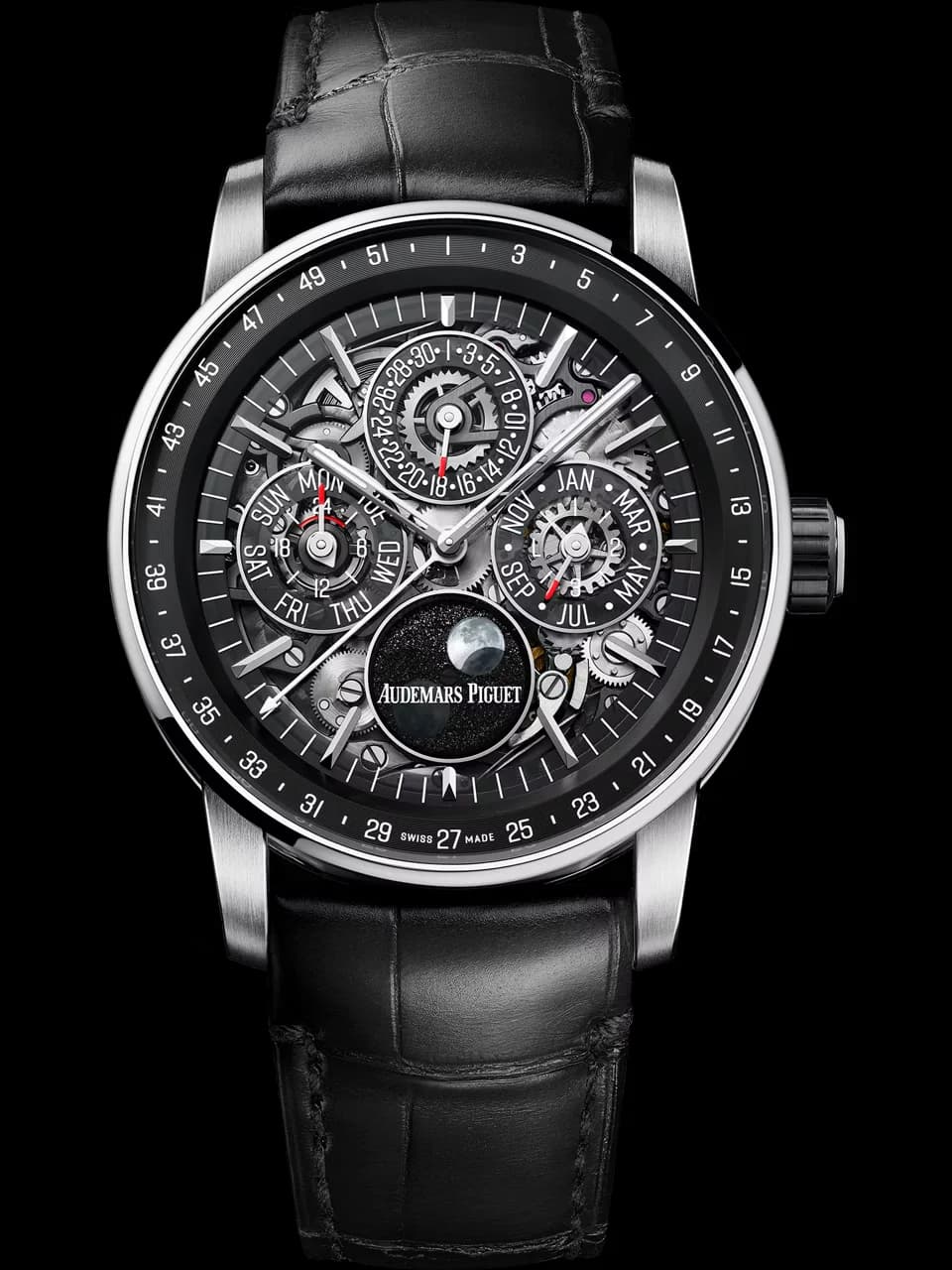
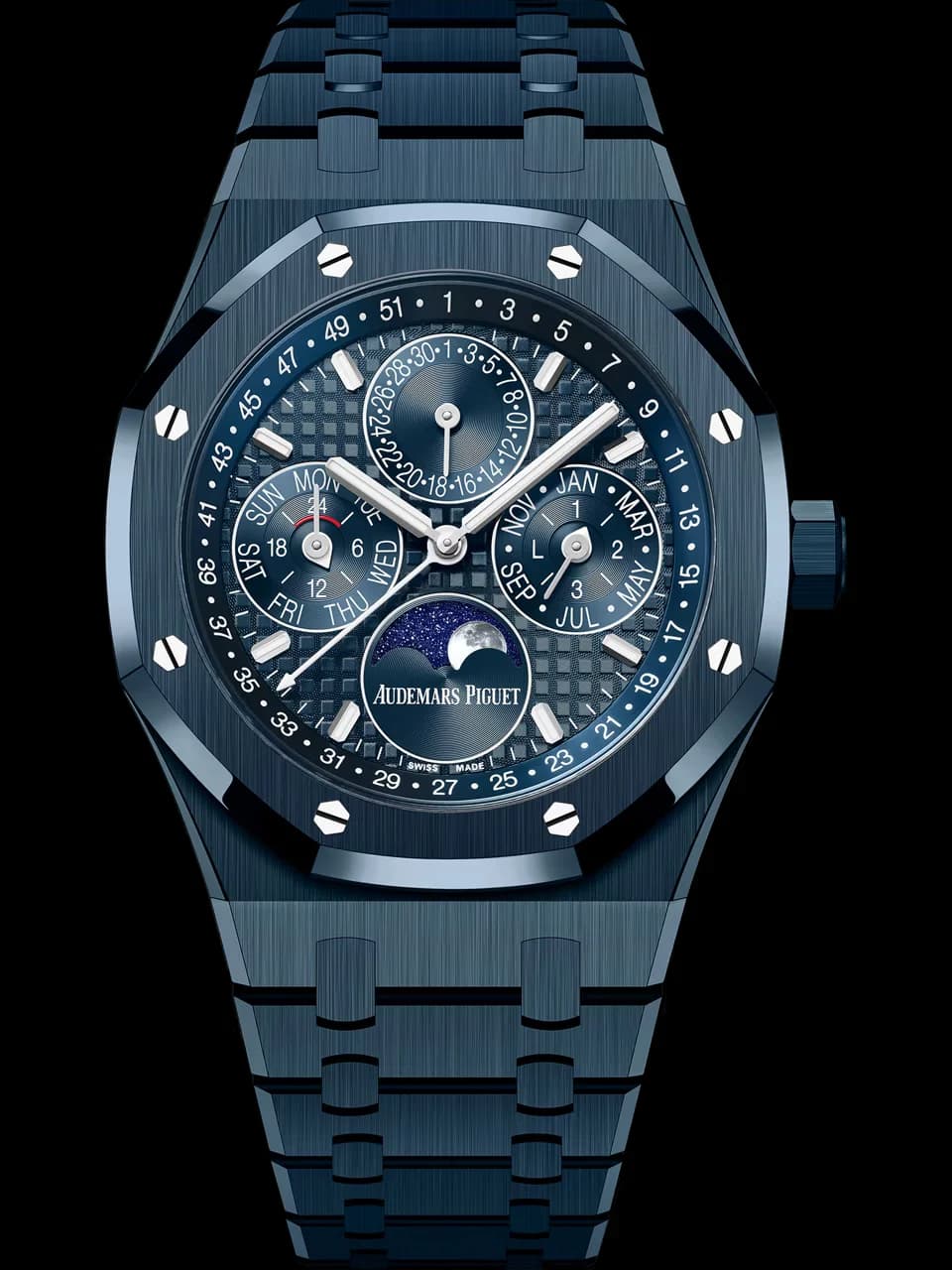
Day is a calendar complication that shows the day of the week, either on a printed disc or with a hand. Horopedia counts it among the simplest calendar complications to build. Unlike a date display, it follows a fixed seven-day cycle, so it never has to allow for months of different lengths.
How does a day display work?
The wheel that drives the day indication turns once a day. A day disc is a flat ring printed with the names of the seven days, either abbreviated or in full. A spring called a jumper holds the indication steady between changes, so the day stays put until the next one is due. When a hand shows the day instead, a star wheel with seven points drives it, one point for each day. Do not correct the day while the mechanism is in the middle of changing it.
What forms can it take?
Instead of a disc, some watches show the day with a hand on an off-centre subdial. That hand goes round once a week. In a retrograde day display, the hand moves along a scale from Monday to Sunday. It then jumps straight back to the start. Some day discs carry two languages. The wearer picks one by shifting the disc half a step, which brings the other set of names into view.
What is a Day-Date?
Rolex launched its Day-Date model at the Basel Swiss Industries Fair in 1956. Wikipedia says it was the first watch to show the day of the week spelled out in full, as well as the date. Rolex made a double quickset for it. This let the wearer set the day of the week and the date separately. The day complication also appears on watches from IWC Schaffhausen, Patek Philippe and Hamilton.
Checked