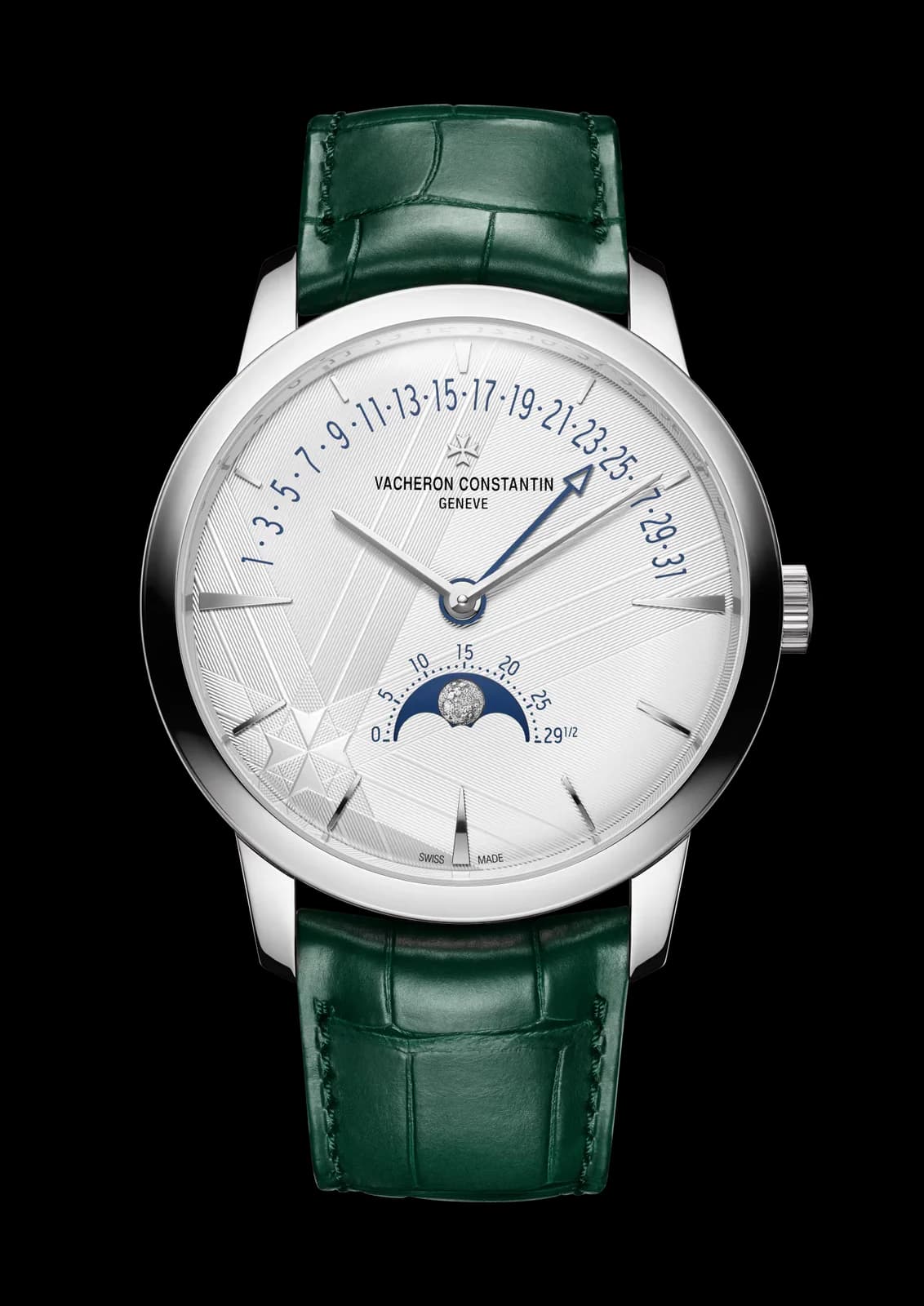
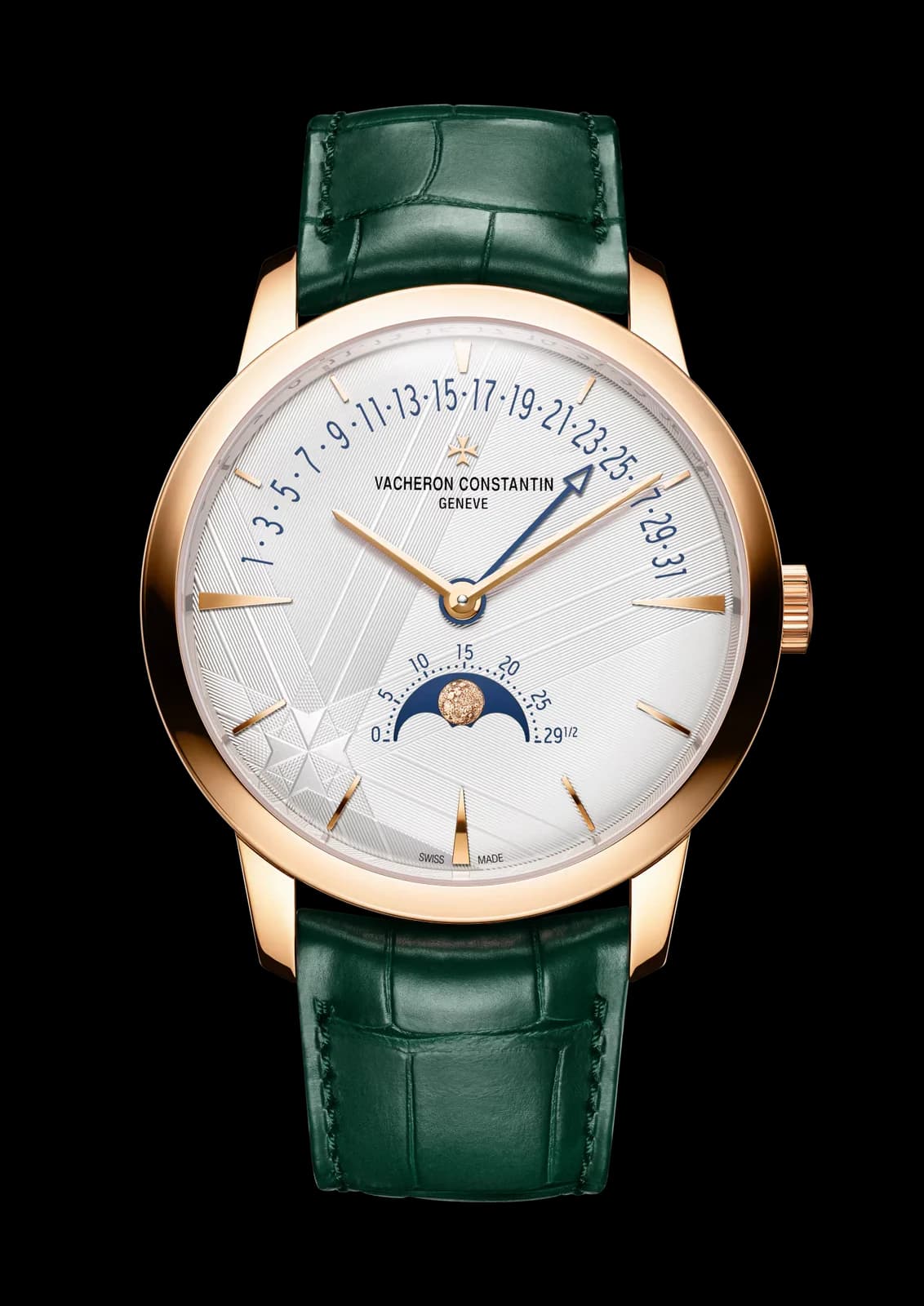
A retrograde display is a way of showing a reading with a hand that sweeps across an arc rather than a full circle. At the top of its scale, the hand jumps back to the lowest value almost at once. It adds no new function, only a new way of showing an existing reading.
How does a retrograde display work?
Inside, a lever with a feeler rests against a cam shaped like a snail. A leaf spring or a hairspring keeps the feeler pressed against it. As the cam turns, a finger linked to the hand runs along its spiral edge, and the hand moves steadily up its scale. At the end of the spiral, the finger falls off a step cut into the cam. That drop sends the hand back to its starting point almost at once, and the climb begins again.
What can a retrograde display show?
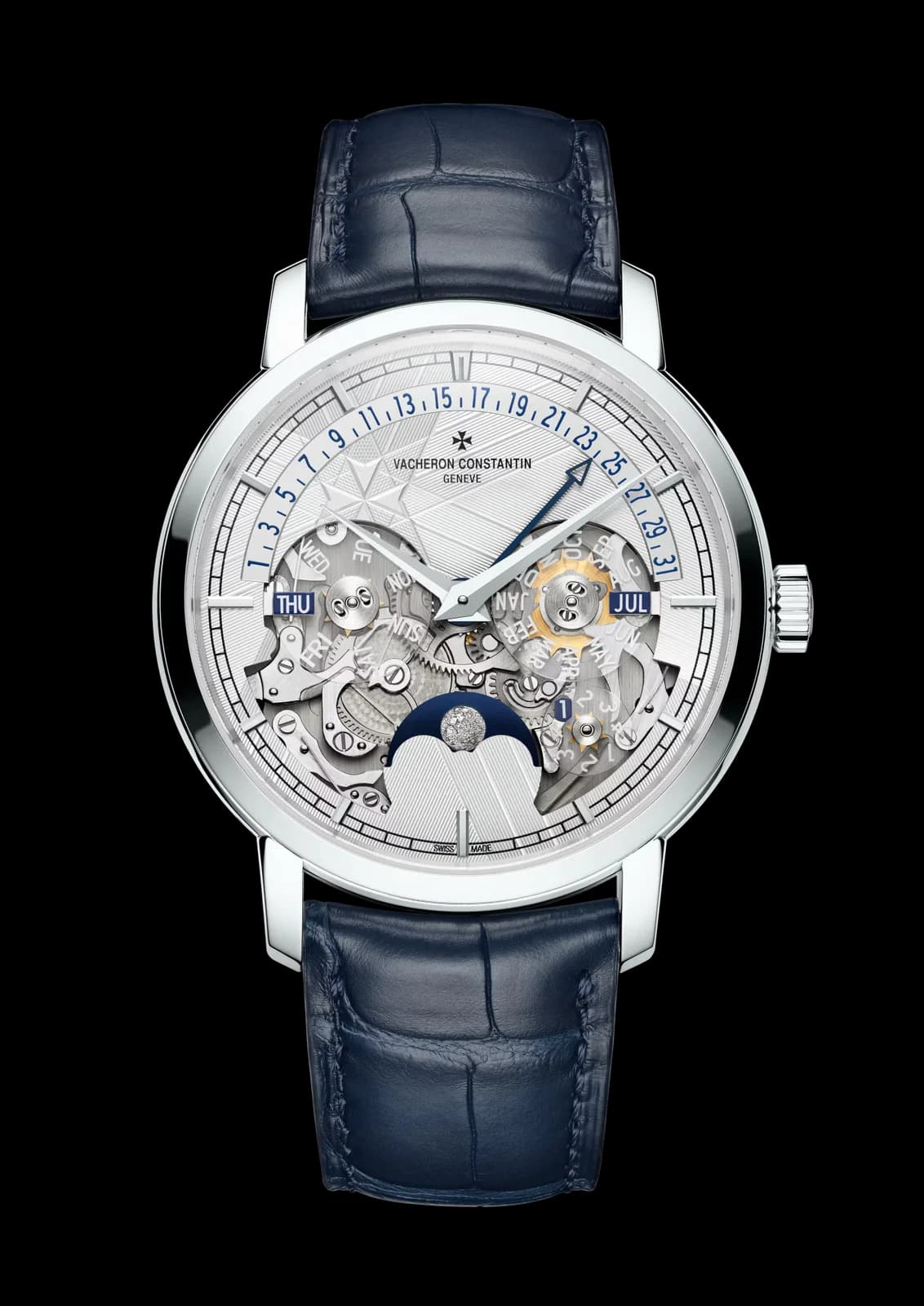
Many readings on a watch can be shown this way. Retrograde hands are used for seconds, minutes, hours, the date, the weekday and more. Each hand sits on a scale that covers only an arc, while an ordinary hand turns through a whole circle. A dial with two retrograde displays is called bi-retrograde, and one with three is called tri-retrograde. Breguet, Vacheron Constantin and Blancpain have all made watches with retrograde displays.
Where it comes from
Isaac-Daniel Piguet and Philippe-Samuel Meylan made a retrograde watch in about the 1820s. The display has gone by more than one name. Other names include retrograde complication, retrograde indication and retrograde hand. The French brand Lip used the term ‘linear display’ for these watches in its advertising. All of these names refer to the same kind of display.
Not to be confused with
Retrograde and jumping-hour mechanisms are different. Even so, many retrograde and jumping-hour mechanisms are built on the same basic part, a snail cam. In a retrograde display, that cam drives a hand along an arc and then lets it fly back to the start. Sharing a part does not make the two the same complication.
Checked