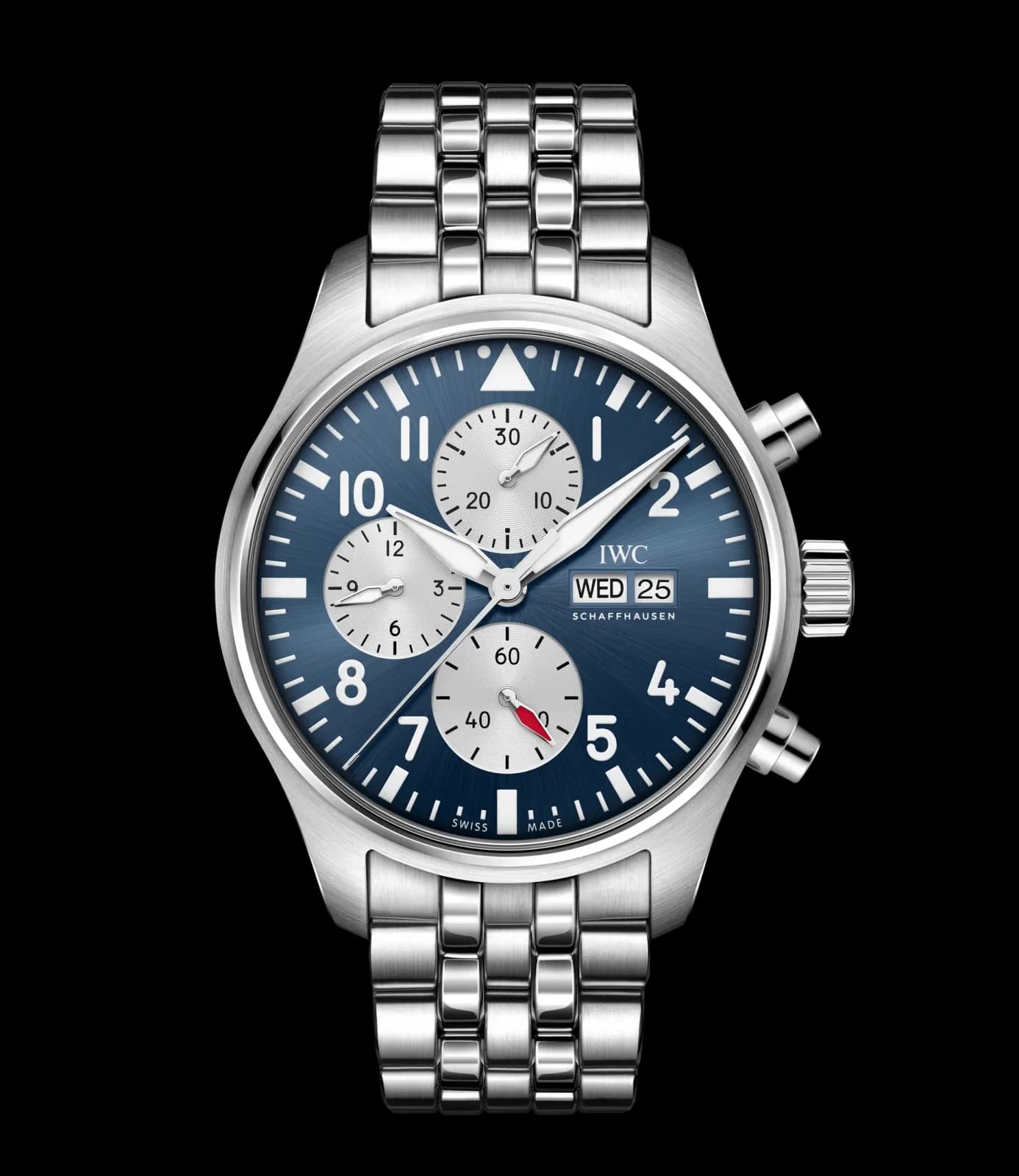
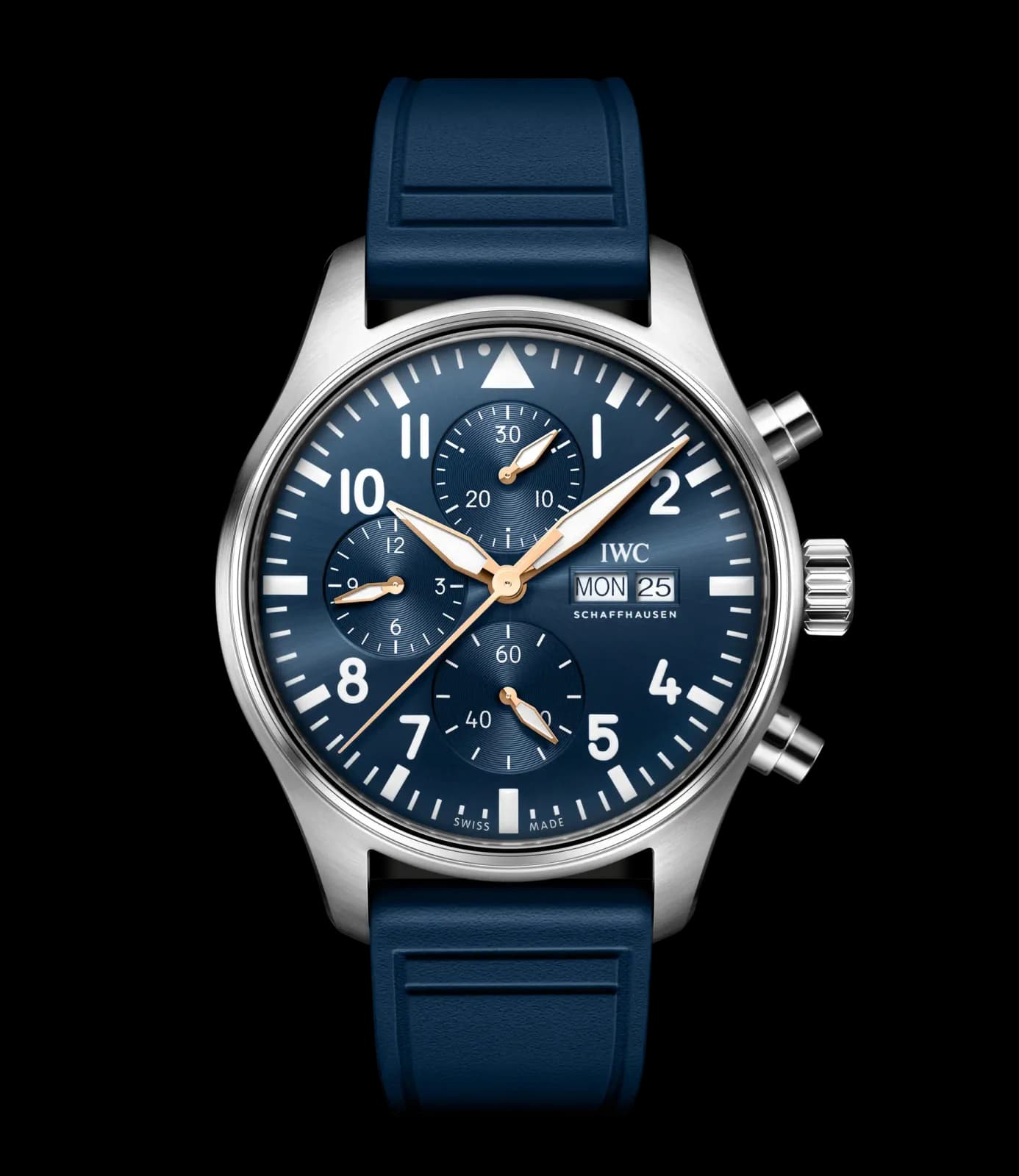
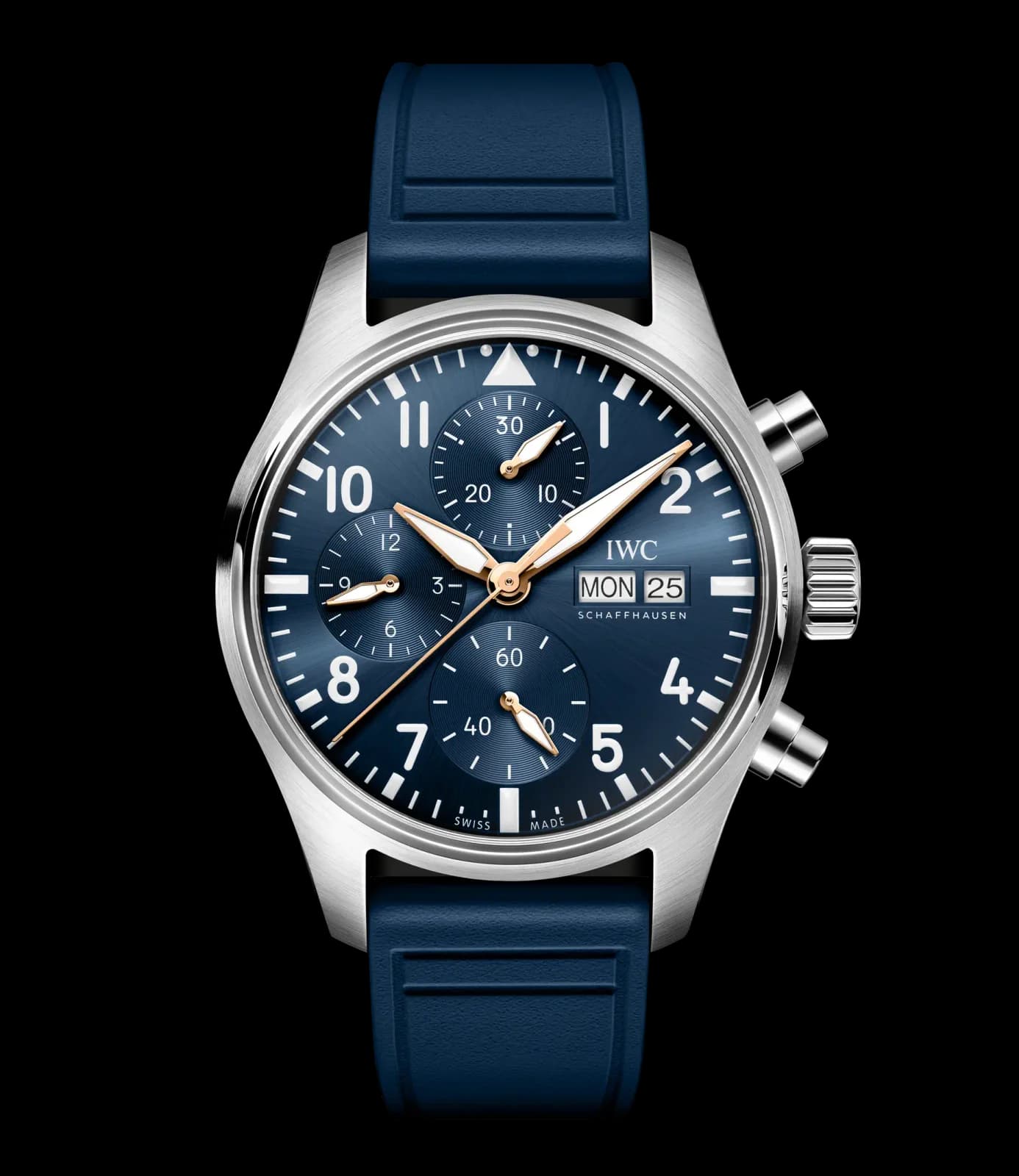
A day-date is a watch complication that shows the day of the week as well as the numbered day of the month. Date and weekday indicators are among the most common complications. Adding the weekday to a date display is only a small step up in complexity.
How is the weekday shown?
The date part works like a plain date. It shows numbers from 1 to 31. The weekday is usually abbreviated and sits at 3 o’clock, beside the date window. Some watches spell the day out in full at 12 o’clock instead. The Hamilton Khaki King and the Rolex Day-Date both do this. Rolex now offers the Day-Date’s weekday display in 26 languages. Omega, IWC Schaffhausen and Rolex all make watches with a day-date.
How does a day-date work?
In one patented design, a wheel that turns once every 24 hours moves the day disc on once a day. The way the display changes varies from watch to watch. Some date displays jump instantly at midnight. Others move slowly over several hours. A day-date does not know how long each month is. At the end of any month with fewer than 31 days, the wearer has to correct it by hand.
Not to be confused with
A triple calendar, also called a complete calendar, shows the month as well as the day and date. A day-date does not show the month. An annual calendar differs in how often it needs help. It needs correcting by hand only once a year, at the end of February. A simple day-date needs correcting after every month shorter than 31 days.
Where it comes from
Rolex launched its Day-Date model in 1956. It was the first watch to show the date together with the weekday written out in full. Rolex advertised it as ‘The Presidents’ Watch’. The model shares its name with the complication. The term day-date, though, covers any watch that shows both the weekday and the date.
Checked