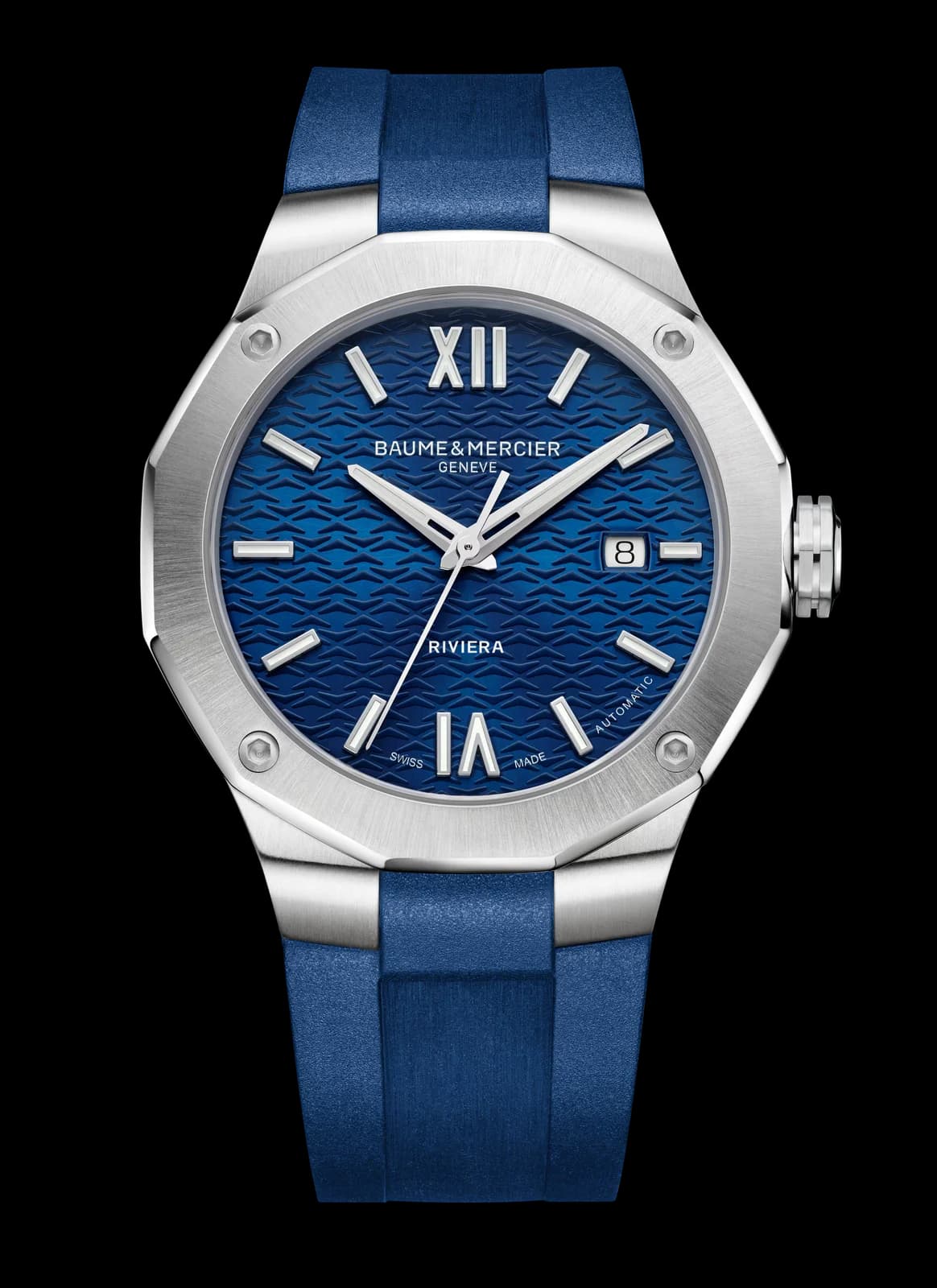
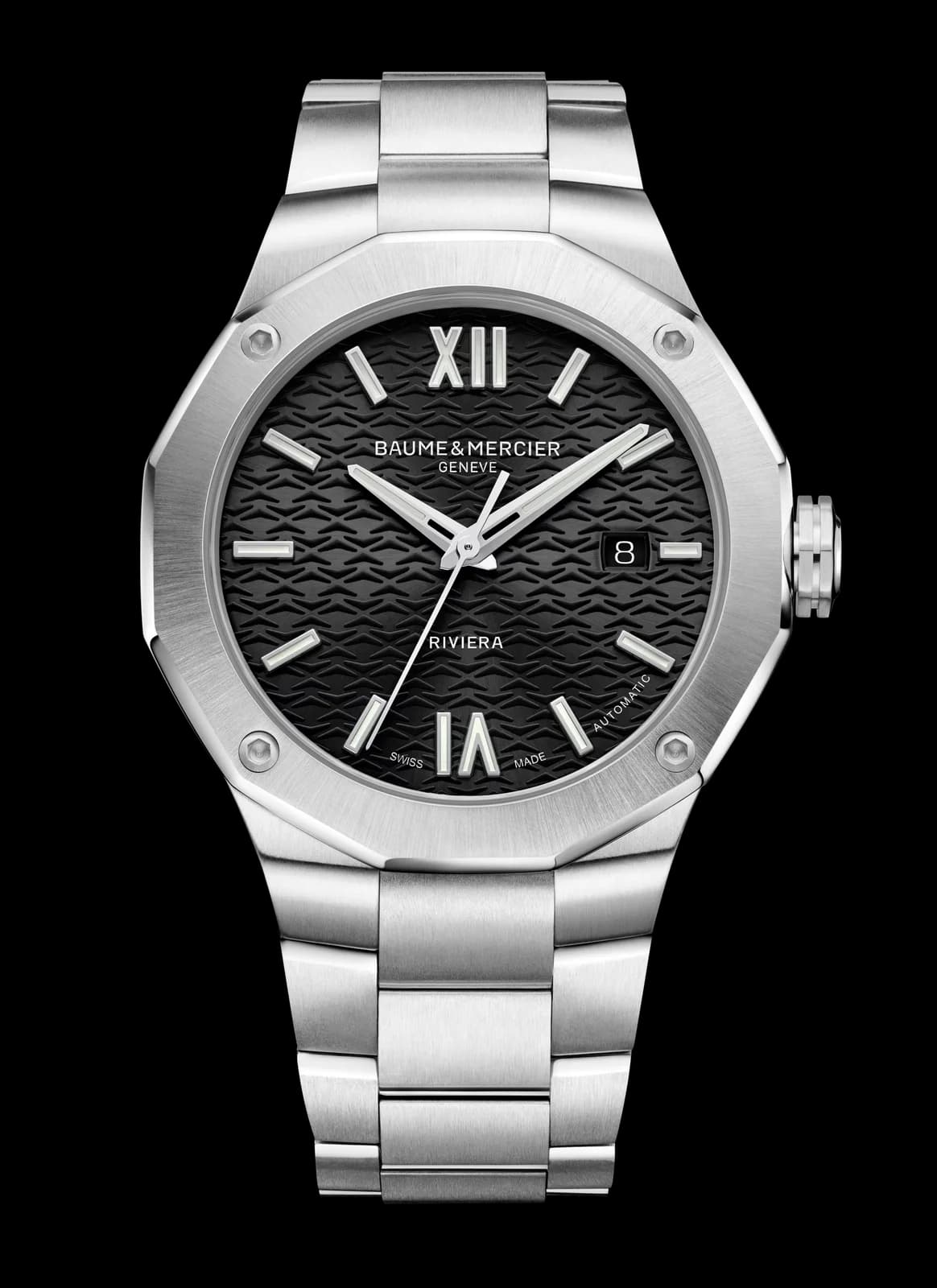
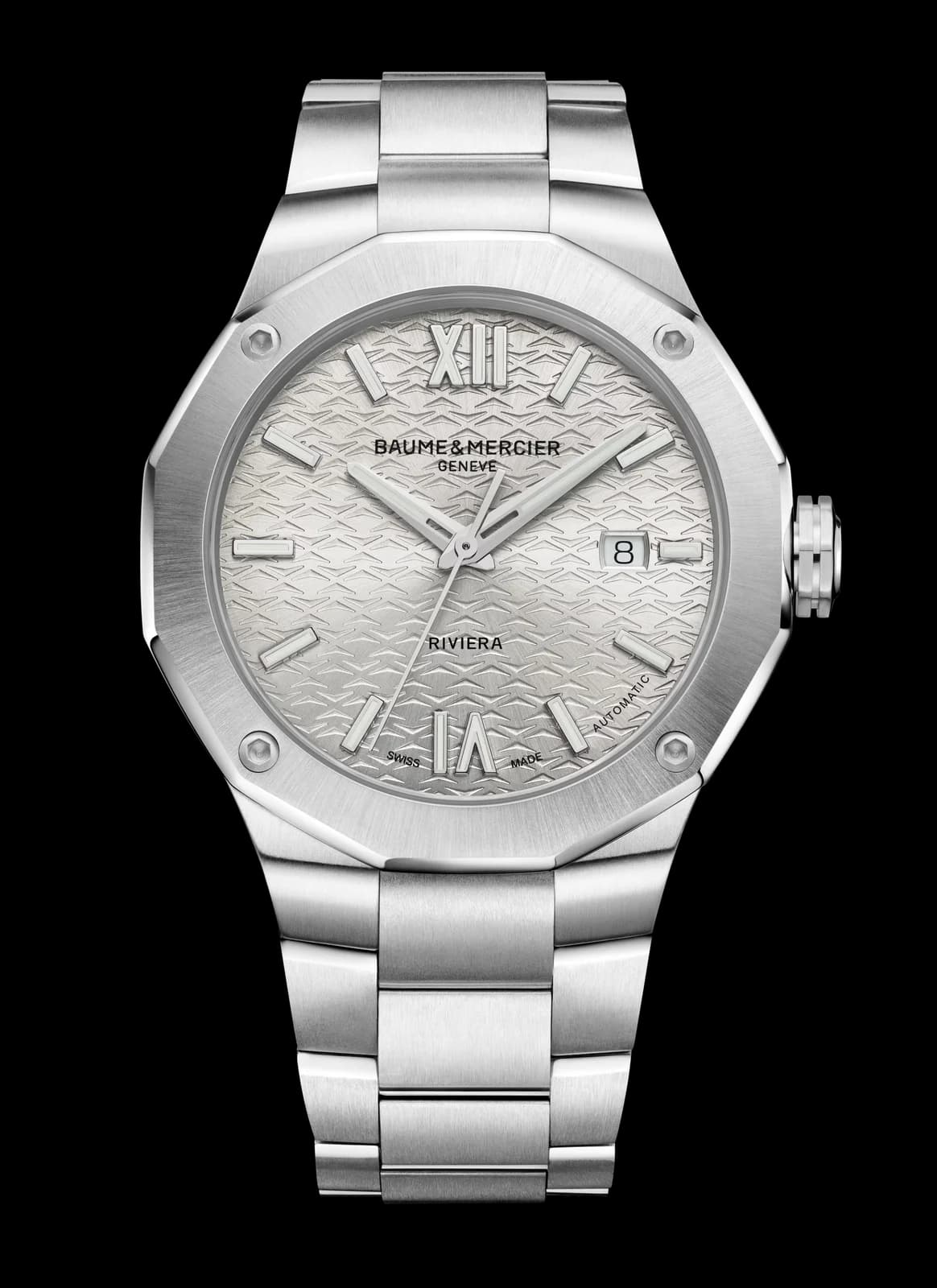
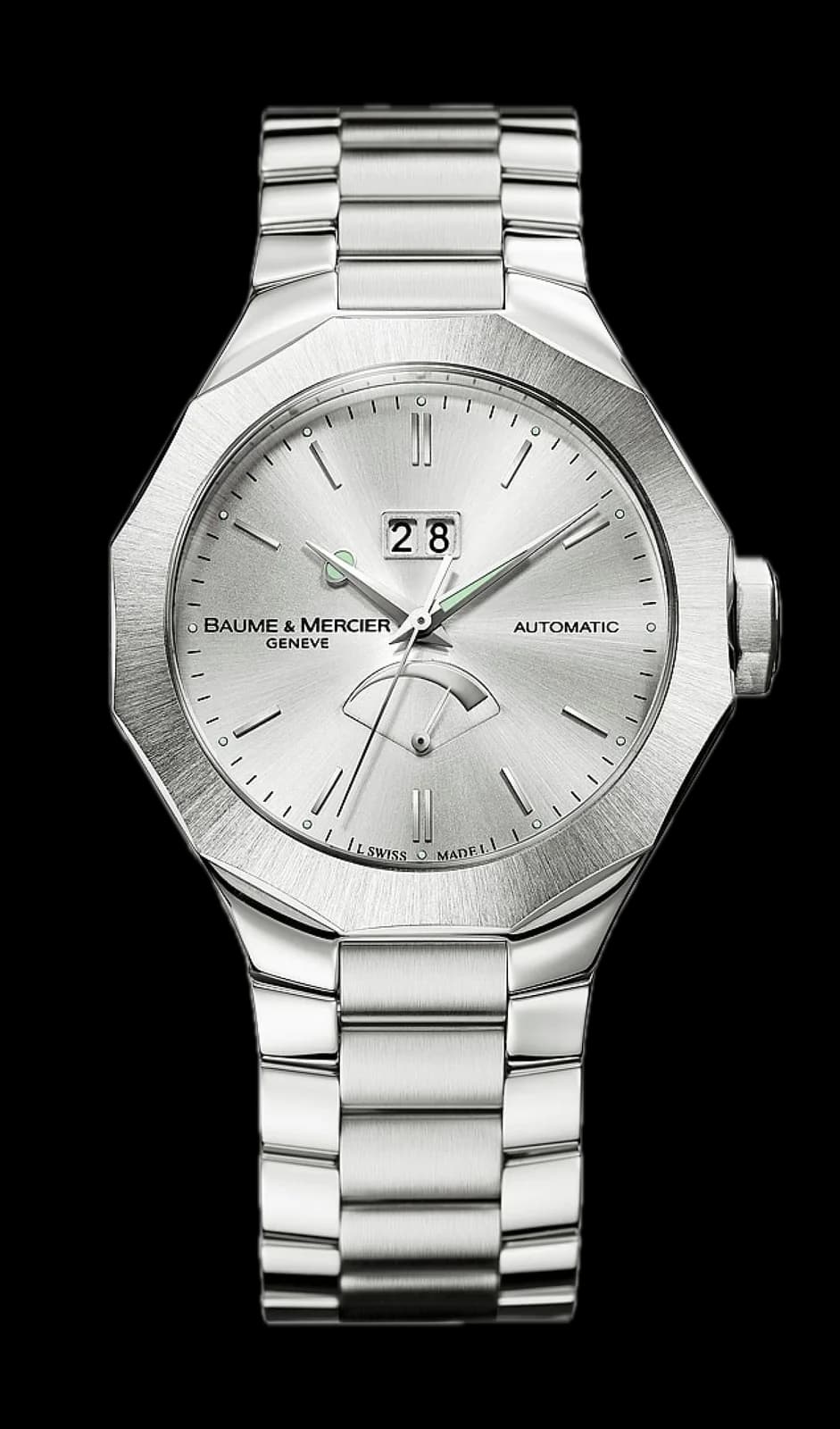
A dodecagonal case is a watch case, or bezel, with twelve straight sides. The shape is a dodecagon, a polygon with twelve sides. Baume & Mercier’s Riviera, launched in 1973, is built around one. Its bezel has twelve sides to echo the twelve hours shown on the dial.
What shape is a dodecagonal case?
In geometry, a dodecagon is any polygon with twelve sides. It is also written as a 12-gon. On a watch, the twelve sides can form the bezel, the ring around the crystal, or the outline of the case itself. In a regular dodecagon, all sides are equal and each corner has an inside angle of 150 degrees. That is a wide angle, so each corner is blunt rather than sharp. The result is a case with clear, flat edges and soft corners.
Where it comes from
The ‘-gon’ ending of dodecagon comes from the Ancient Greek word for a corner or angle. Jean-Claude Gueit designed the original Riviera. It came out one year after Gérald Genta’s Audemars Piguet Royal Oak. The Riviera paired its twelve-sided case with an integrated bracelet. Baume & Mercier meant it to stand out as a bold, unusual watch.
Which watches have a dodecagonal case?
Baume & Mercier and Piaget both make watches with this shape. The Riviera is one example. On the newer Riviera 73, the twelve-sided bezel has no screws showing. With no screw heads on its surface, the outline stays smooth. Nothing breaks the line where one flat edge meets the next. The twelve sides and their wide corners are left to define the shape on their own.
How is it different from an octagonal case?
An octagonal case is a related shape with eight sides rather than twelve. Cartier London made one under Jean-Jacques Cartier. Both shapes are polygons, with straight sides meeting at corners. The difference is the number of sides. An octagon has eight. A dodecagon has twelve, as on the bezel of the Baume & Mercier Riviera.
Checked