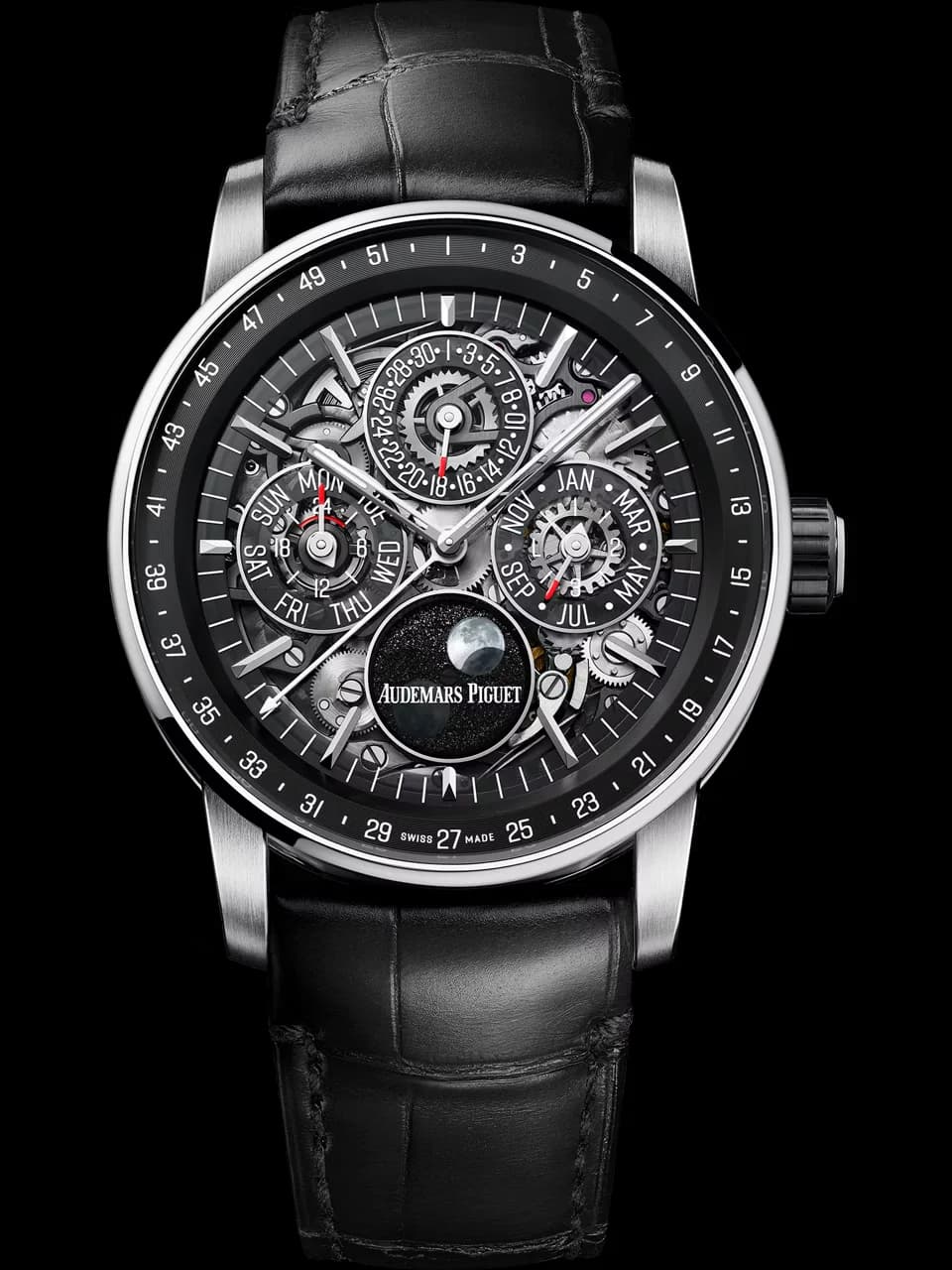
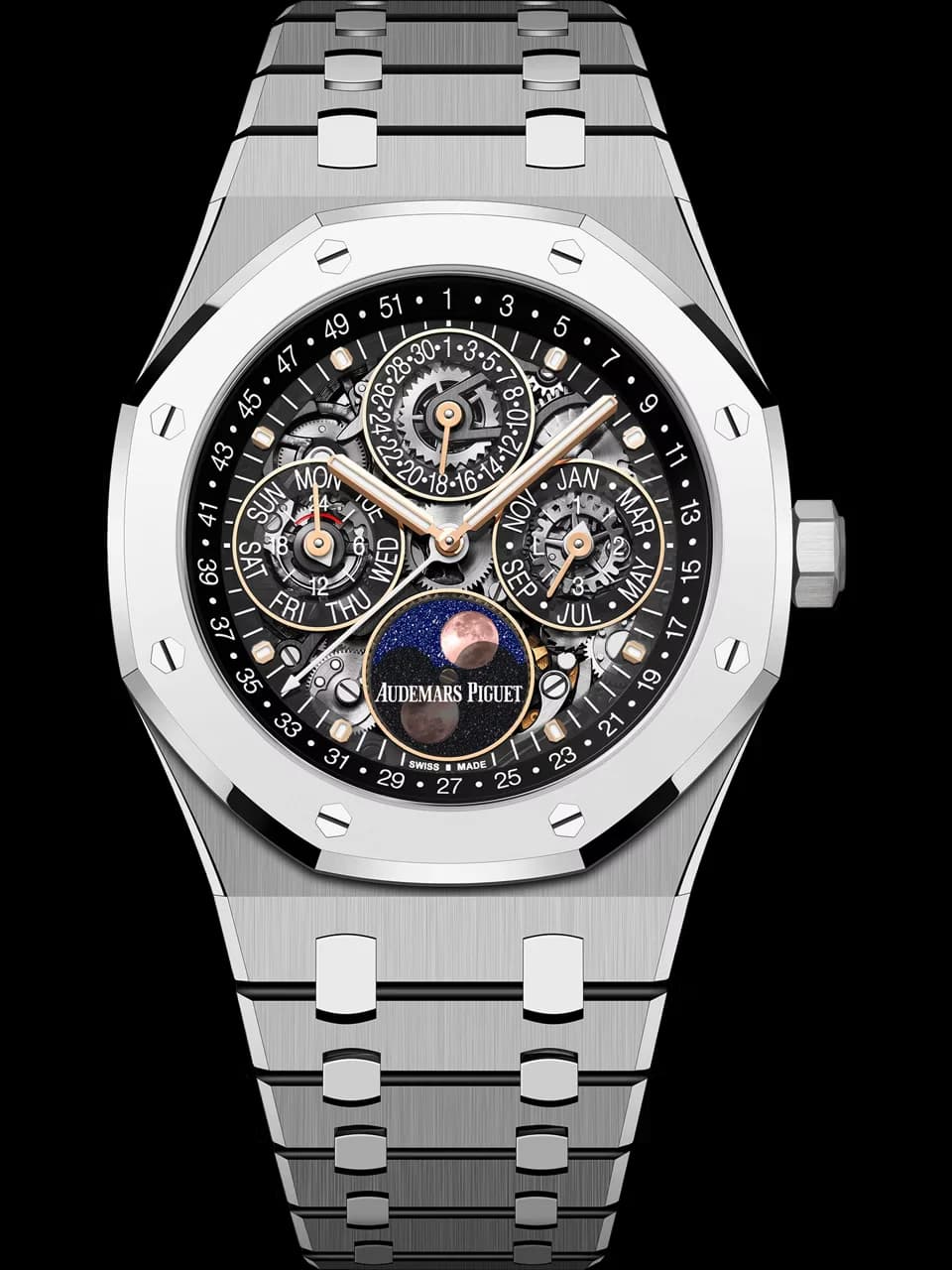
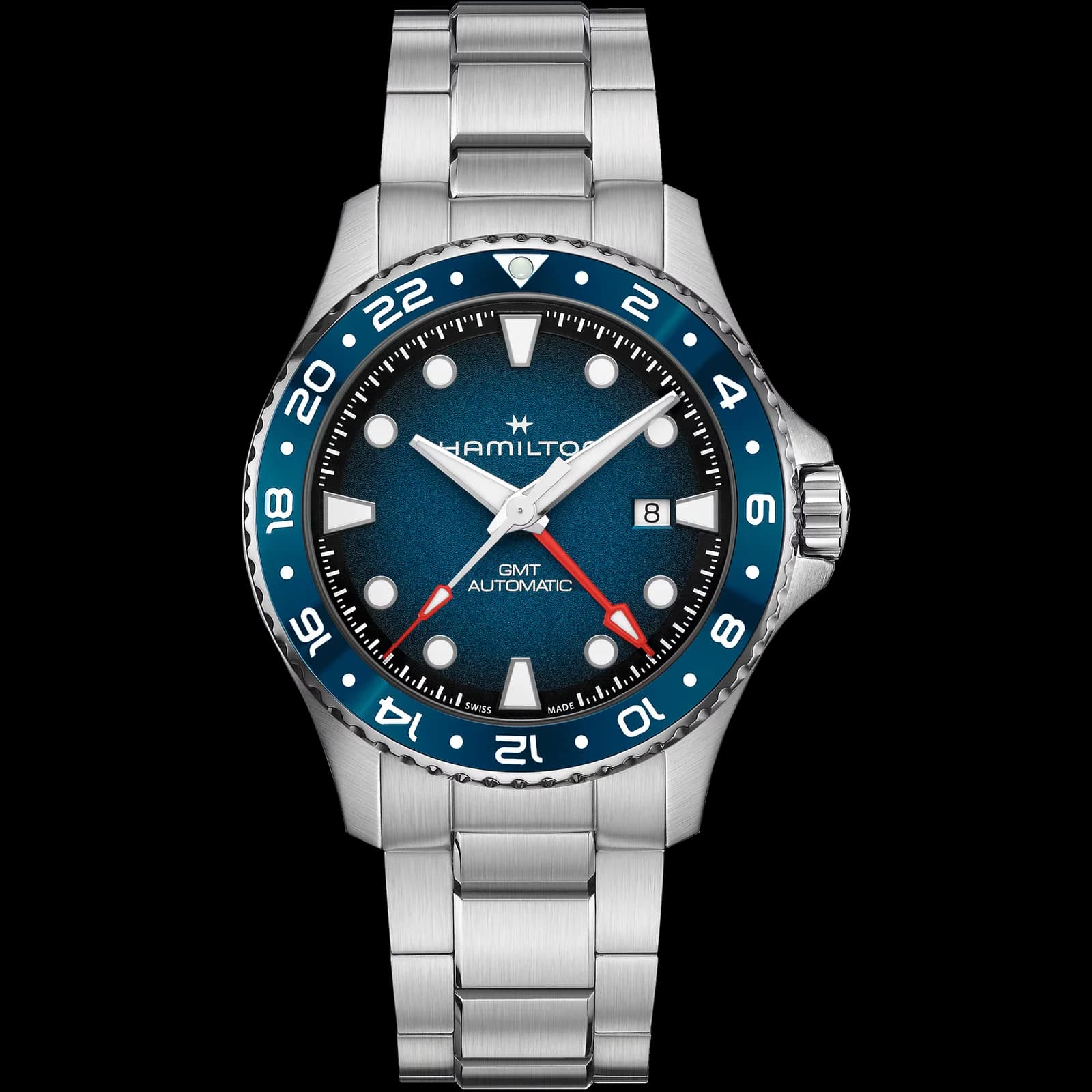
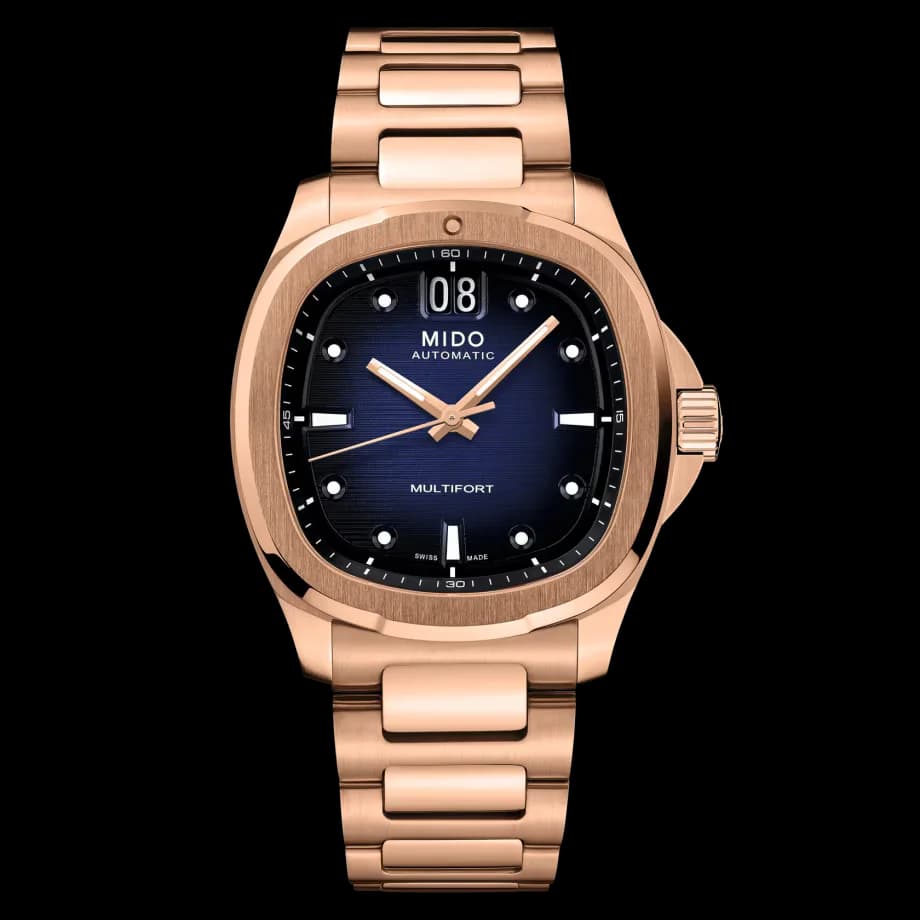
A gradient dial is a watch dial whose colour changes bit by bit, usually from a lighter centre to a darker rim. It was very popular in the 1970s. Today H. Moser & Cie uses it as a signature style, and it also appears on watches from Tissot, Oris and Audemars Piguet.
How is a gradient dial made?
One method starts with a base that has a sunburst or brushed finish. See-through lacquer goes over the top, so the finish below stays visible through the colour. The darker outer area is then added, either by airbrushing or by tinting the edges by hand. The most common kind is called a radial fade. Some uncommon dials run the colour change at other angles instead of outward from the centre.
How were vintage gradient dials made?
Older gradient dials are sometimes called vignette dials. They were lacquered while they turned on a spinning disc. The outer ring was then darkened in one of two ways. Either it got a thicker layer of the same colour used at the centre, or it received an extra coat of black. Both methods left a lighter centre and a darker rim.
Where it comes from
Fumé dials go back to the 1960s and 1970s. During the 1970s, Rolex in particular made a fair number of them. Fumé comes from the French word for smoked. It refers to a lighter centre shading to a darker edge. Dégradé is also a French word. It is explained as meaning ‘to degrade’, and the effect it names is a fade. Both are used as other names for the gradient dial.
Checked