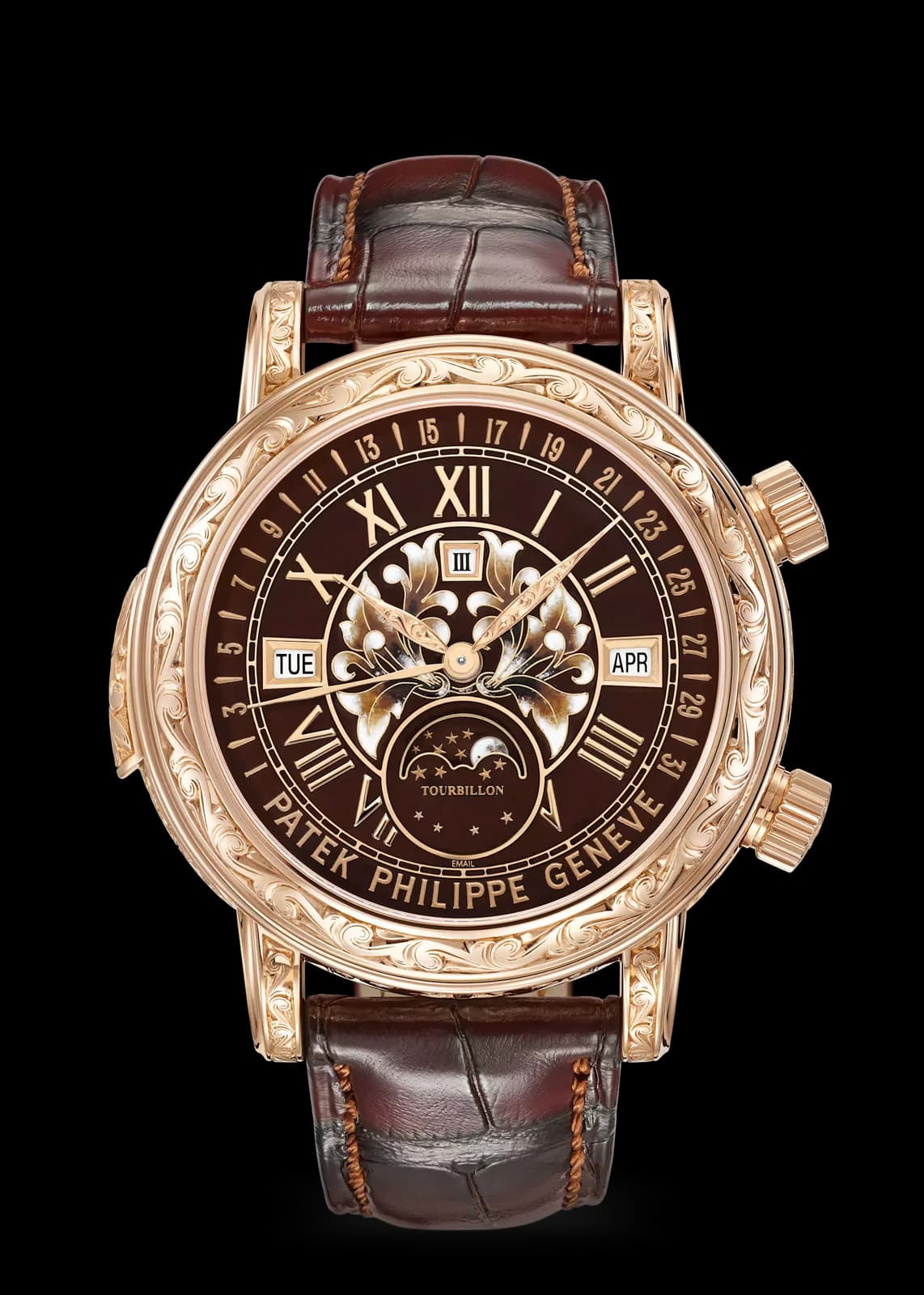
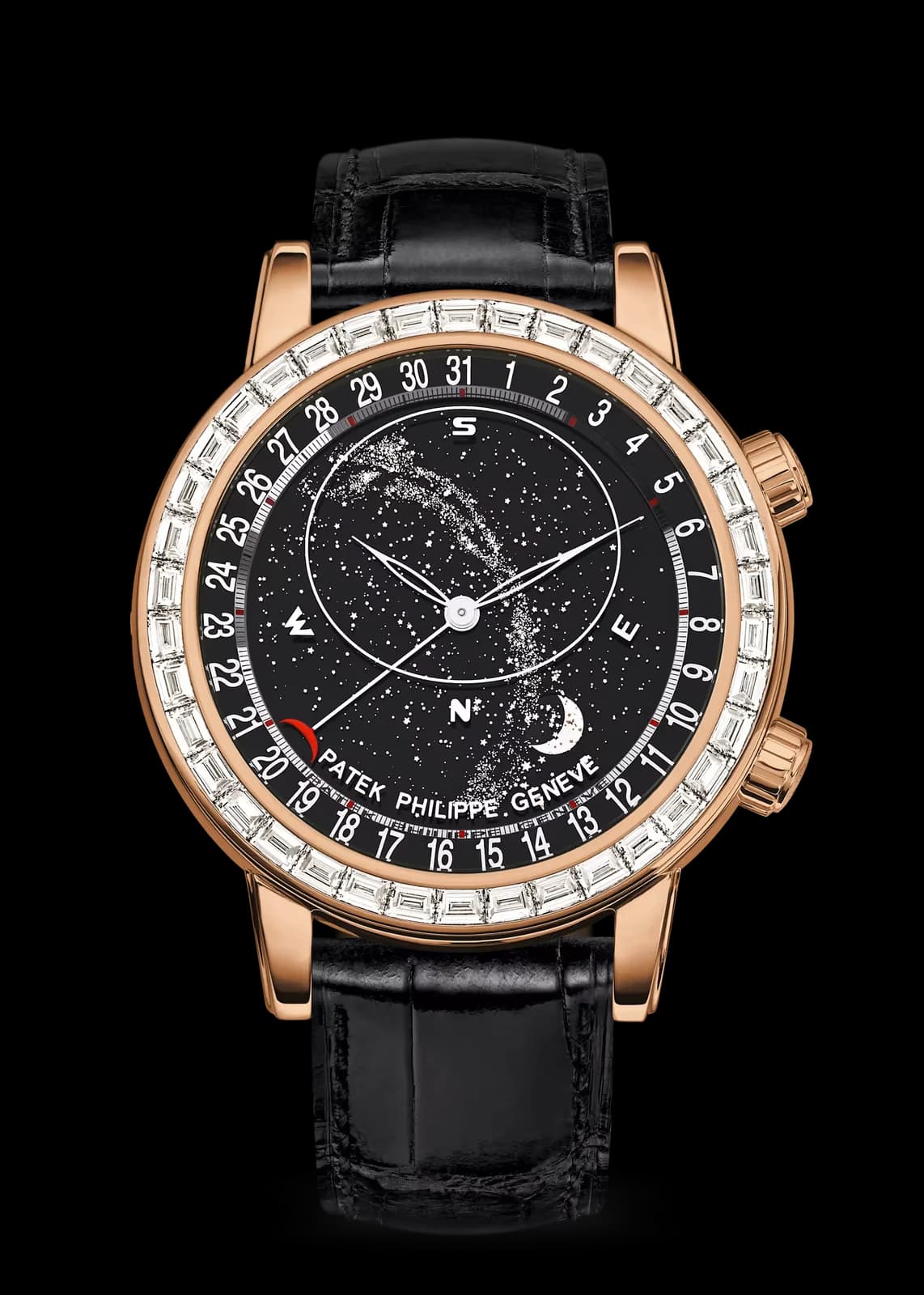
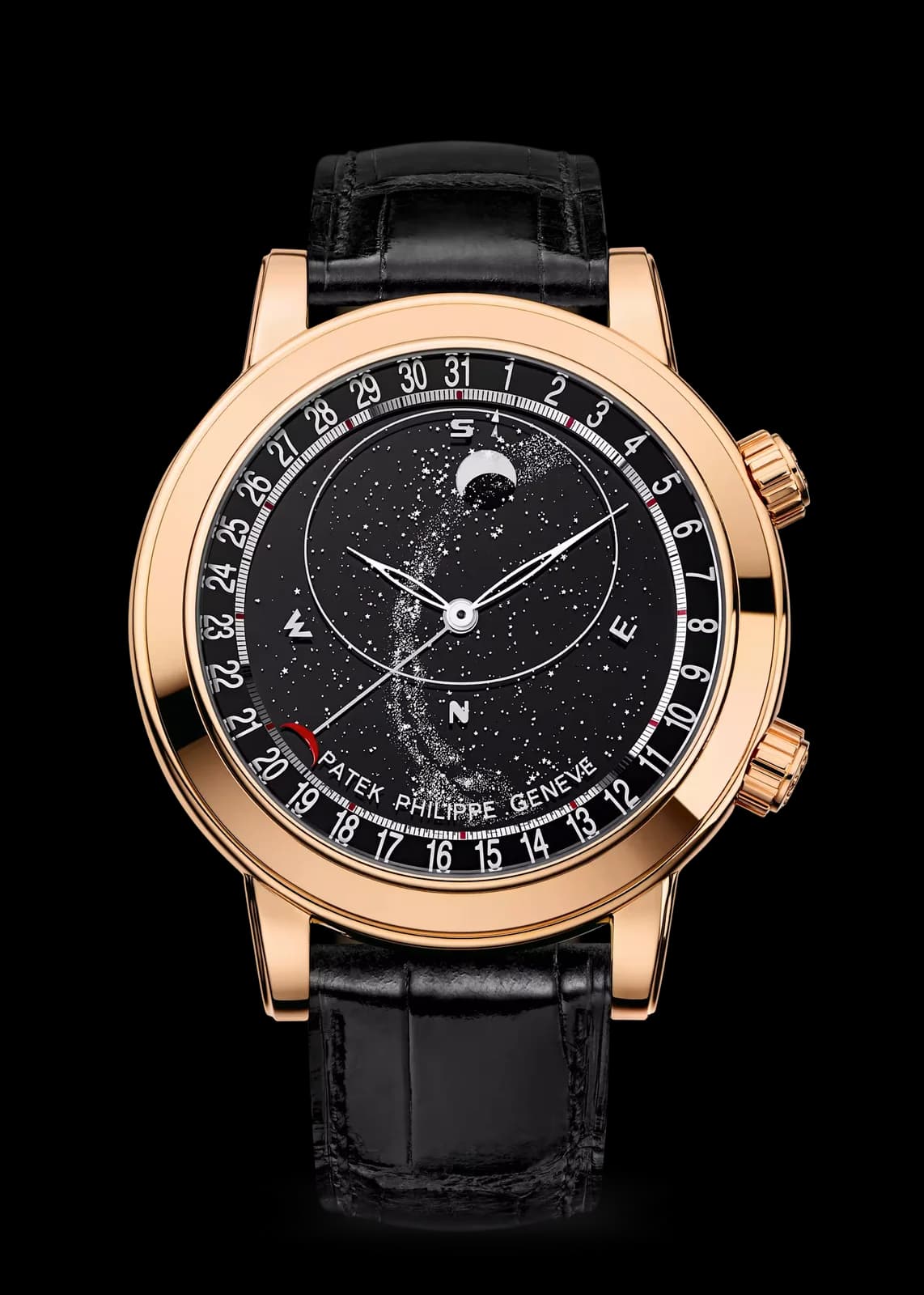
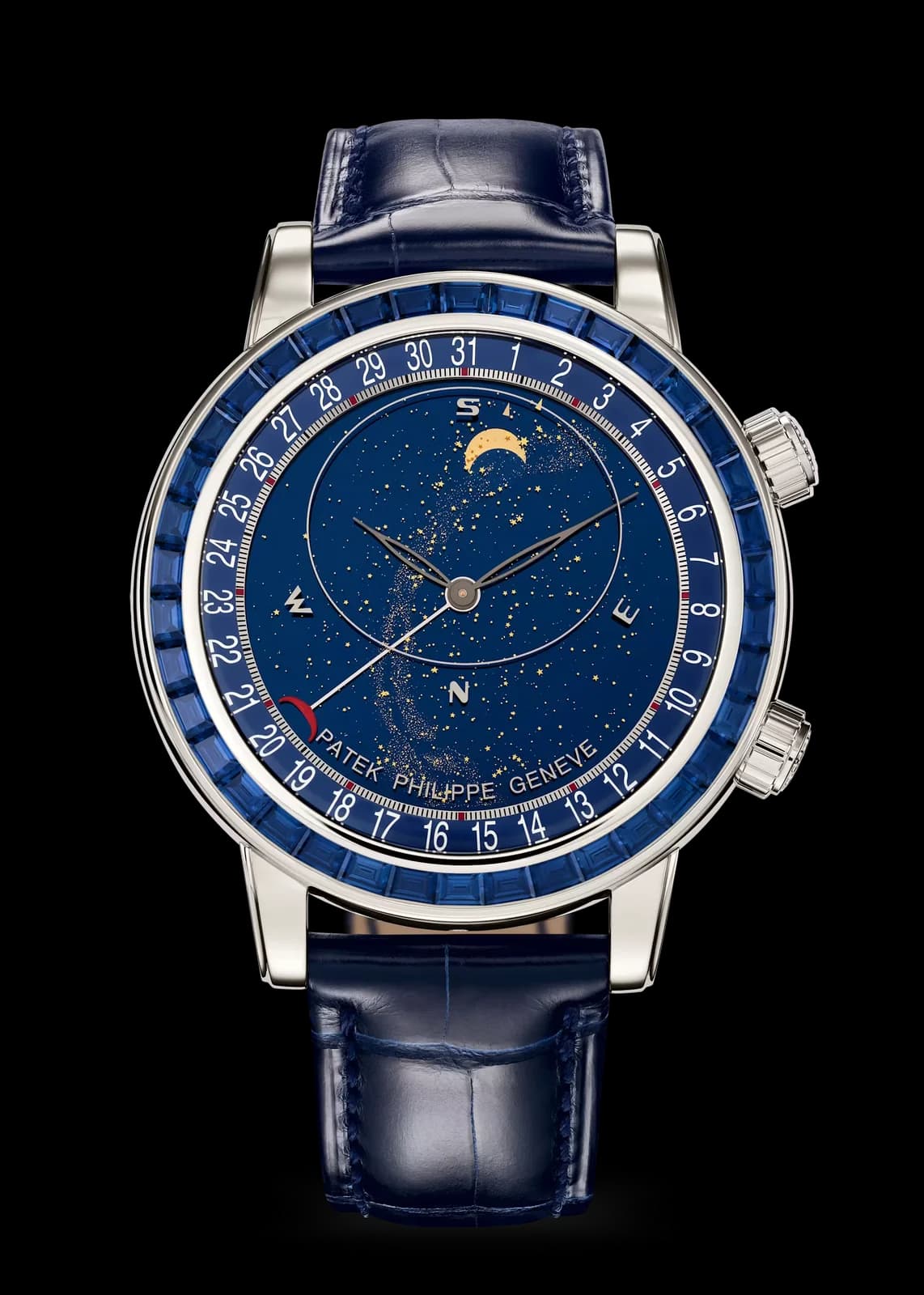
A sky chart is a watch display that shows the stars turning across the sky as they appear to move. Watchmakers call it a planisphere. An oval marks the horizon, so the wearer can see which stars are visible at any moment. On some watches, the chart is set for a named place.
How does a sky chart work?
A planisphere is built from two adjustable discs that turn on a shared pivot. In a watch, one disc carries the stars. It makes one full turn per sidereal day, not per ordinary solar day. This keeps it in step with the stars rather than the Sun. An oval acts as the horizon. The stars inside it at any moment are the ones that can be seen. On Patek Philippe’s Celestial, the oval is marked on the inside of the crystal. It frames the part of the sky that can be seen from Geneva’s latitude.
Where it comes from
The watch sky chart comes from the astrolabe. An astrolabe was essentially a planispheric star chart turned by hand rather than driven by clockwork. The word planisphere comes from the Latin planisphaerium, a term Claudius Ptolemy used in the second century. Jacob Bartsch made the first star chart called a planisphere, in 1624. A watch sky chart does the same job as these older charts. The difference is that the movement turns the stars, not the user’s hand.
Which watches have a sky chart?
Some sky charts are made for one particular place. In 1922, Patek Philippe made James Ward Packard a complicated pocket watch with a star chart for his hometown of Warren, Ohio. Another watch, the Henry Graves supercomplication, delivered in 1933, included a star chart for New York City. On Patek Philippe’s Celestial, the chart frames the sky seen from Geneva’s latitude. The Celestial also shows when the star Sirius and the Moon cross the meridian.
Checked