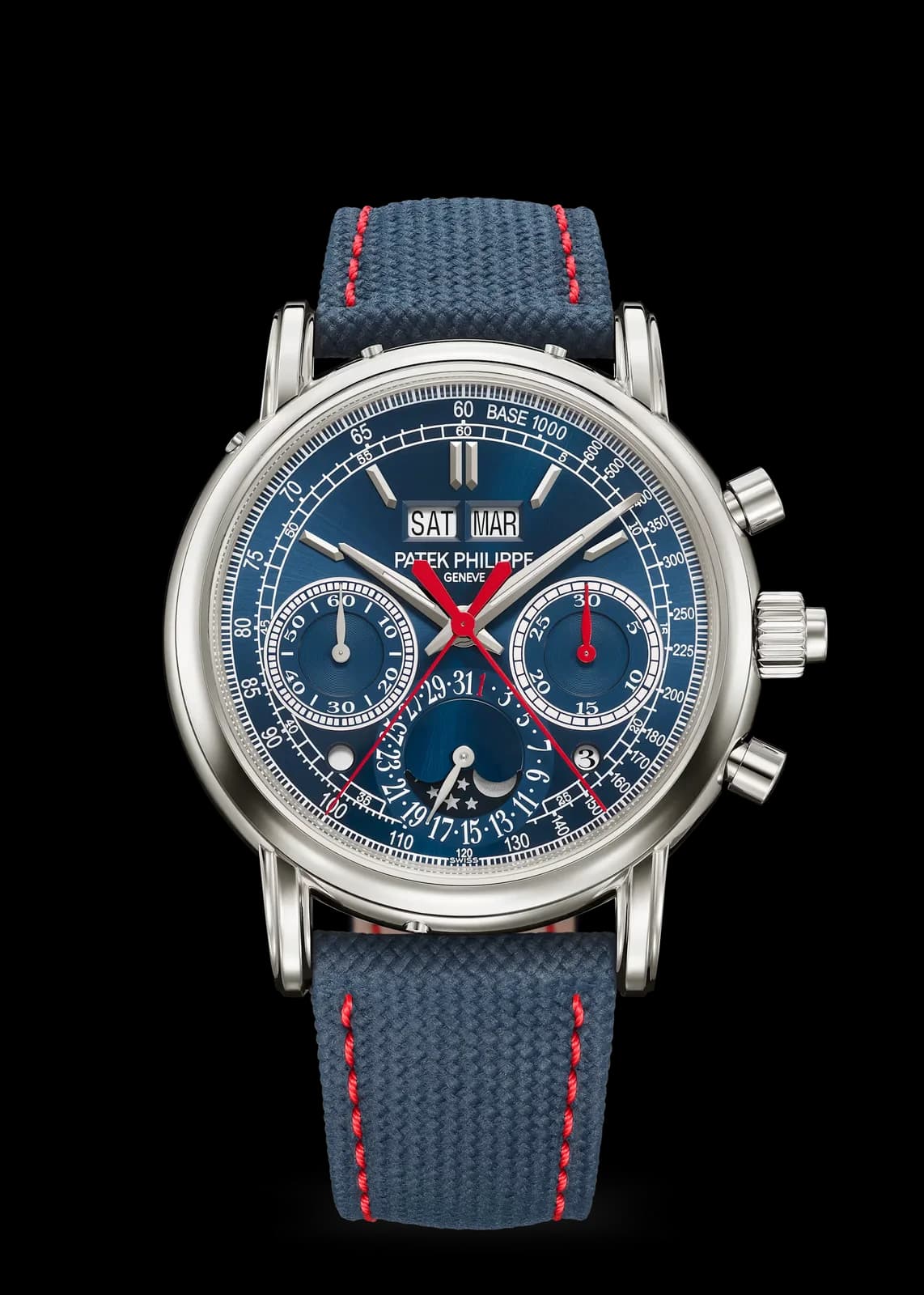
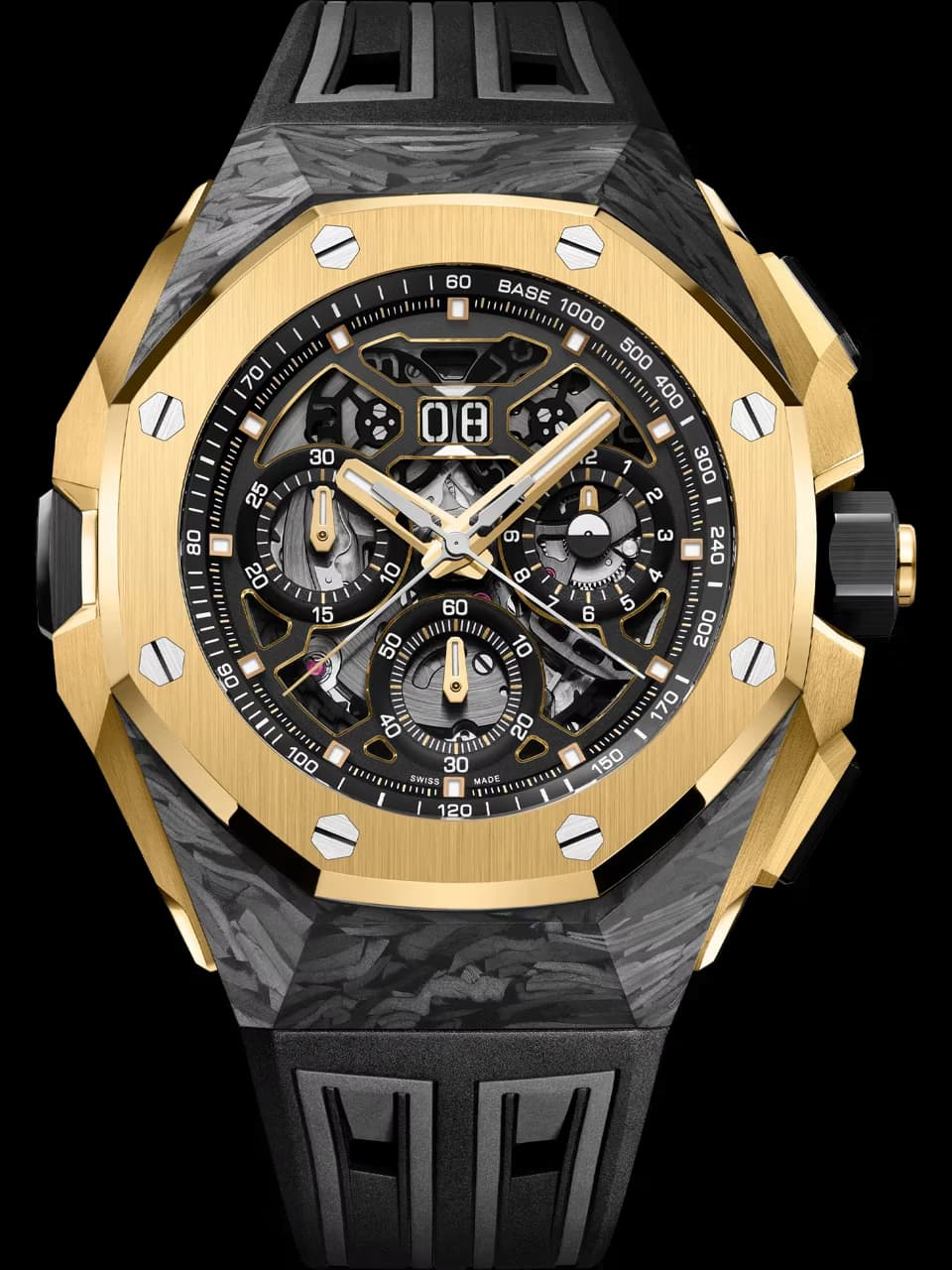
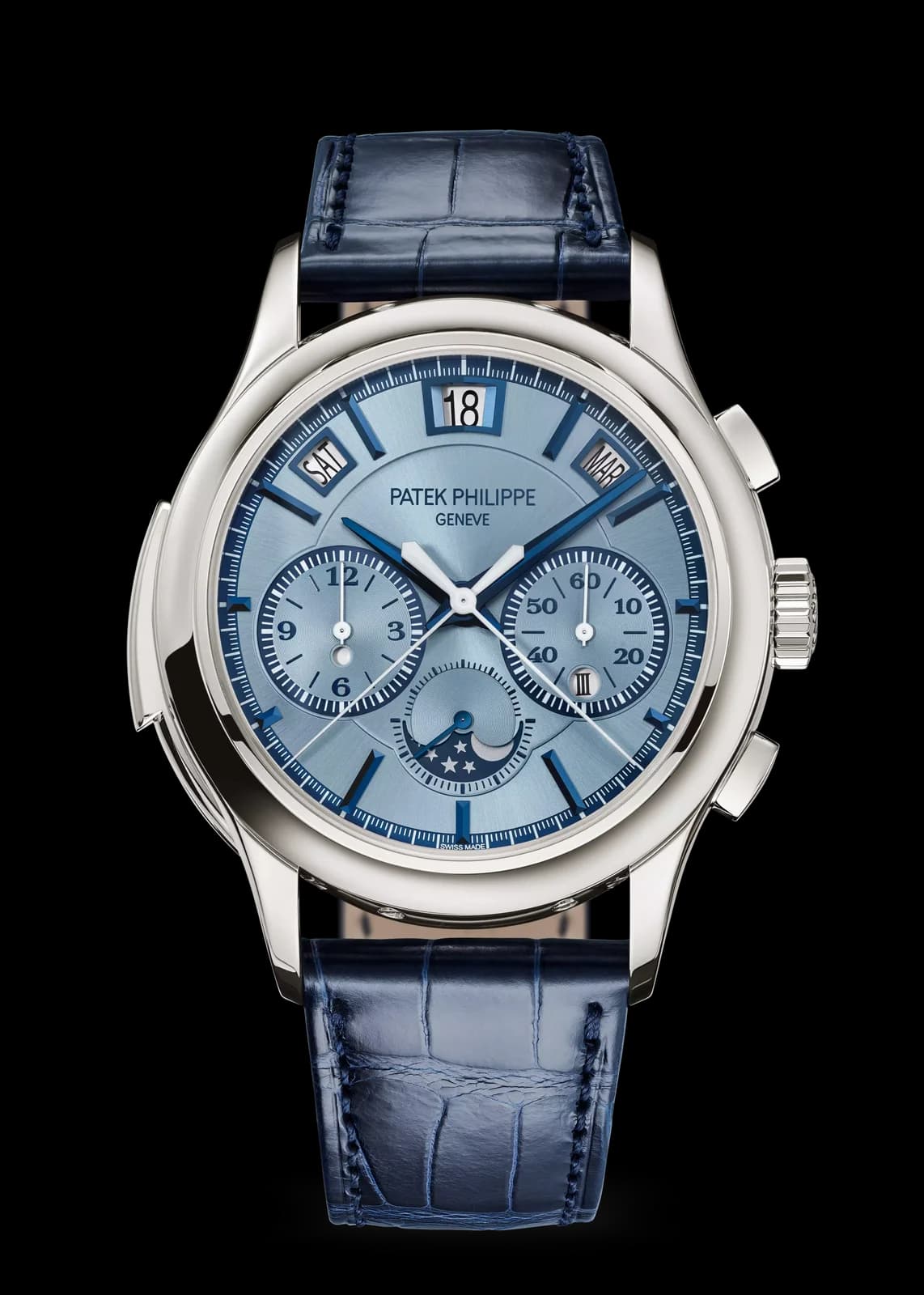
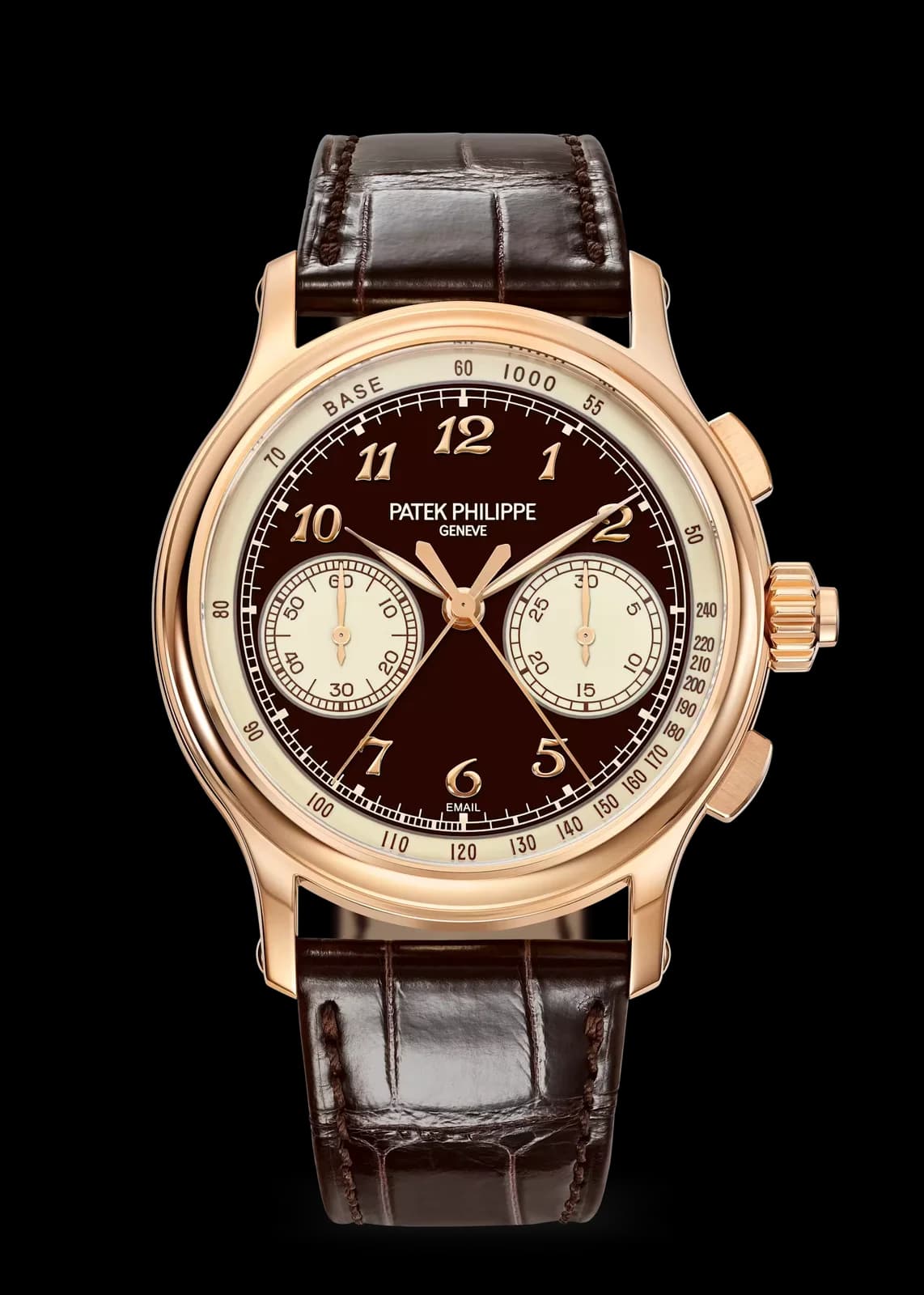
A split-seconds chronograph, also called a double chronograph, is a watch with two seconds hands that can time two events at once or compare them. One hand keeps running while the other can be stopped. This makes it useful for timing intervals that begin together but finish at different moments.
How does a split-seconds chronograph work?
A single pusher, usually at 2 o’clock, starts both seconds hands together. A second pusher, usually at 10 or 8 o’clock, works the split-seconds hand on its own. Press it and that hand stops while the chronograph hand carries on. The stopped hand shows the first time. Press the extra pusher again and the split-seconds hand jumps forward to rejoin the running hand. The split-seconds hand can also be restarted or returned to zero. Until 1992, most of these watches drove the two hands with two chronograph modules, each controlled by its own column wheel.
Where it comes from
Adolphe Nicole is credited with inventing the split-seconds chronograph in the 19th century. The complication used to be called the fly-back second. That name now belongs to a different kind of chronograph, the flyback, whose timer resets instantly. The split-seconds chronograph does not work that way. Watches from Tissot, IWC Schaffhausen and Certina have the split-seconds function.
Not to be confused with
A flyback chronograph is a different function. One press sends its seconds hand back to zero and starts it running again straight away. A split-seconds chronograph does something else. It keeps one hand running while a second hand stops to mark a separate time, then lets that hand catch up. The old name for the split-seconds chronograph, fly-back second, adds to the confusion, because the flyback name is now used for the instant-reset type.
Checked