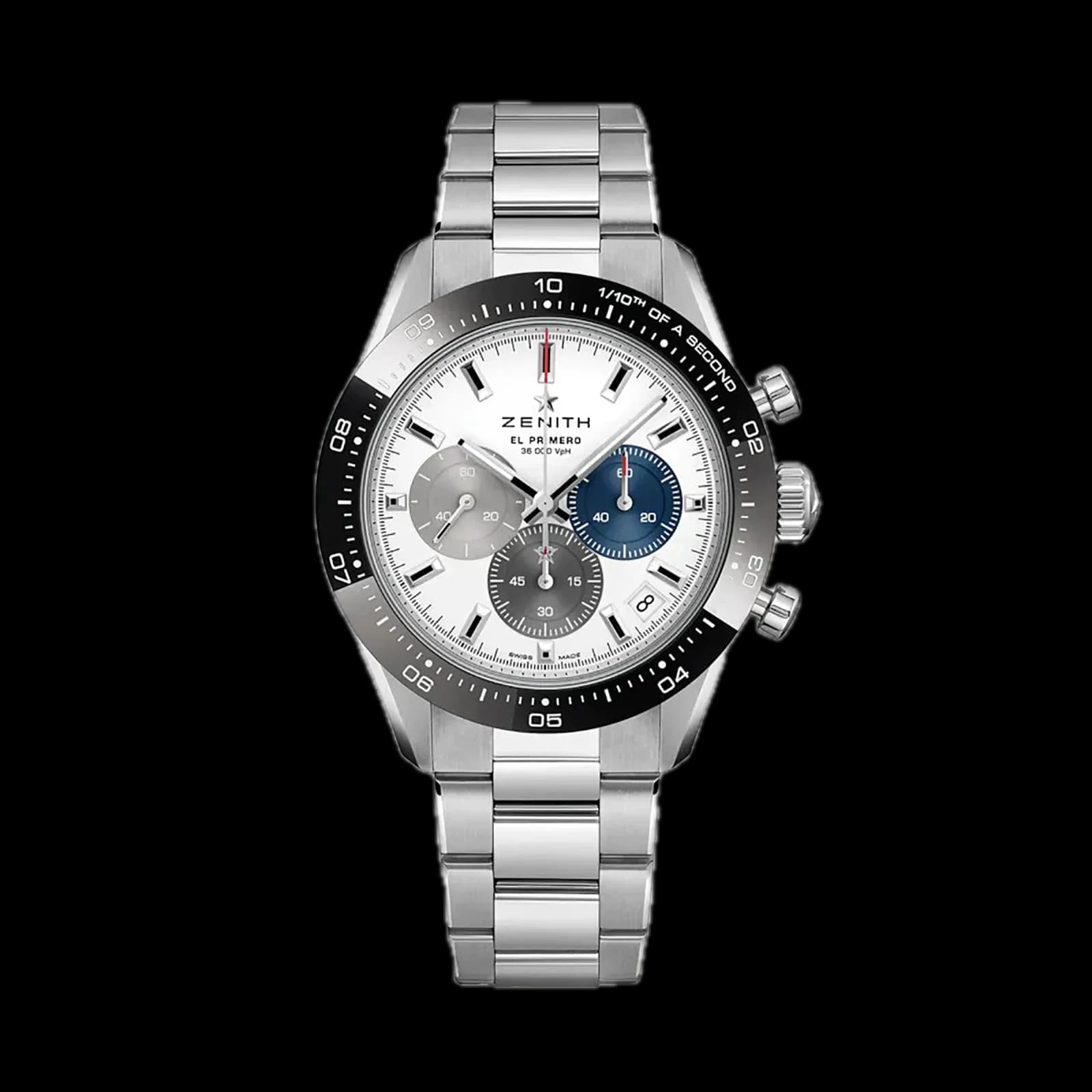
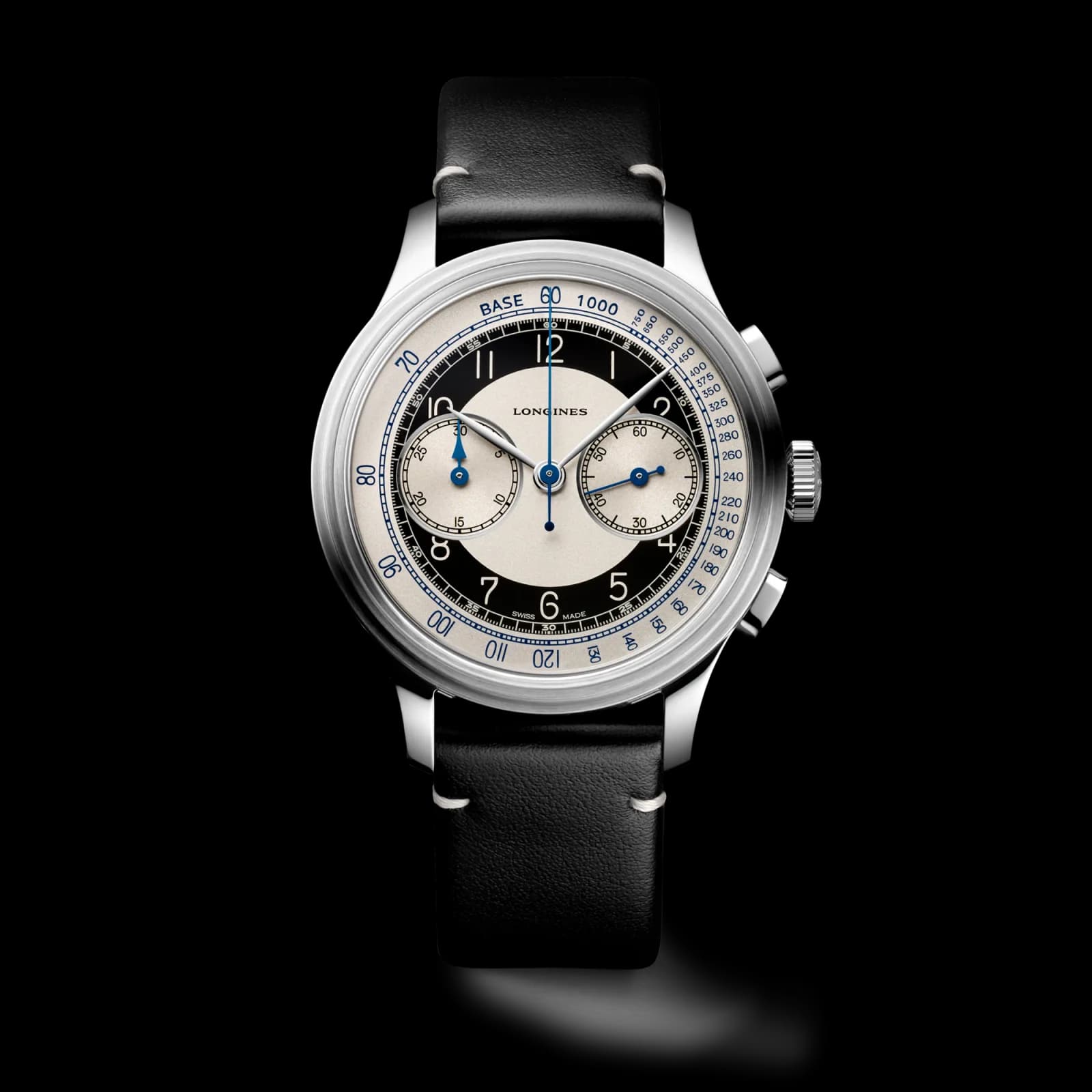
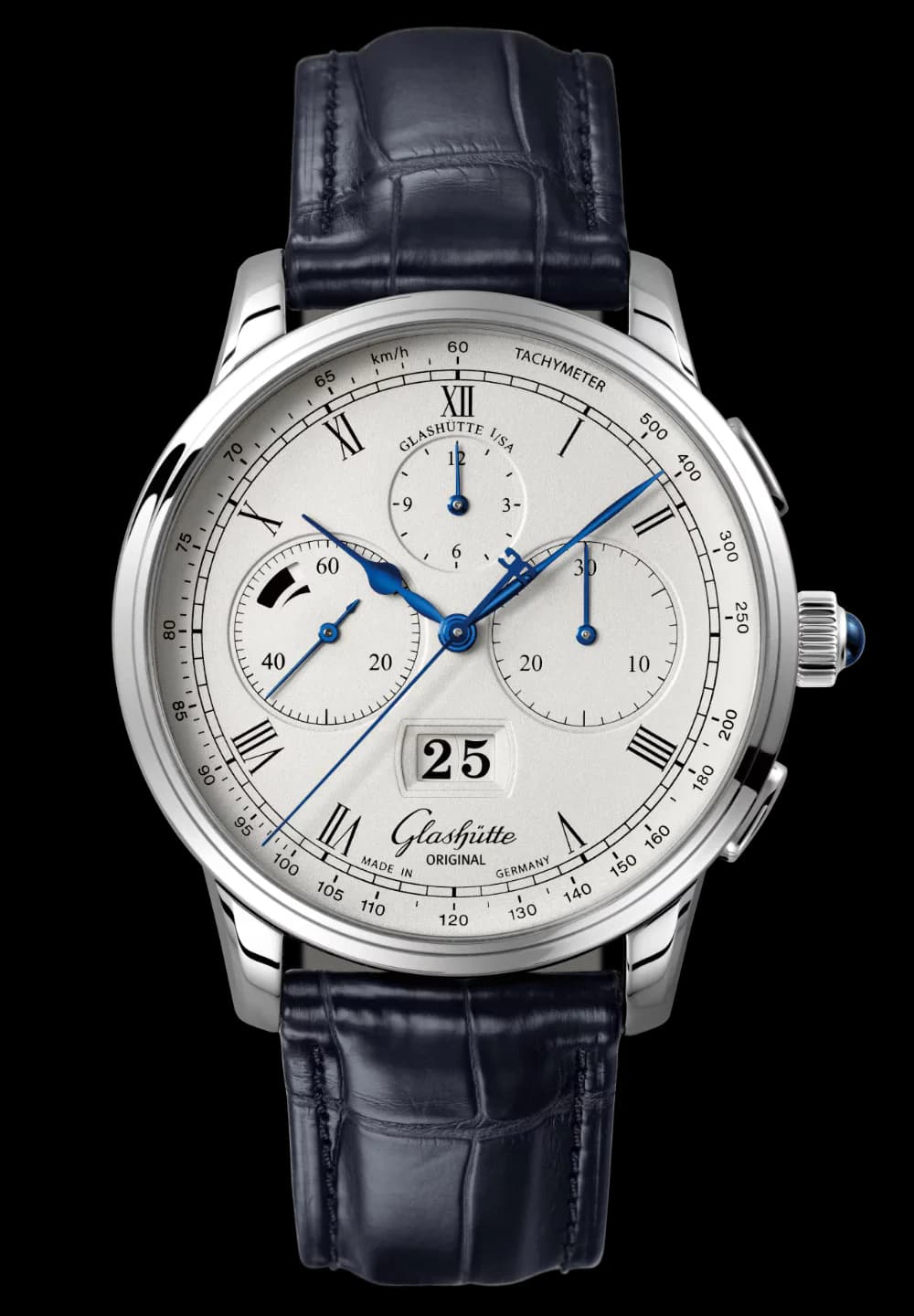
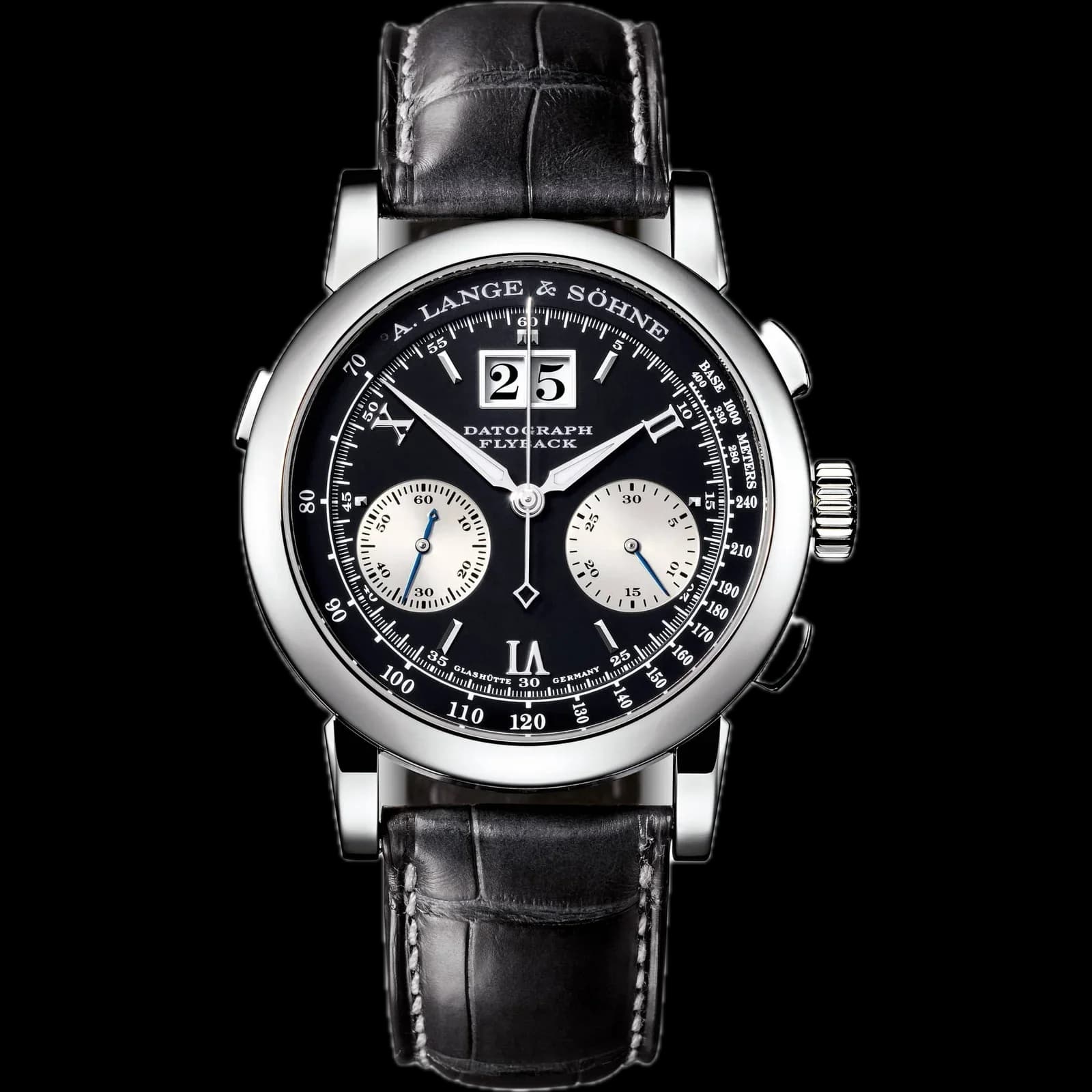
A tachymeter scale is a scale around the rim of some analogue chronograph watches. It is used to work out speed from elapsed time. It shows how fast a moving object, such as a vehicle, travels over a known distance. Time+Tide calls it by far the most common chronograph scale.
How do you use a tachymeter scale?
Start the chronograph as an object passes a starting point. Stop it once the object has covered a set distance, such as a mile or a kilometre. The scale is calibrated against a standard length, and that length is always marked on the dial. Any unit of distance works, as long as you use the same unit throughout. The result is only the average speed over the timed distance. It does not show how the speed changed along the way.
What are its limits?
A standard watch tachymeter only works for events that last one minute or less. At the other end, tachymeter scales usually begin at around seven seconds, though some begin as late as nine seconds. Very short events of under about ten seconds are also hard to read. So the most useful timings fall between about ten seconds and one minute.
Where it comes from
The name joins two Greek words, one meaning speed and the other meaning measure. The scale can sit on the bezel or on the dial. Phillips says Omega’s first Speedmaster, reference CK 2915 from 1957, was the first chronograph with the scale on the bezel instead of the dial. Omega called it the Tacho-productometer scale at the time. Watches from Omega, Glashütte Original and A. Lange & Söhne carry a tachymeter.
Not to be confused with
A telemeter scale is different. It measures distance, not speed. It shows how far away something is, for example by timing the gap between seeing lightning and hearing thunder. A pulsometer scale is different again. It is used to count heartbeats per minute rather than to measure speed. Of the three, only the tachymeter turns elapsed time into speed.
Checked