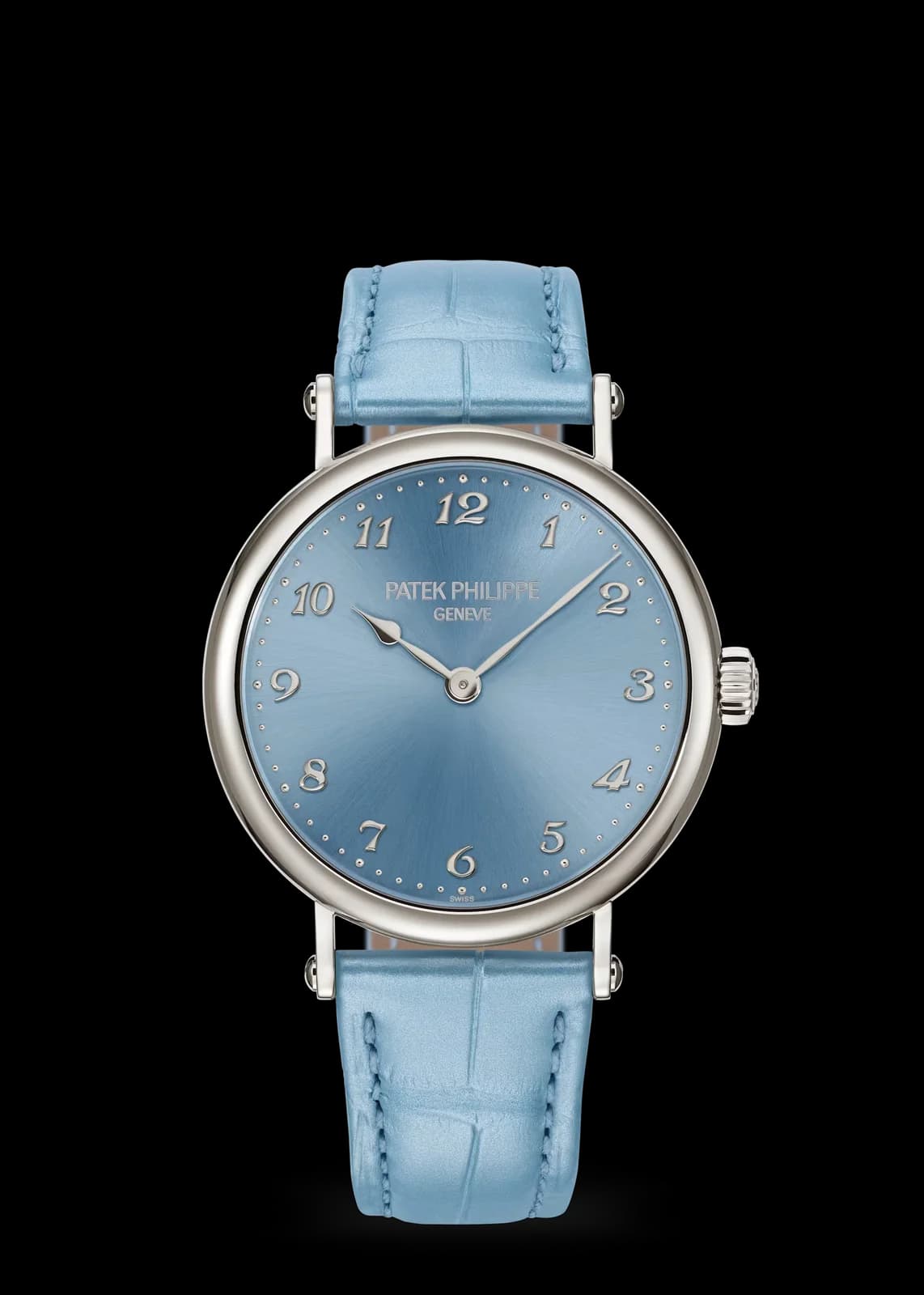
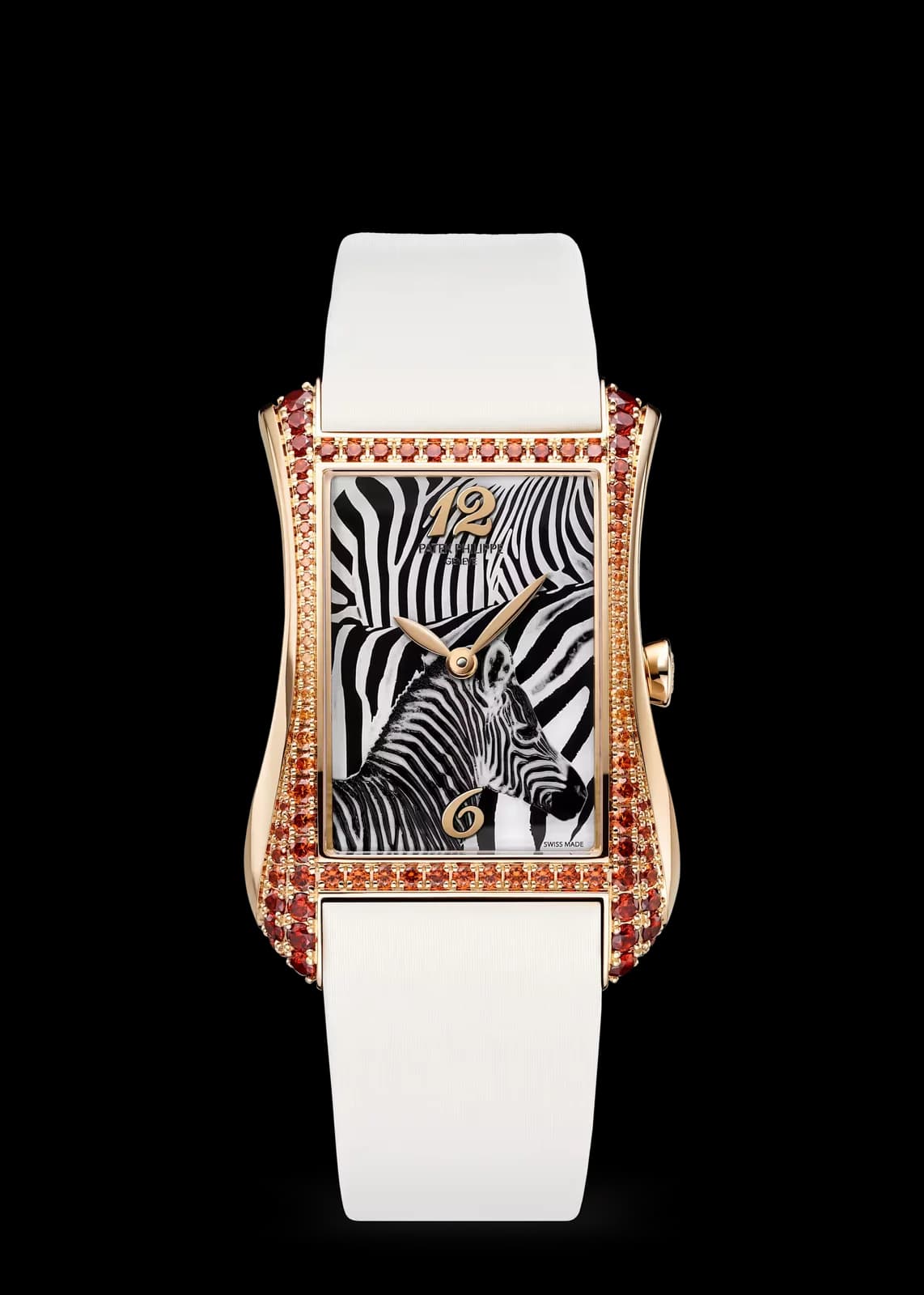
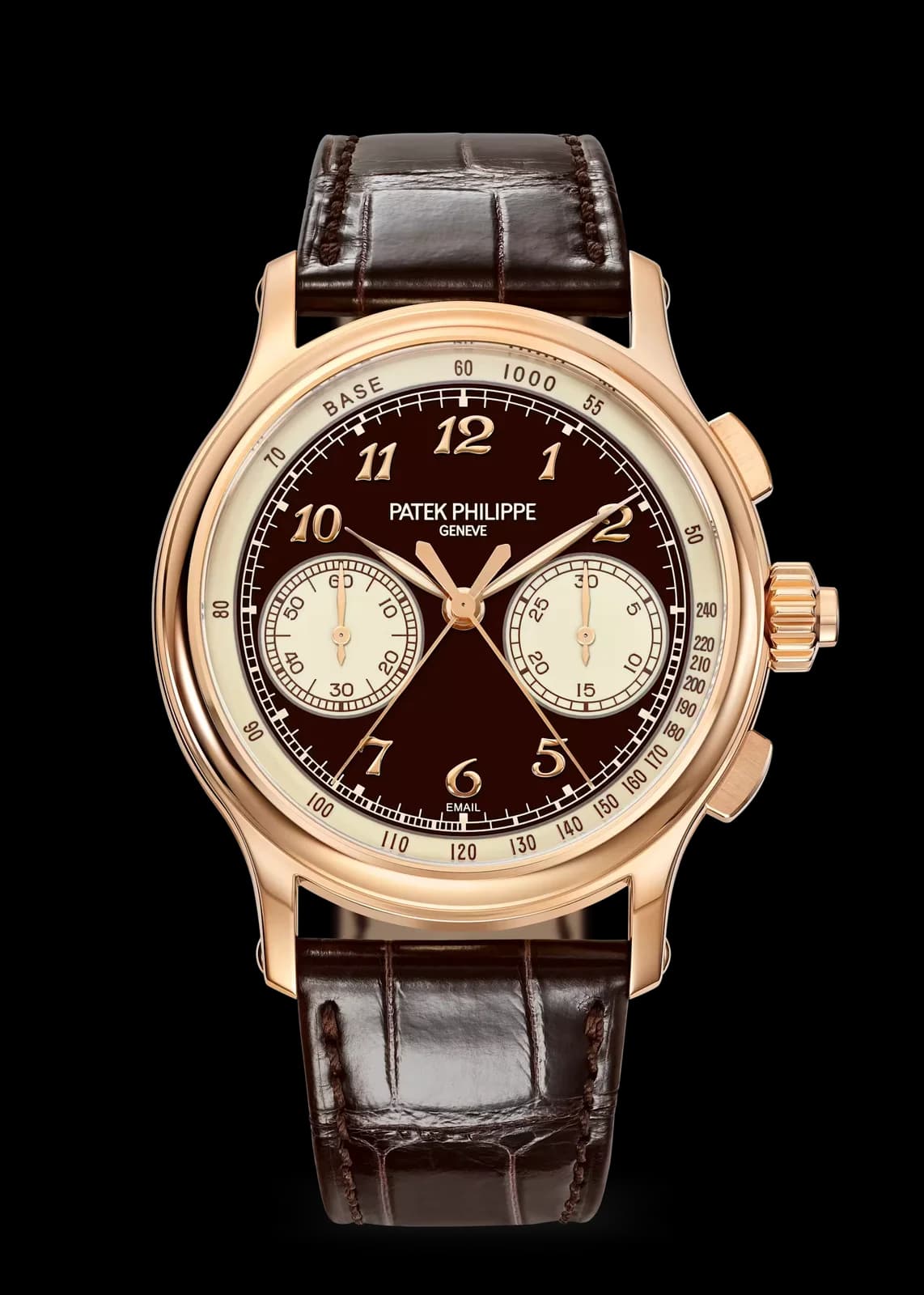
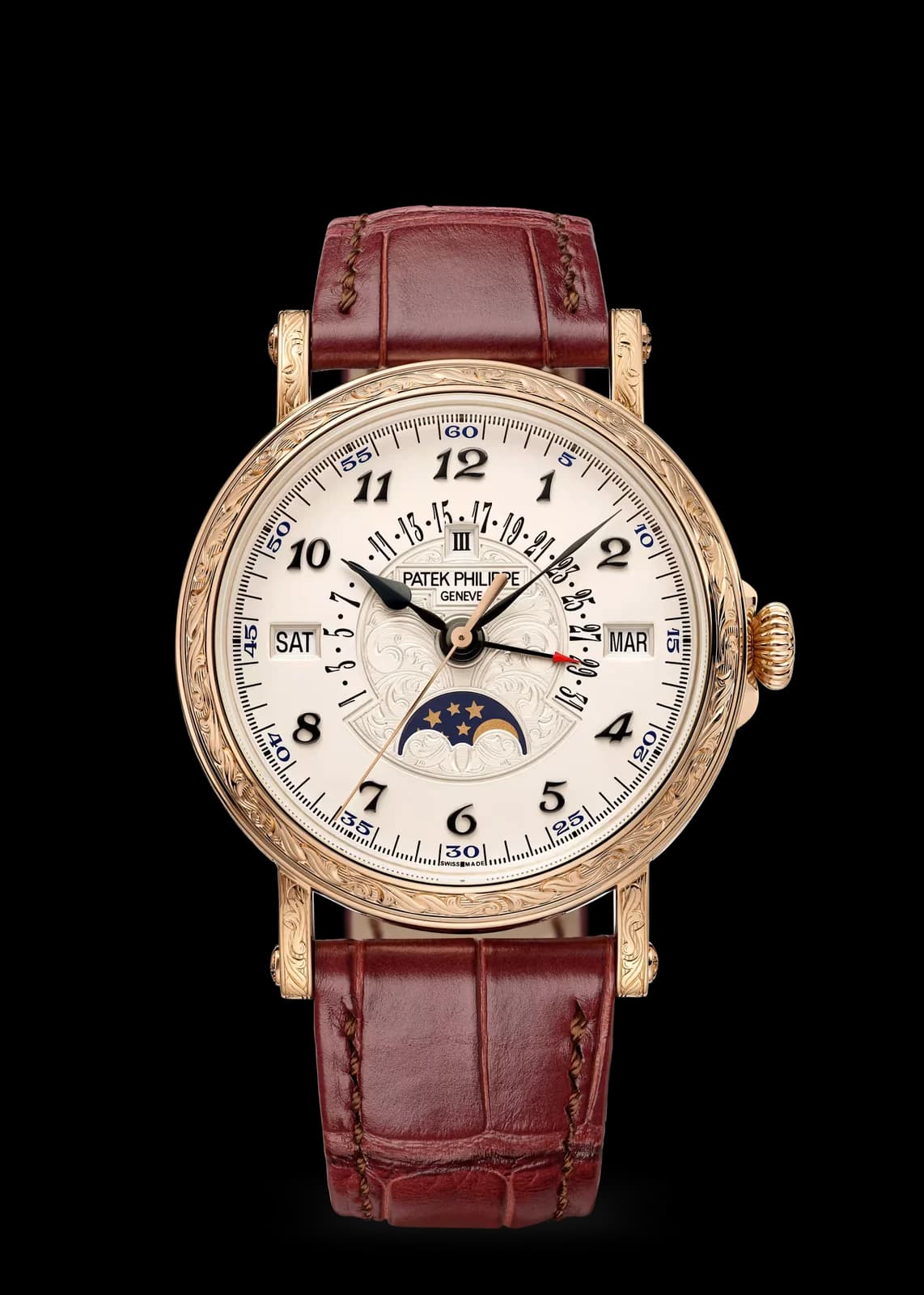
Breguet numerals are a style of Arabic hour numeral that Abraham-Louis Breguet designed late in the 18th century. They lean a little and are neither blocky nor handwritten. That makes them decorative while they still do a practical job. Watchmakers still use them today, and leading makers took up the style.
What do Breguet numerals look like?
Breguet started with ordinary Arabic numerals and made them his own. He refined their shapes and gave them a slight tilt. The design drew on neoclassical lettering. Look for thin upstrokes, round flourishes and strokes that taper. The result sits between a plain printed figure and a handwritten one. Roman numerals give a different effect. Unlike Breguet numerals, they can look formal or cramped, particularly on small dials.
Where it comes from
The numerals first appeared before the French Revolution. Those early dials marked the minutes with small stars. Every fifth minute carried a stylised fleur-de-lys. Breguet usually put his Arabic numerals on enamel dials. On his guilloché, or engine-turned, dials he generally used Roman numerals instead. This pairing of dial and numeral was a habit rather than a fixed rule.
Who uses Breguet numerals today?
The style became so popular that leading makers adopted it, among them Patek Philippe, Vacheron Constantin and Omega. The Breguet brand still uses the numerals in its Classique and Tradition lines, and they have become one of its signatures. Breguet often keeps Roman numerals for its guilloché dials, much as the founder did. Outside Breguet, look for the numerals on watches by Patek Philippe, Vacheron Constantin and A. Lange & Söhne.
Checked