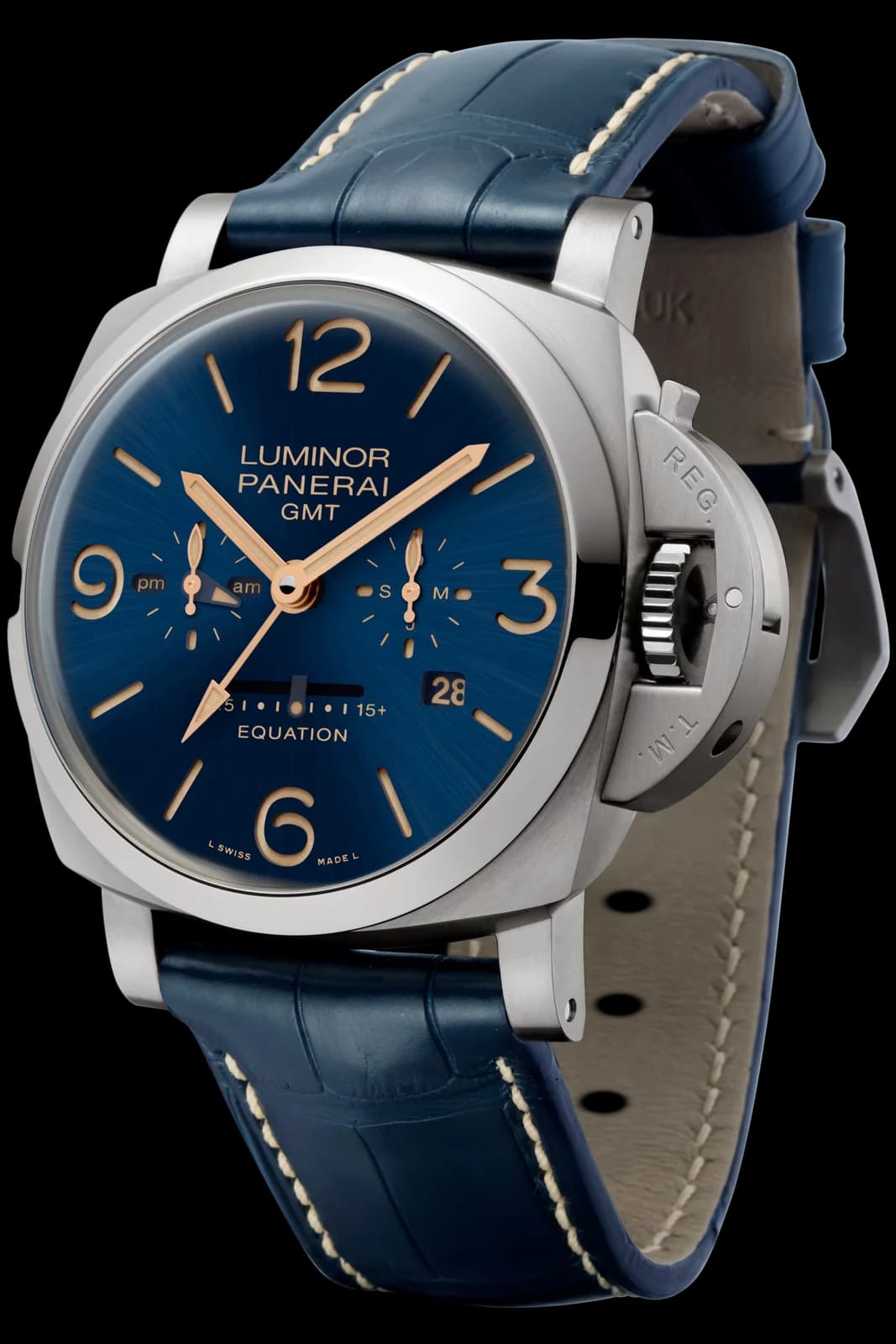
The equation of time is a complication that shows the gap between apparent solar time, which a sundial shows, and mean time. The gap changes through the year, and sundial time can run up to about 16½ minutes ahead in early November. It is one of the rarest wristwatch complications.
How does an equation of time work?
A cam shaped like a kidney sits in the movement and drives the display. Its outline follows the yearly difference between mean and true solar time. As the cam turns through the year, the reading on the dial changes with it. The difference is not always large. It falls to zero on about four days each year: in mid-April, mid-June, early September and late December. On those days, sundial time and mean time agree.
What is a running equation of time?
The simpler display uses a small subdial. Its hand points to the number of minutes to add or take away, on a scale from minus 16 to plus 14. The wearer does the sum. A running, or marchante, equation of time removes that step. It adds a second minute hand that shows solar time directly. Blancpain launched its Le Brassus Equation du Temps Marchante wristwatch at the Basel fair in 2004.
Where it comes from
Christiaan Huygens published the first essentially correct tables of the equation of time in 1665. Clocks with a built-in mechanism to make the correction are called equation clocks. The earliest had a pointer that showed the equation of time on a scale. Later 18th-century clocks made the correction by themselves. Who invented the kidney cam is disputed. Some credit Huygens; others credit Robert Hooke.
Checked