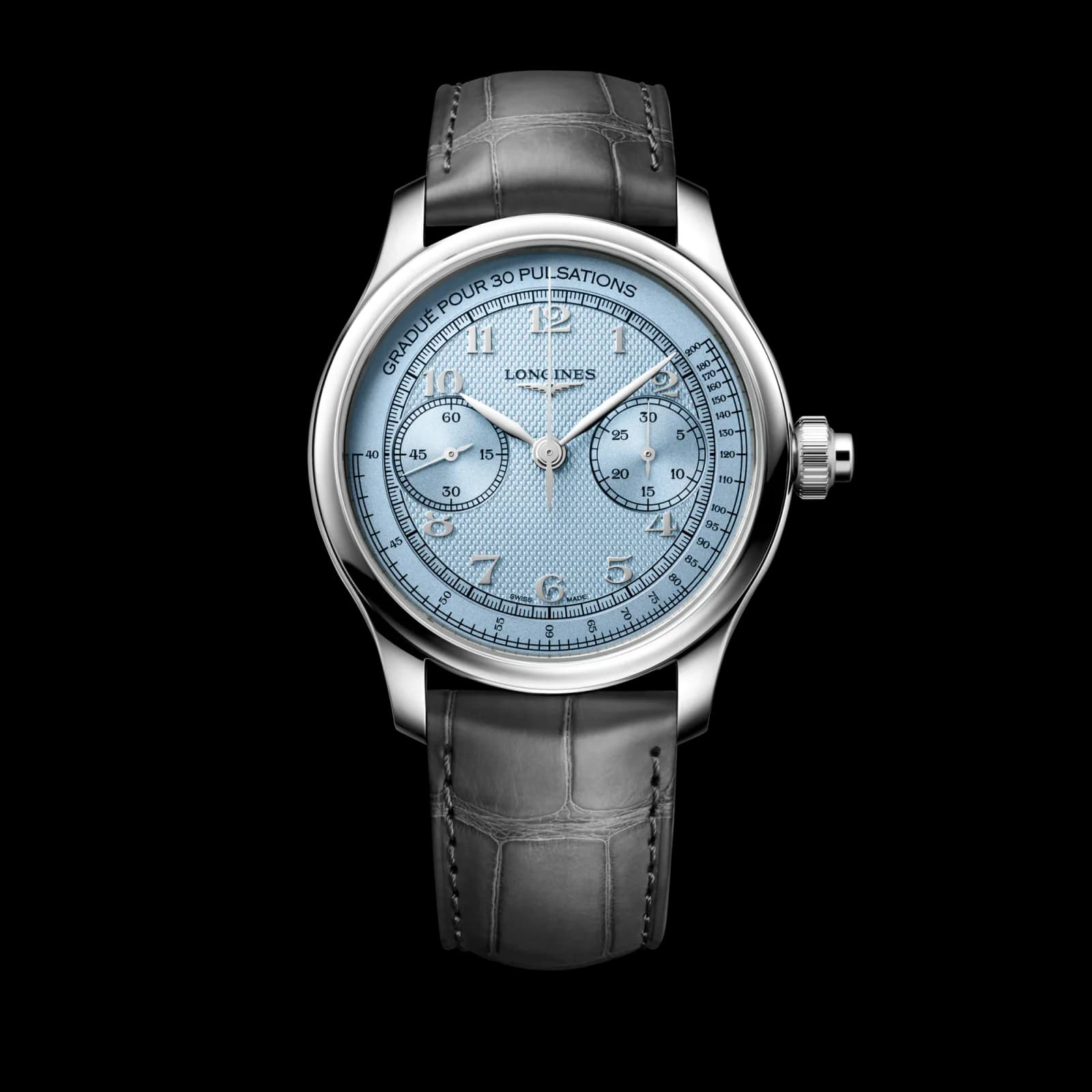
A monopusher chronograph is a chronograph worked by a single button, usually built into the crown. One press starts the timing, a second stops it and a third returns the hands to zero. It is the design used on the earliest wristwatch chronographs, made in the 1910s and 1920s.
How does a monopusher chronograph work?
The single button runs every stopwatch function in a fixed order: start, stop, reset. Inside the movement, a cam or a column wheel sets that order. Which one is used depends on the calibre. The button is usually in the crown. On some watches it sits on the side of the case at 2 o’clock instead. On the Longines 13.33Z movement of 1913, the crown did two jobs. It wound the watch, and it also worked the chronograph.
Where it comes from
Pilots, doctors and other professionals who needed exact timing were early users of these watches. In the 1910s and 1920s, the single-button layout was not one choice among several. Every wristwatch chronograph of that period used it. On those watches, one button started a timing, stopped it and cleared the dial. Later chronographs added a second button. With two buttons, starting and stopping could be kept apart from resetting.
Not to be confused with
A two-button chronograph spreads the work across two buttons. One starts and stops the timing as many times as needed. The other resets it. This lets the wearer add up several separate timings on the same dial. A monopusher cannot do that. After a stop, the next press sends the hands back to zero. This is also the design’s biggest practical weakness: one extra press can wipe out a timing by accident.
Checked