Jaeger‑LeCoultre unveils The Collectibles VII vintage capsule
Ten vintage pieces across Duoplan, Reverso and Memovox, from a 1929 movement to two platinum Reversos, come with archive extracts.
3 min read
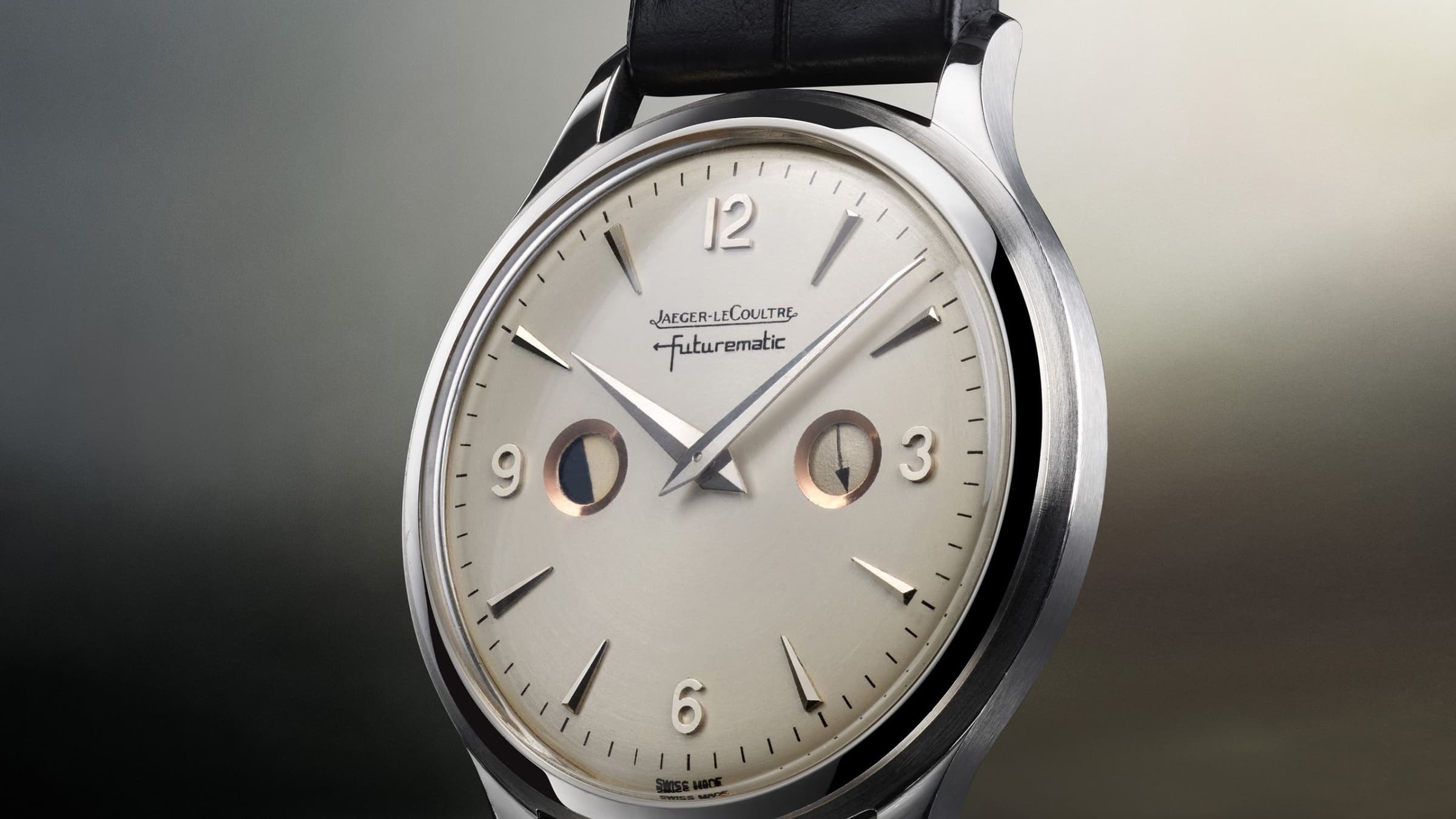
Jaeger-LeCoultre has unveiled The Collectibles VII, a capsule of 10 vintage pieces drawn from three families, Duoplan, Reverso and Memovox, plus a looser Precision category. It debuted at an exhibition in Hong Kong, where visitors could watch a vintage watch being restored live.
The Collectibles began in 2023 to mark the manufacture’s 190th anniversary, alongside a book documenting its emblematic watches from 1925 to 1974. Every piece comes with an extract from the maison’s archives and, where available, its original box, papers, and strap or bracelet.
The Duoplan family centers on the Caliber 101, launched in 1929 as the world’s smallest mechanical movement, at 14mm long, 4.8mm wide and 3.4mm thick. It stacks two planes: a large balance wheel oscillating at 18,000vph on one, the gear trains on the other. It is still in production, and four different sized Duoplan calibers have been made since 1925. In the capsule it appears in a 1950s Art Deco-style watch with a platinum case 6.15mm wide and 5.84mm thick. The watch is set with 22 baguette-cut diamonds, including those on the two rings of the cordonnet bracelet.
Also from the family: the 1955 Duoplan Chain, in solid 18K pink gold weighing 73.9g with a polished bracelet and the Caliber 403, which was introduced in 1927 and produced until 1966. The 1949 Duoplan Tubogas is a secret watch, its yellow gold case sliding over the dial, on a ribbed pink gold bracelet. A circa 1935 single-lug Duoplan with the Caliber 409 has one rounded lug on each side of the case.
The Reverso selection runs from a 1931 steel Reverso Cordonnet with a Tavannes-supplied Caliber T051 to two limited-edition platinum models. The 2001 Number 1 shows a skeletonized, hand-engraved caliber through its sapphire caseback, while the 2003 Number 2 reveals a spinning tourbillon under a mirror-polished bridge.
The capsule also includes a 1949 Triple Calendar made for the Portuguese market, with Portuguese day and month indications and teardrop lugs, and the 1958 Futurematic E502, nicknamed Porthole for its two small windows showing power reserve and small seconds. The 1958 Memovox Parking has a blue and white pictogram and the hand-wound Caliber 814, with a central disk marking 30, 60, 90 and 120 minutes for the alarm.