Why a minute repeater costs a fortune
A slide, two hammers and tuned gongs spell out the time, and the hand work behind that small sound explains the price.
4 min read
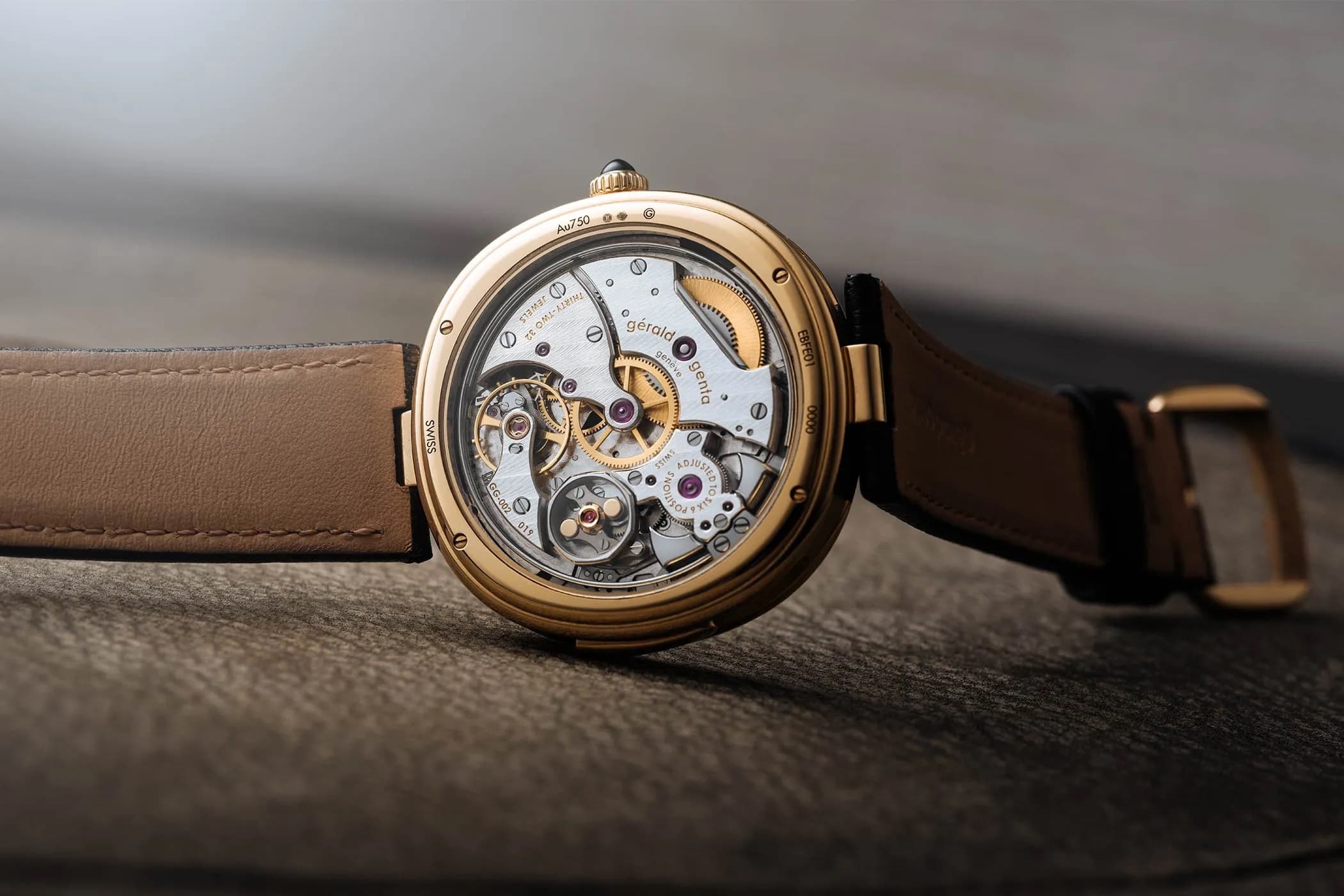
A time you can hear
Press the slide on the side of a minute repeater and the watch speaks. It does not tick louder or light up. It strikes small hammers against tuned gongs, and the sound spells out the time.
Take 4:47. First come four low strikes for the hours. Then three double strikes, each a low note followed by a high one, for the quarters. Last come two high single strikes for the minutes past the final quarter. Hours sound low, minutes sound high, and quarters mix both.
That need for three distinct sounds is the heart of the complication. The watch has to count, remember and play back, all from one push of a slide, and it has to do so for every one of the 720 minutes on a twelve-hour dial.
Born in the dark
The idea began in the 17th century as a way to read the time in darkness. A watch that could announce the hour by sound solved the problem, and it was also prized by people who could not see a dial.
The invention itself was disputed. Reverend Edward Barlow, who created the rack and snail mechanism, is credited with inventing the repeating clock. Quare was awarded the patent by King James II’s council in 1687 over Barlow, and Daniel Quare and Barlow both claimed the repeating watch as their own around 1700.
Breguet finalised the minute repeater around 1783, and it became the benchmark chiming complication of the 1800s. He also chose gong springs over bells, a choice used ever since. Wire gongs were more compact and let the case itself act as a resonator.
What lives inside
Open up the mechanism and the cost begins to make sense. A minute repeater needs three rack-and-snail cam systems, three hammer-and-gong systems and a striking governor. The movement typically holds 300 to 500 hand-finished parts, with clearances measured in hundredths of a millimetre.
The striking train also has its own mainspring. It is not wound by the going train at all; pressing the slide winds it.
Around 1820, Breguet’s all-or-nothing mechanism stopped repeaters from chiming only part of their sequence, so the watch either plays the whole thing or stays silent.
Tuning by ear
The gong is where the craft is finished by hand. Pitch depends on the length of the gong, and the gong is tuned by filing after the watch is cased. That hand work adds to the labour cost.
Cases tend to muffle chimes, so getting a loud and clear sound out of a closed watch is a real engineering challenge. Watchmakers adjust gong position, filing and the angle at which the hammer strikes, all by ear, until the tone is as pure as they can make it.
Minute repeaters usually use two hammers, though some chiming watches have three to five. Westminster chimes, which imitate Big Ben, use at least four sets of gongs and hammers.
Hours at the bench
A highly trained watchmaker can spend up to 300 hours assembling a chiming movement. Patek Philippe has each of its minute repeaters auditioned and approved by leadership in a sound booth before delivery.
The work does not end when the watch is sold. Routine overhauls can take several weeks of bench time, and major restorations can exceed six months.
There is a practical trade-off too. Nearly every minute repeater is resistant only to dust and humidity, because the slide opening cannot be sealed without deadening the sound.
From pocket to wrist
Audemars Piguet built the first wristwatch minute repeater in 1892, on a Louis-Elisee Piguet movement, and the house has specialised in minute repeaters since 1875. Only a handful of its watchmakers are trained to assemble and adjust a Grande Sonnerie, which typically has two mainspring barrels, one for timekeeping and one for striking.
The modern wrist repeater was revived by Patek Philippe’s Cal. R27 in reference 3979 from 1989. The 5178G with cathedral gongs, popularised by Patek Philippe and coiling nearly twice around the movement, measures 40mm, while the standard-gong 5078G is 38mm.
In 2015, after eight years of research with EPFL, Audemars Piguet’s Supersonnerie added a soundboard coupled to the gongs. The IWC Portuguese Minute Repeater is offered in 42mm rose gold, limited to 250 pieces.