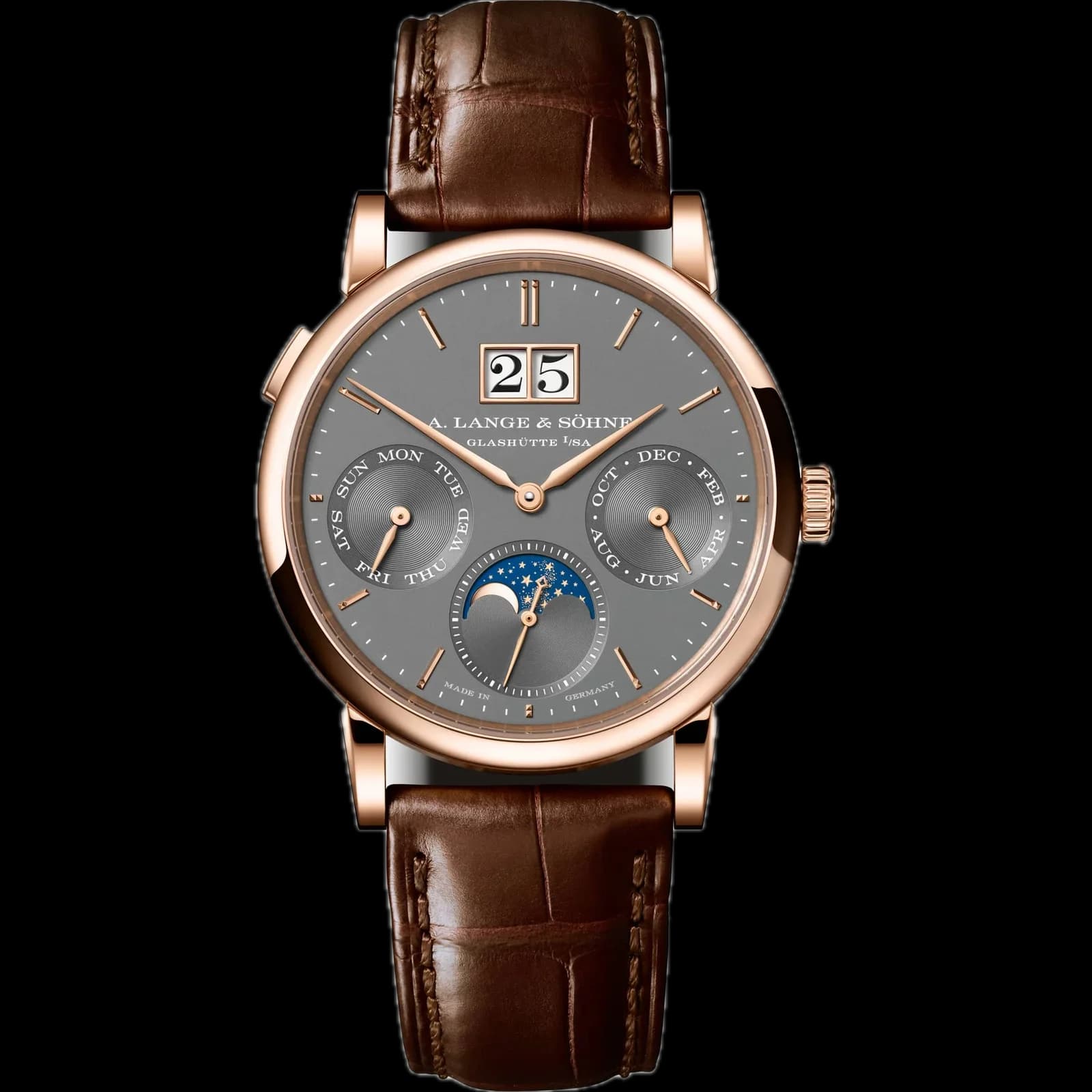
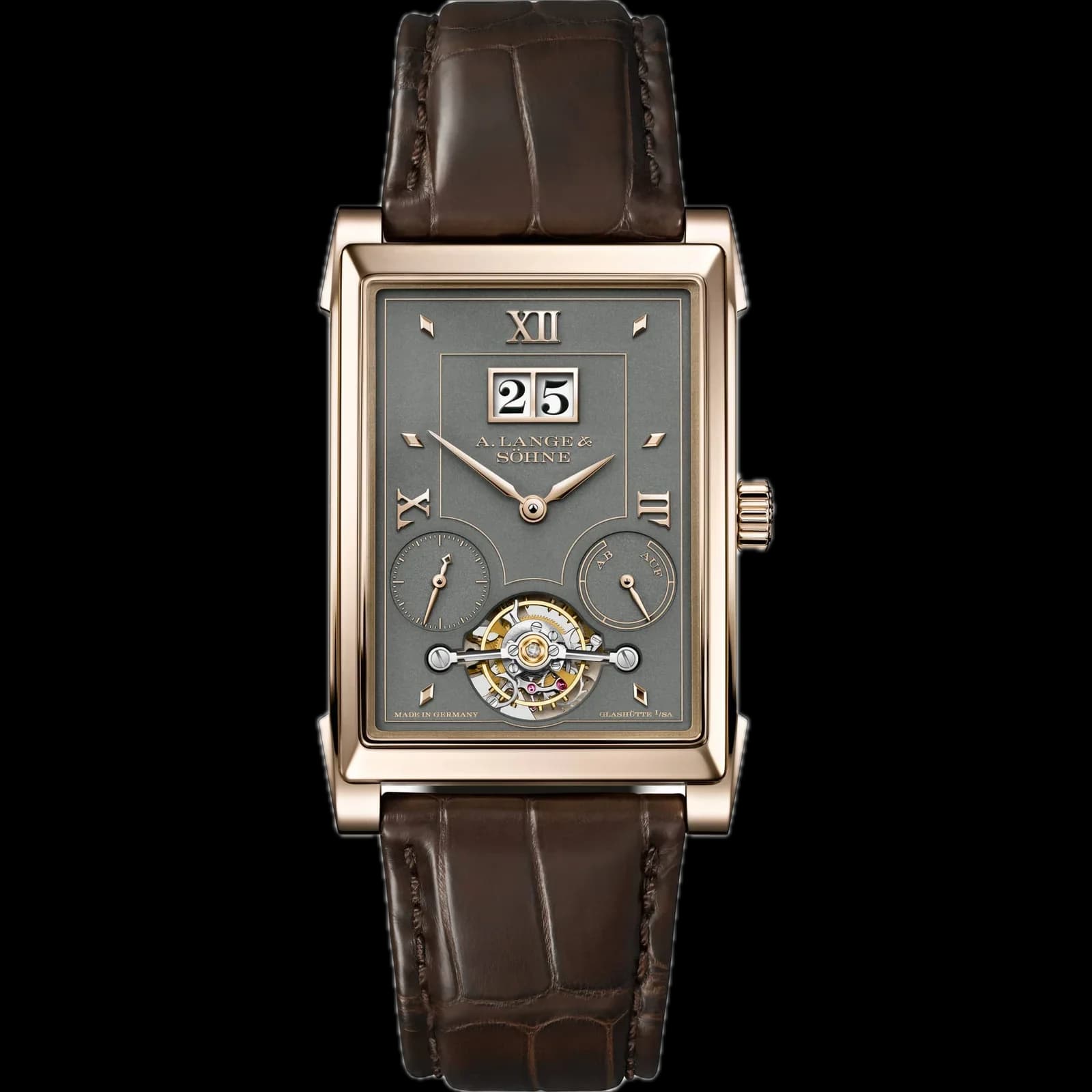
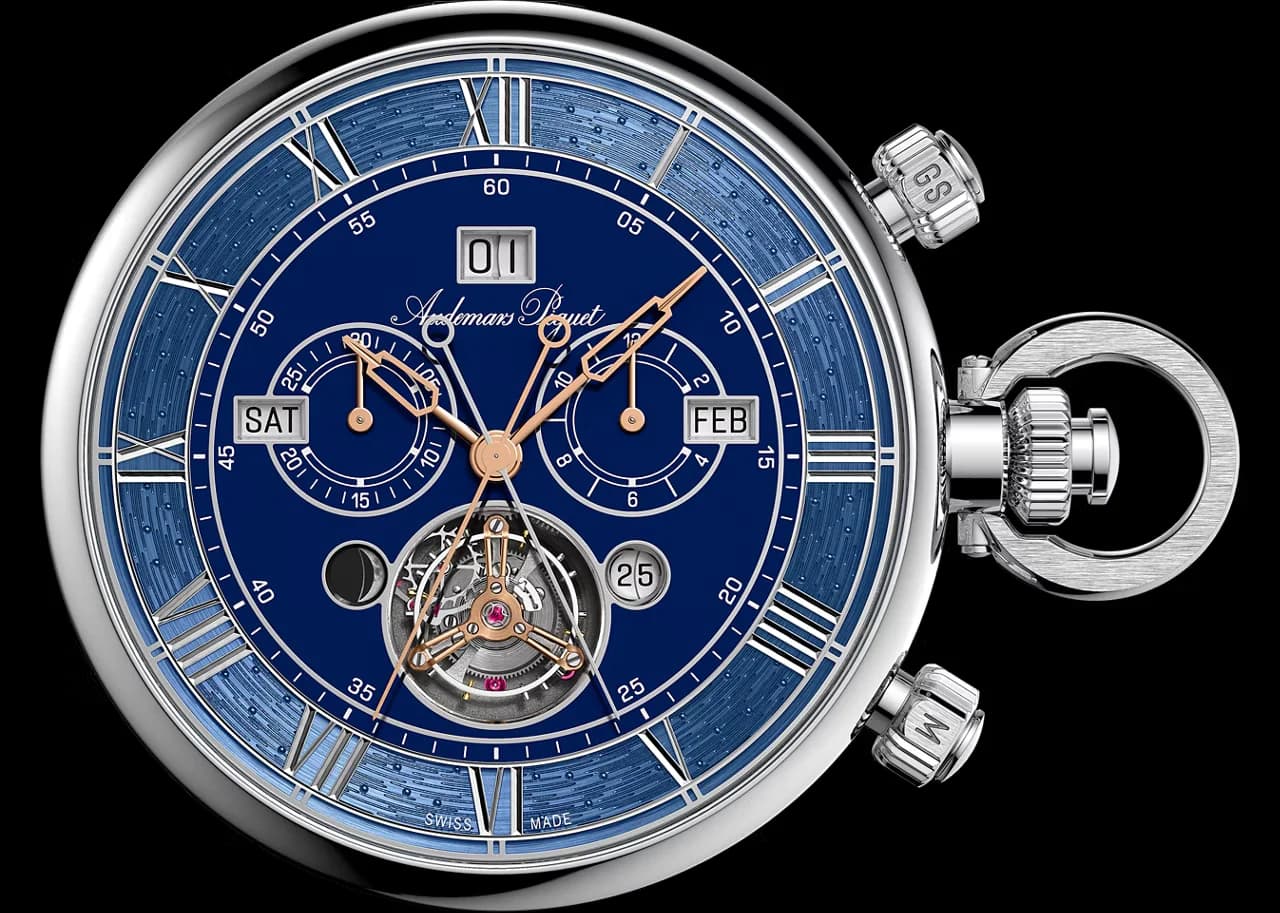
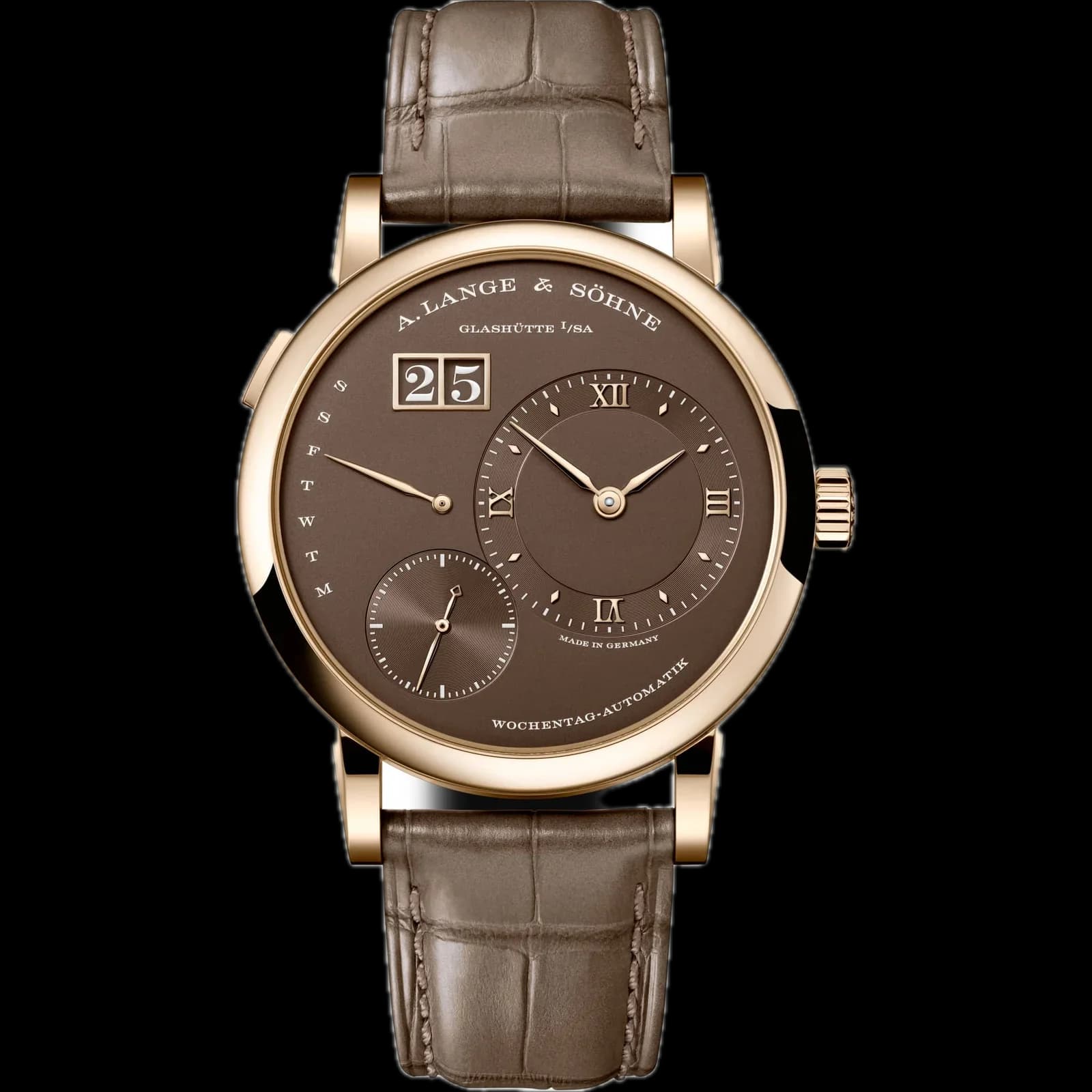
Big date is a complication that shows the date in large figures, usually across two numeral discs. One disc carries the tens digits 0 to 3. The other carries the units 0 to 9. The large date was the first patent the modern A. Lange & Söhne filed.
Why do the two digits often look split apart?
In a typical big date, the two discs sit at different heights or on separate axes. As a result, the tens digit and the units digit often look visibly split apart. Glashütte Original took a different route with its Panorama Date. It puts both discs on one axis and at one level, one inside the other. Only a very thin line of 0.06 mm divides the two digits. The window therefore needs no bar down its middle. The brand first used it in the Senator Panorama Date, presented in 1997.
How does the Lange outsize date work?
A. Lange & Söhne’s outsize date does not use two plain discs. The units sit on a ring-shaped disc showing 0 to 9, which moves on one step each day. The tens sit on a cross carrying 1, 2, 3 and a blank space. The cross moves on only once every ten days. Two programme wheels with specially calculated teeth control these irregular steps. The Lange 1, with its two-window large date, was among the first watches the revived brand presented on 24 October 1994.
Where it comes from
The Lange outsize date was modelled on the Five-Minute Clock in the Semper Opera House in Dresden. Johann Christian Friedrich Gutkaes designed and built it in 1841 with his student Ferdinand Adolph Lange, who later became his son-in-law. The clock showed the hours in Roman numerals on a left roller. The minutes appeared in five-minute steps on a right roller. That clock, with its figures side by side on left and right rollers, is the model for the Lange date on the wrist.
Checked