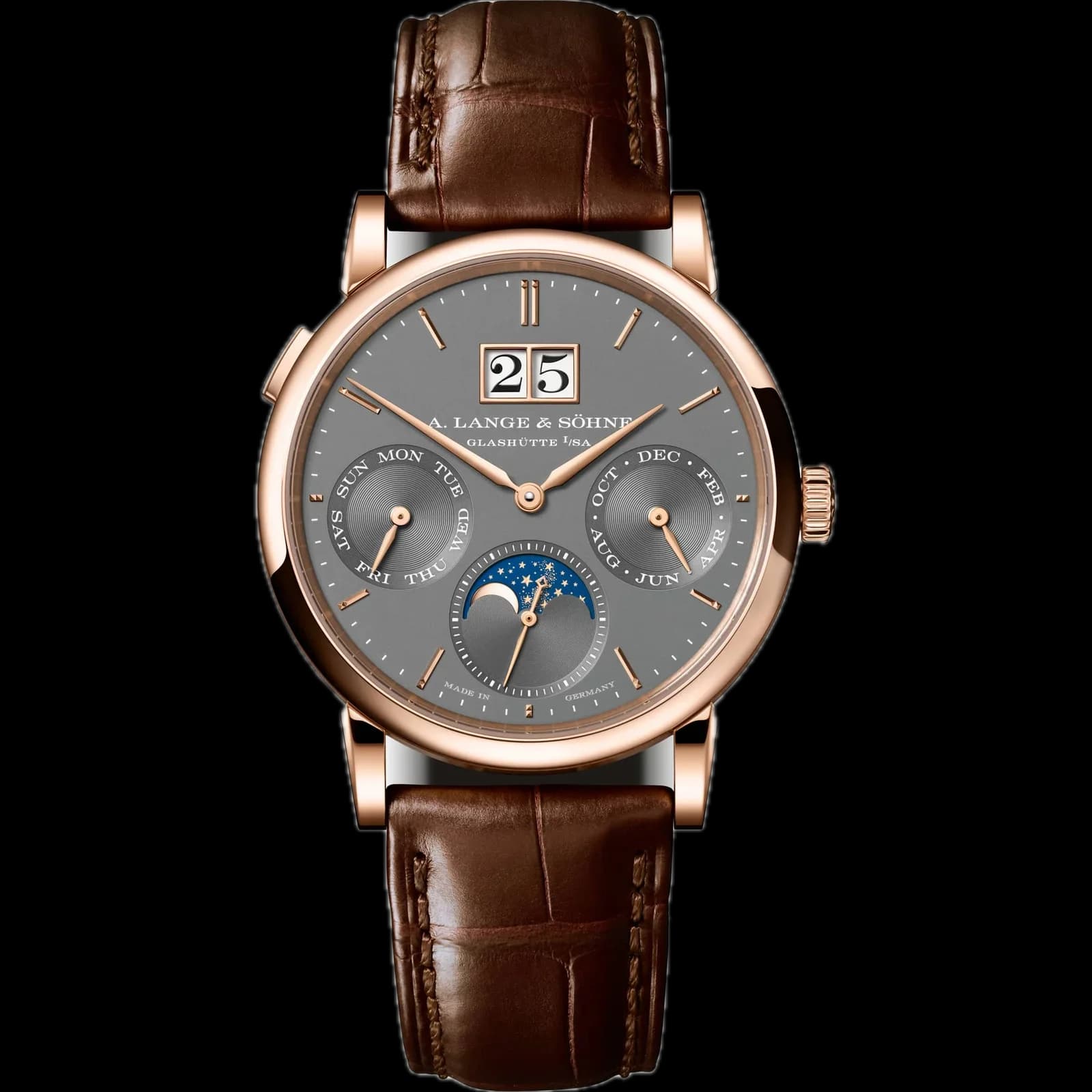
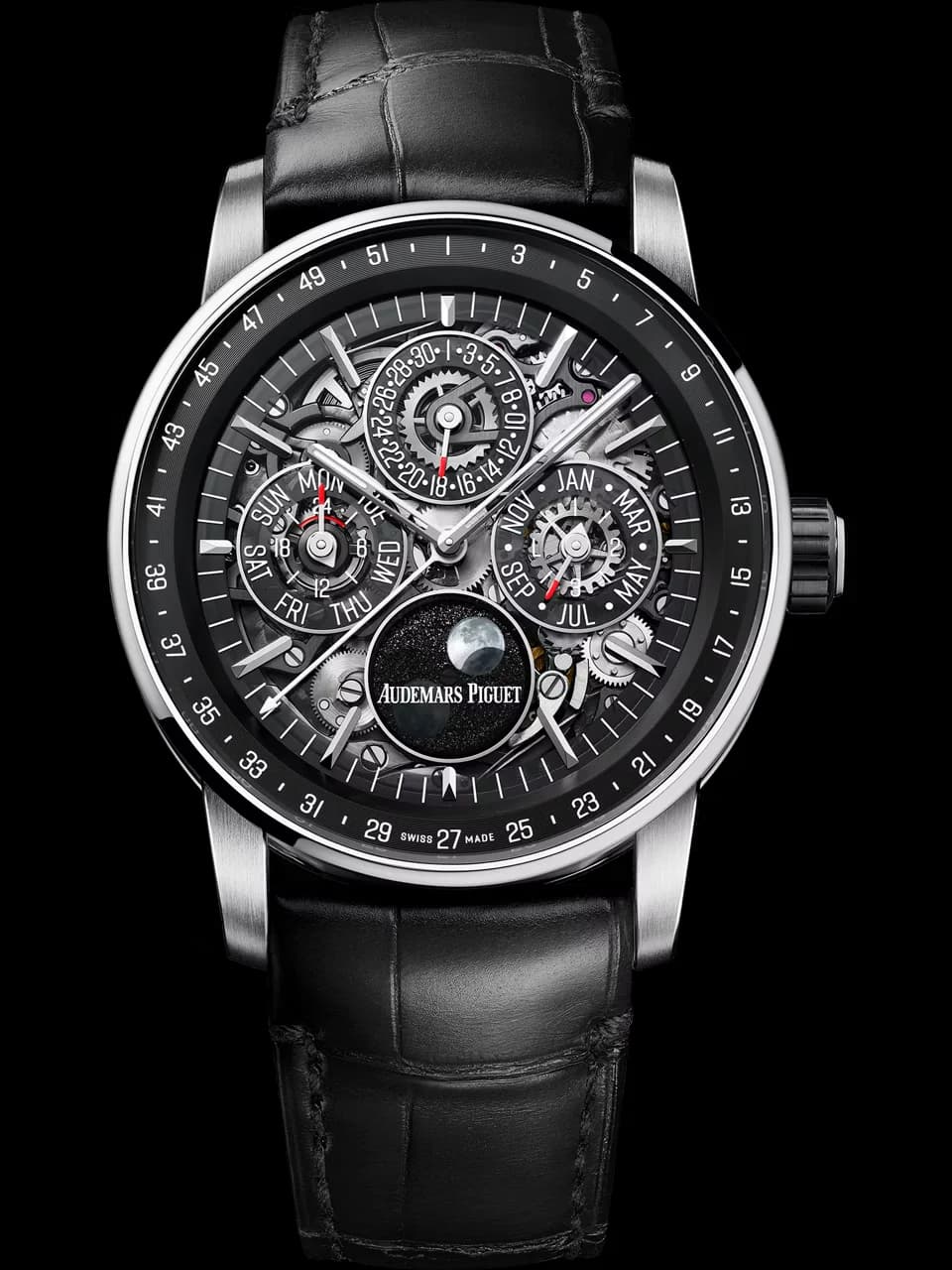
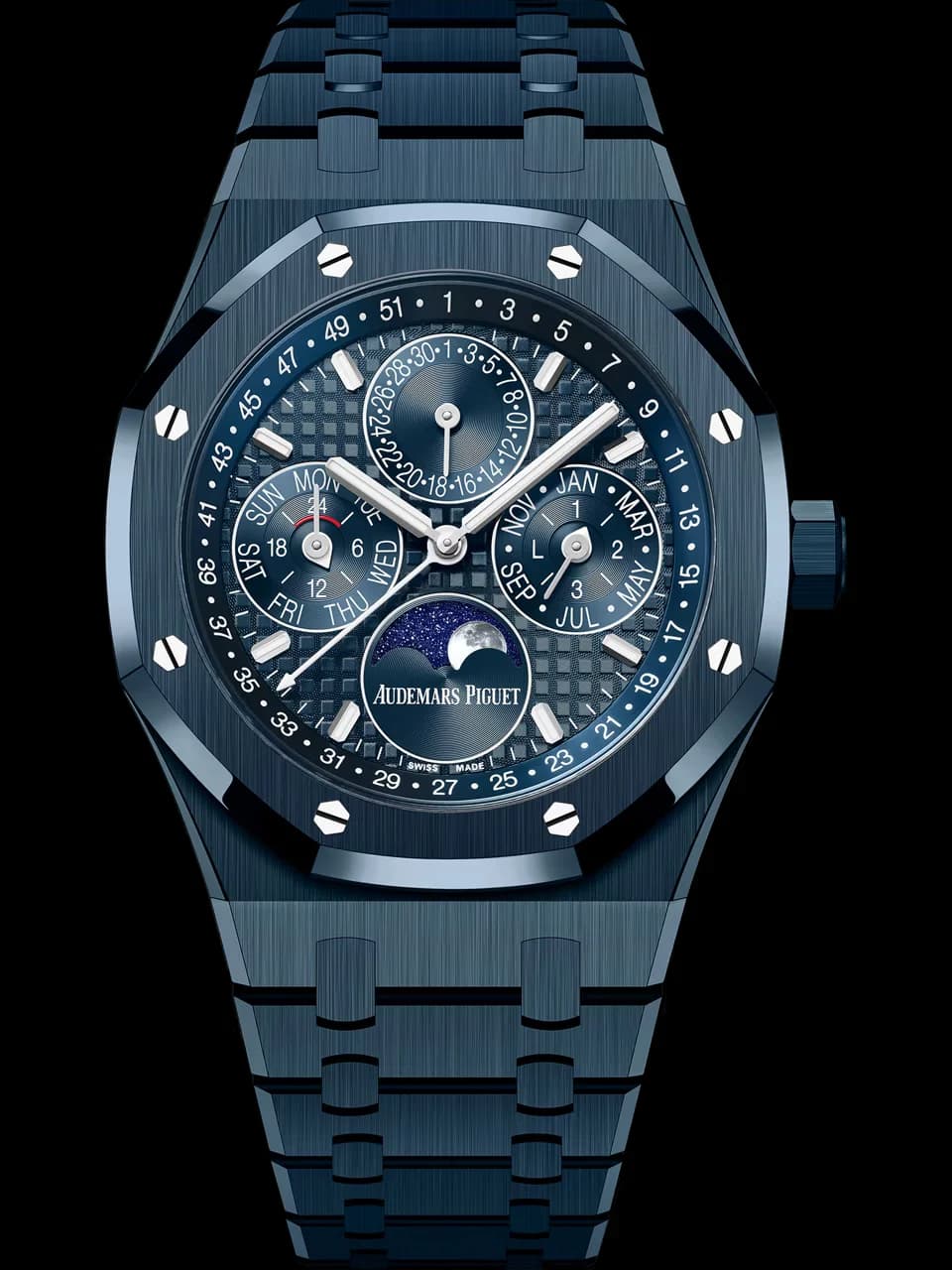
Month is a calendar complication that shows the current month on the dial. It counts as an extra complication beyond the time. With the day and date, it makes up a full, complete or triple calendar.
How is the month shown?
Most often, the month sits in a window as a three-letter abbreviation, such as JAN or FEB. Some watches use a hand instead. That hand shares an axis with a twelve-pointed star wheel, which drives it. A retrograde display works differently. Its hand does not turn in a full circle. Instead, it travels along a line or arc, from January at one end to December at the other.
How does a month display work?
The month display rarely takes its power straight from the base movement. It is usually driven by the watch’s date or calendar mechanism. When the month moves on by one step, a jumper spring holds the display in place. It stays steady there until the next change. For setting, many watches have a separate pusher. Each press moves the month indicator forward by one step.
Does the month need correcting by hand?
That depends on the calendar. A simple calendar shows the date, weekday and month. It may need a manual correction after any month with fewer than 31 days. An annual calendar handles 30-day and 31-day months by itself. Only February still needs a hand correction, and this sets it apart from a simple month display. A perpetual calendar goes further. It stores the length of every month across the four-year leap cycle, usually on a cam with 48 positions.
Where it comes from
Patek Philippe’s No. 97975 was the first perpetual calendar wristwatch. It shows the month on a subdial at six o’clock. The company’s records date its movement to September 1898. In 1996, Patek Philippe brought the annual calendar to market with the Ref. 5035. The month indication appears on watches from IWC Schaffhausen, Patek Philippe and Audemars Piguet.
Checked